
The size, material, spout and mount that suit each machine, and the container rule that applies where you buy.
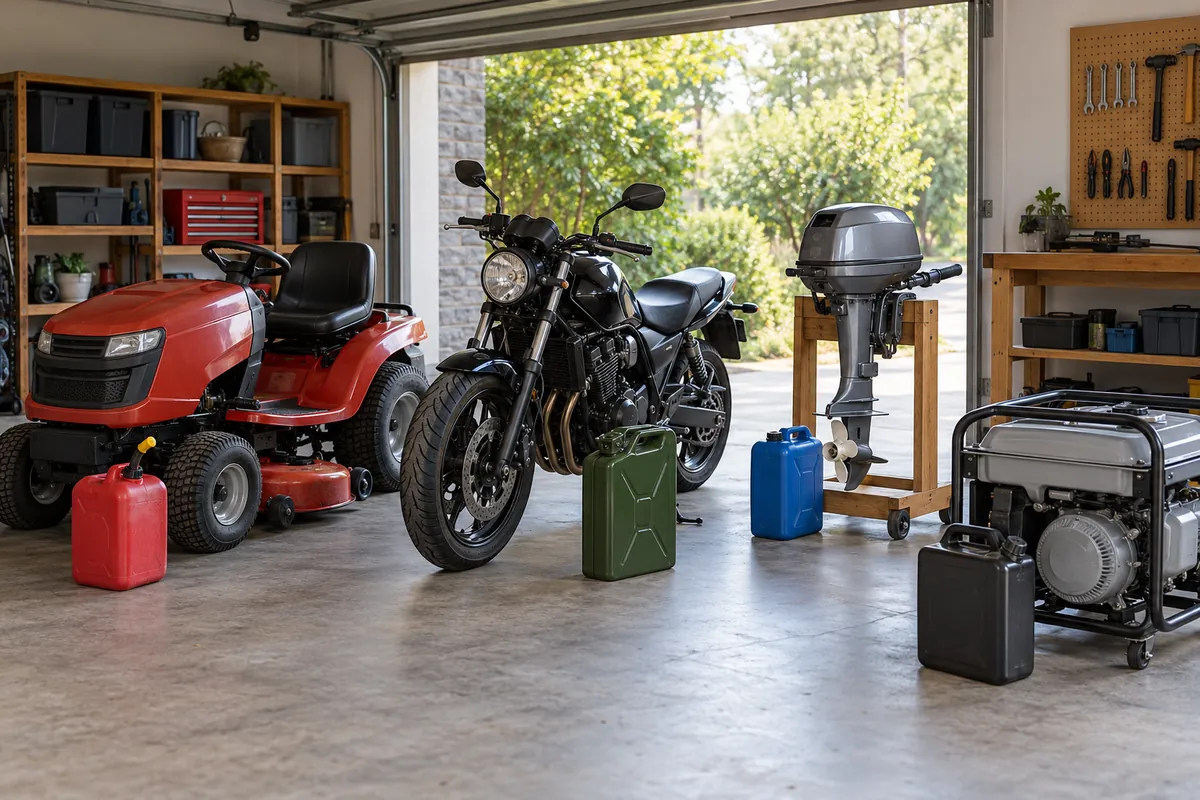
Match the can to the tank and the carry. A generator takes a 10 or 20 litre steel can, a boat a low horizontal can, a mower or chainsaw a 3 to 5 litre can, a motorcycle a 3 litre reserve and an overland 4x4 a 20 litre NATO-pattern can. In Great Britain a petrol can holds at most 20 litres in metal and 10 in plastic.
Quick answer: What size fuel can does each machine need?
A 10 or 20 litre steel can for a generator, a low horizontal can for a boat, 3 to 5 litres for a mower or chainsaw, a 3 litre reserve for a motorcycle and a 20 litre NATO-pattern can for an overland 4x4. Great Britain caps a petrol can at 20 litres in metal and 10 in plastic.
Start from the tank, then the carry, the stowage and the rules where the can is sold. The table gives our starting point for each job.
| Job | Size | Material and spout | Carried or mounted | Deeper guide |
|---|---|---|---|---|
| Portable generator | 10 or 20 L | Steel, flexible spout | Upright beside the set | Generator fuel |
| Boat or outboard | 5, 10 or 20 L horizontal | Galvanised or stainless; flexible spout | Flat in a drained locker | Marine containers |
| Lawn mower | 3 to 5 L | Steel; spout matched to the neck | By hand from a shed shelf | How to choose |
| Motorcycle, dirt bike, ATV | 3 L reserve; 5 or 10 L on a rack | Steel; screw cap, or tap and hose | Pannier, topbox or rack | Horizontal cans |
| Overland 4x4 | 20 L NATO pattern | Steel or aluminium; flexible spout | In a holder, low and central | Overland storage |
| Farm machinery | 20 L horizontal | Galvanised steel; spout matched to the neck | On the machine frame | Farm fuel |
| Chainsaw, two-stroke | 3 to 5 L, one can per mix | Steel; ratio marked on the can | By hand | Can colours |
Size it to one refuelling interval. Read the generator’s fuel use in litres an hour from its manual and multiply by the hours between fills. A set that burns 2 litres an hour through an 8-hour shift needs 16 litres, so one 20 litre can covers it. A small portable set suits a 10 litre can, about 9 kg full of petrol. The generator fuel guide and the jerry can sizing calculator turn burn rates into can counts.
Choose steel with a vented cap and a flexible spout, and stand the can on the ground to fill it (HSE). A petrol can in Great Britain holds 20 litres or less in metal or 10 or less in plastic (Petroleum (Consolidation) Regulations 2014, Schedule 3, paragraph 1(a)). A home may keep 30 litres in total without notifying the Petroleum Enforcement Authority. Switch the generator off and let it cool before you refuel, because fuel spilled on hot engine parts can ignite (CPSC).
A horizontal steel can stows flat in a cockpit locker or under a seat, where an upright can has no room, and it keeps the weight low. Galvanised steel suits sheltered and inland water. Stainless suits a boat that meets salt spray, which wears away the zinc on galvanised steel faster than inland air does (stainless horizontal can). A flexible spout reaches a filler neck on an unsteady platform. The marine guide covers salt, grades and the one-third fuel rule.
On UK inland waters the Boat Safety Standards (July 2024, item 14) require spare petrol to be stored so that fire and explosion risk is minimised. BSS guidance adds the numbers: no more than 30 litres of petrol, in cans of 10 litres or less if plastic and 20 or less if metal. It wants the cans stowed securely upright, away from heat and sun, ideally in a drained locker and never in the engine or cabin space. The guidance says upright, so ask the Boat Safety Scheme how a horizontal can may lie. Portable outboard tanks of 27 litres or less have their own standard, ISO 13591.
Two to three fills of the mower’s tank, in a can you can pour with one hand: 3 to 5 litres for a walk-behind mower, 10 for a ride-on. A 1.5 litre tank, for example, gives 3 to 4.5 litres, so a 5 litre can fits. A small can keeps fuel fresh, because petrol ages faster than diesel and faster again with ethanol (storing fuel safely).
HSE asks you to let a petrol mower cool before refilling, to fill the tank in the open air away from buildings and to stand the can on the ground while it is filled. A flexible or auto-shutoff spout matched to the can’s neck keeps the pour on target. In the US the spout and cap count as parts of the container under the EPA rule (40 CFR 59.611), so replace them with parts the maker lists.
A 3 litre steel reserve can fits a pannier or topbox. Ours measures 16.2 × 29.7 × 12.8 cm and weighs about 1 kg empty and 3 kg with petrol. For a quad, a side-by-side or a dirt bike at the track, a 5 or 10 litre horizontal can strapped to a rack carries more and stays low. The 3 litre mini can takes an optional tap and hose, and a tie-down kit keeps a can from working loose over rough ground.
HSE tells riders to dismount before filling a motorbike tank and to stand the can on the ground. A 3 litre can is 0.79 US gallons, so a US sale puts it inside the EPA container rule and both CPSC rules (see the rules table below).
A NATO jerry can is a 20 litre pressed-steel can with three handles, in a pattern from the 1930s. Ours measures 34 × 16 × 46 cm and weighs about 3.1 kg empty: about 18 kg with petrol and 20 kg with diesel. Nobody owns the pattern and no body certifies a can as NATO, so judge a maker by its UN test report and steel gauge. Genuine vs fake NATO cans lists the checks, and the NATO pattern guide explains the design.
Mount the can low and central in a holder that grips its own geometry, with a strap that survives corrugations, and keep fuel and water cans apart. See the overland guide for payload and range. In Great Britain a private individual carrying fuel for personal use is exempt from ADR up to 60 litres per container and 240 litres per vehicle (ADR 1.1.3.1(a), DfT Guidance Note 23). Other countries set their own limits.
A 20 litre horizontal steel can that sits on the machine frame. Our agricultural can measures 50.8 × 30.8 × 21.9 cm, is 0.8 mm galvanised steel and weighs about 3.3 kg empty. We quote the mounting to the machine. Add a spout matched to the neck for a controlled pour, keep one liquid per can, and put DEF in its own can (DEF and AdBlue containers). A 20 litre plastic can holds diesel too, because the petrol container limits do not reach it, but steel takes more knocks. The farm fuel guide covers water, sludge and clean diesel.
The storage rule counts the fuel held on the whole farm. In England the Silage, Slurry and Agricultural Fuel Oil Regulations 2010 apply when the farm holds more than 1,500 litres of fuel oil in tanks and drums together. They then ask for a bund of 110% of the largest tank, or 25% of the total where several tanks share an area, whichever is greater (GOV.UK). The UK oil storage guide covers the other nations. Red diesel needs no red can, because the dye is in the fuel (red diesel rules).
A 3 to 5 litre can for each mix ratio, marked with the ratio and the date it was mixed. A can used for one ratio should not serve another. Australia’s AFAC scheme gives 25:1 mix bottle green and 50:1 mix pipeline grey. Great Britain sets no colour, so pick a scheme and keep to it (jerry can colours).
Mix what the job will use. Old petrol leaves gum and lacquer in carburettor jets (storing fuel safely), and a saw stored with old mix will not start in spring. HSE asks you to fill mowers “or any other machines” in the open air away from buildings, and a saw falls under that. Stand the can on the ground to fill it and let a hot engine cool first.
A full 20 litre steel can weighs about 18 kg with petrol and 20 kg with diesel. A 10 litre can weighs 9 to 10 kg and a 3 litre can about 3 kg. The figures use petrol at 0.72 to 0.76 kg a litre (NIOSH), diesel at up to 0.845 (Directive 98/70/EC, Annex II) and the empty weights on our product pages (jerry can sizes).
HSE’s lifting filter (INDG143, figure 1) gives 25 kg for men and 16 kg for women at knuckle height with the load close to the body, and 10 and 7 kg at shoulder height. The Manual Handling Regulations set no weight limit, so the figures are guidelines. A full 20 litre can is over the 16 kg figure and a full 10 litre can is under it, so specify 10 litre cans where one person refuels all day.
A jerry can holds drinking water if it was made for water. A metal can suits water when its interior is food-contact: stainless steel, or steel with a potable-water interior specification. A fuel can is coated for hydrocarbons and is not for food or drinking water, so once a can has held fuel, keep it for fuel. See the water range.
A water can is the wrong container for fuel. Its interior is not coated for hydrocarbons, its gasket may be EPDM, which swells in petrol and diesel (closures and caps), and it sits outside the fuel certification regime. Colour does not settle the question: blue is the usual water colour and also marks kerosene in some schemes, so mark a water can WATER and a diesel can DIESEL.
Petrol is UN 1203, packing group II, and diesel is UN 1202, packing group III (ADR 2025, Table A). A UN-marked steel jerrican is a listed container for both (UN 1203, UN 1202).
| Market | Rule | What it sets for a fuel can |
|---|---|---|
| Great Britain, container | Petroleum (Consolidation) Regulations 2014, Schedule 3 | Petrol cans up to 10 L in plastic and 20 L in metal, marked PETROL, HIGHLY FLAMMABLE, capacity, maker and month. Petrol means a flash point below 21 °C, so diesel is outside. Northern Ireland differs: at home, two metal cans of up to 10 L or two plastic cans of up to 5 L (HSENI). See UK petrol container rules. |
| Great Britain, storage | HSE guidance on petrol at home | Up to 30 L: no notice. Over 30 and up to 275 L: written notice to the Petroleum Enforcement Authority. Over 275 L: a licence. |
| United States, EPA | 40 CFR part 59, subpart F | Consumer containers of 0.25 to 10 gallons: 0.3 g of hydrocarbon per gallon per day, no leaks upright or inverted, and an operator-opened vent must close automatically. OSHA safety cans are excluded. |
| United States, CPSC | 16 CFR parts 1460 and 1461 | A child-resistant closure since 17 January 2009 on gasoline, kerosene and diesel containers up to 8.45 gallons (to ASTM F2517-22e1 for those made from 22 December 2022), and a flame mitigation device on consumer containers of 5 gallons (18.9 L) or less. See EPA and CARB compliance. |
| Australia and New Zealand | AS/NZS 2906:2001; WorkSafe Victoria | The standard covers cans up to and including 25 L, boat tanks included. Victoria treats the UN mark plus the AS 2906 mark as compliant and bars the sale of plastic jerry cans and removable marine tanks over five years old. See AS/NZS 2906 and AFAC. |
A 20 litre can holds 5.28 US gallons. That puts it inside the EPA range of 0.25 to 10 gallons and above the 5 gallon ceiling in the CPSC definition of a portable fuel container (16 CFR 1461.2). The 10 litre and smaller cans sit inside both. For plastic cans read steel vs HDPE fuel cans.
We make the cans in this guide in Vietnam and China to one specification managed from Singapore, and we supply the trade: distributors, wholesalers, retailers and own-brand buyers. The 20 litre NATO steel can covers the generator, overland and general fuel jobs. The 10 litre can halves the filled weight, the 3 litre cans serve the motorcycle and the strimmer, and the horizontal cans serve boats, tractors and generator frames. Holders and spouts are tooled to our own cans, so confirm the fit before you pair them with another maker’s can.
We hold UN certification for our dangerous-goods jerrican designs, certified per design type and made under quality assurance the competent authority accepts, and our factories hold ISO 9001, 14001 and 45001. We hold no EPA, CARB or AS/NZS 2906 certification, so tell us your market and we confirm what applies and what we would need to obtain.
| Your use case | Recommended can | Why this one |
|---|---|---|
| Generator, overland 4x4, general petrol or diesel | 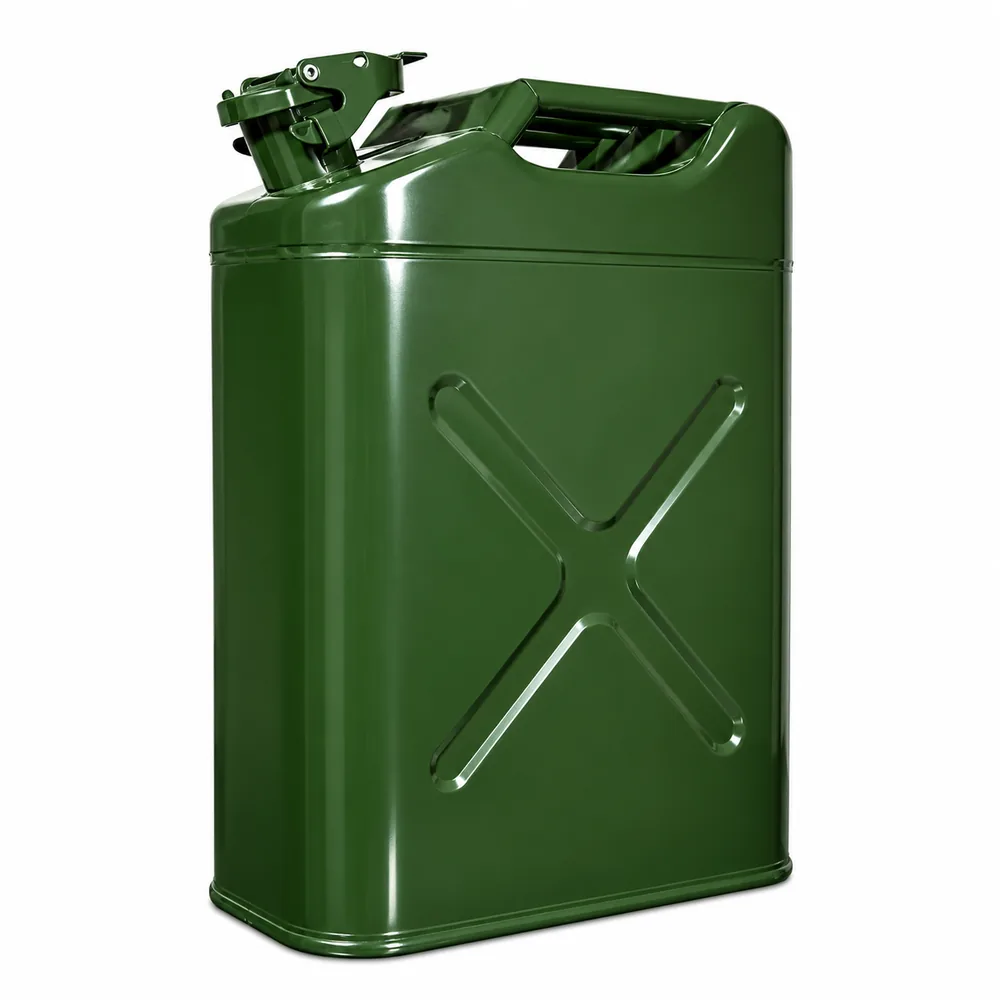 20L NATO Steel Fuel Can |
Coated steel with a vented cap, 34 x 16 x 46 cm, and the pattern NATO holders take. |
| A lighter carry, ride-on mowers, small generators | 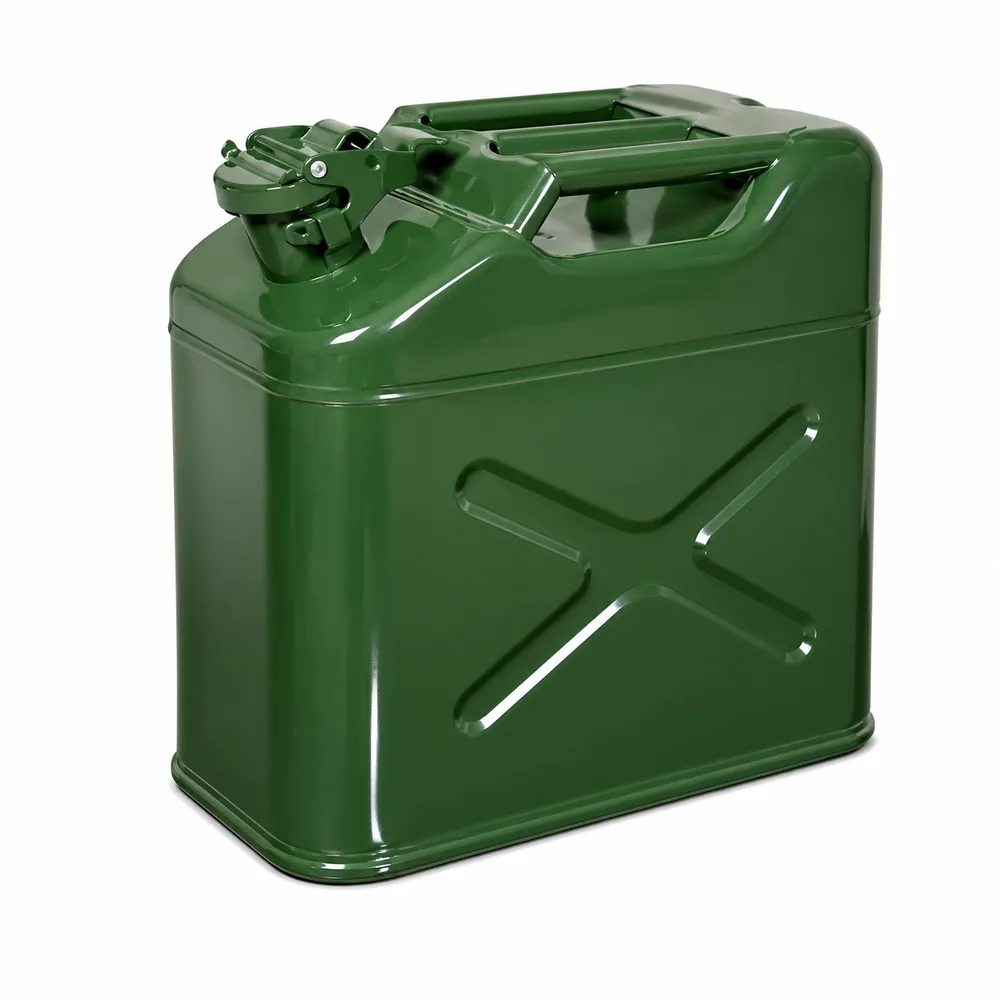 10L NATO Steel Can |
The same pattern at half the filled weight, about 9 kg with petrol. |
| Motorcycle pannier, strimmer, chainsaw | 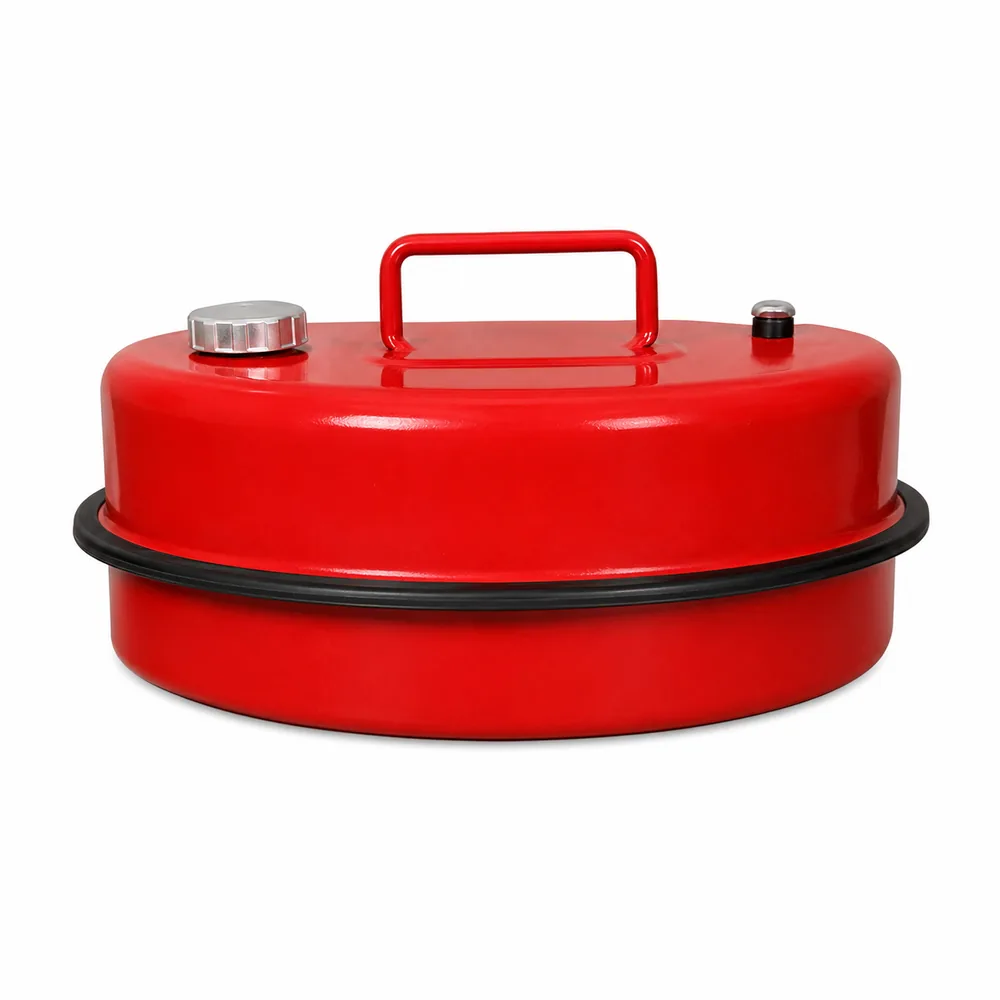 3L Compact Fuel Can |
Three litres of steel with an anti-corrosion, anti-UV finish, about 1 kg empty. |
| Quad rack or topbox reserve; optional tap | 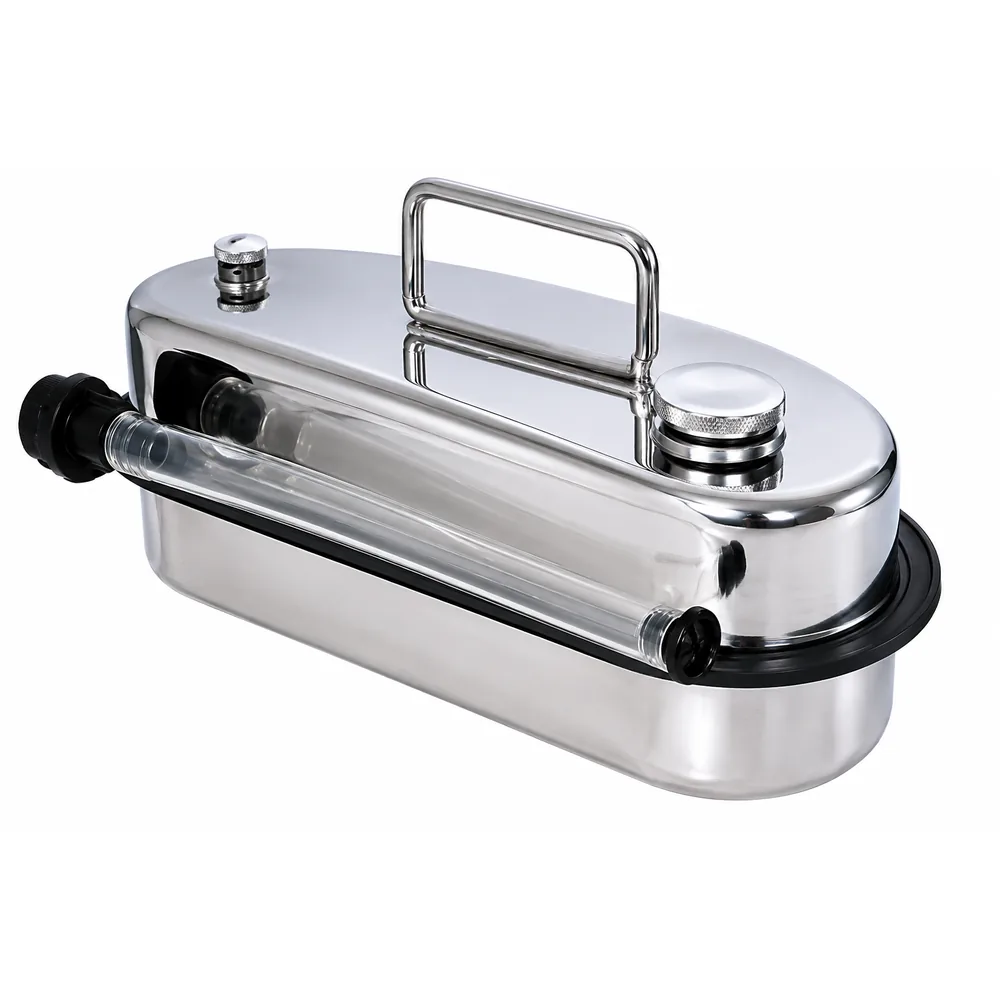 3L Mini Horizontal Can |
Galvanised or stainless, with an optional tap and hose for topping up. |
| Boat locker, generator frame, tractor | 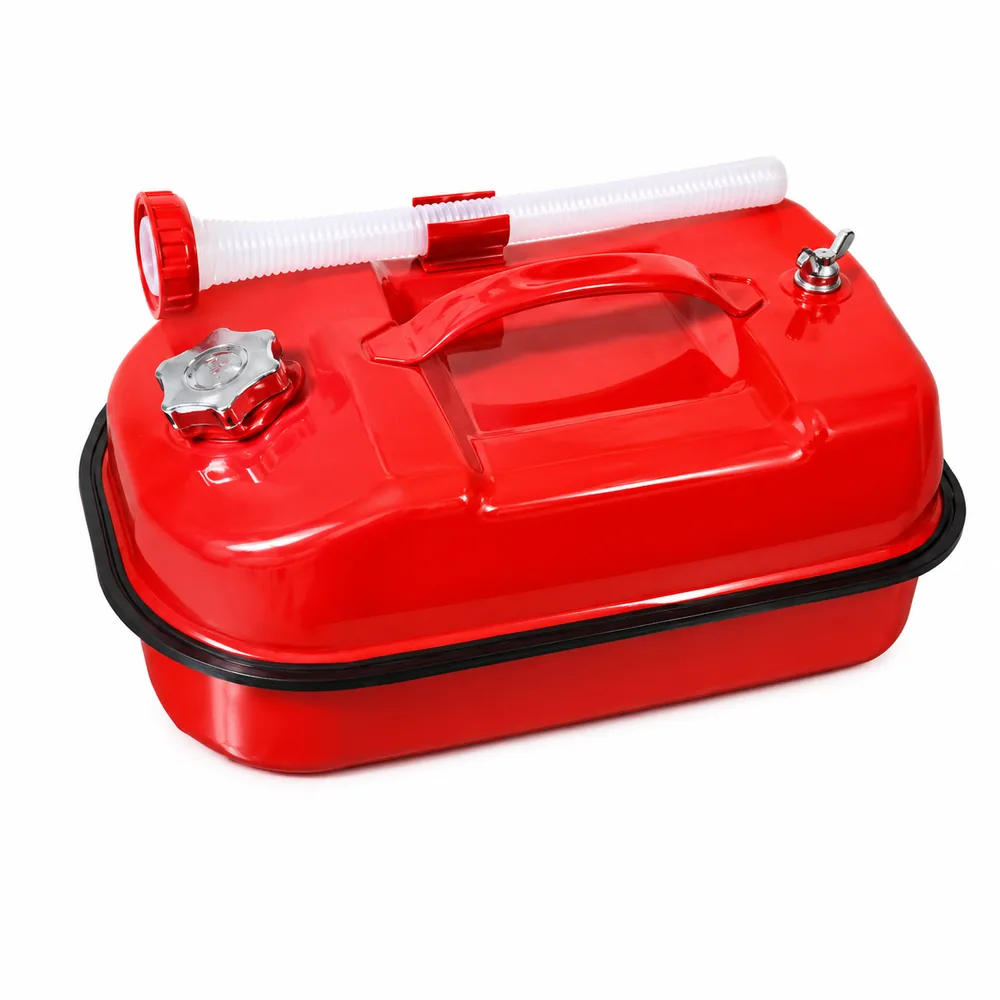 Horizontal Galvanised Can — 5L / 10L / 20L |
Low-profile steel in 5, 10 and 20 litres with a stowed flexible spout. |
| Diesel to tractors and farm machinery | 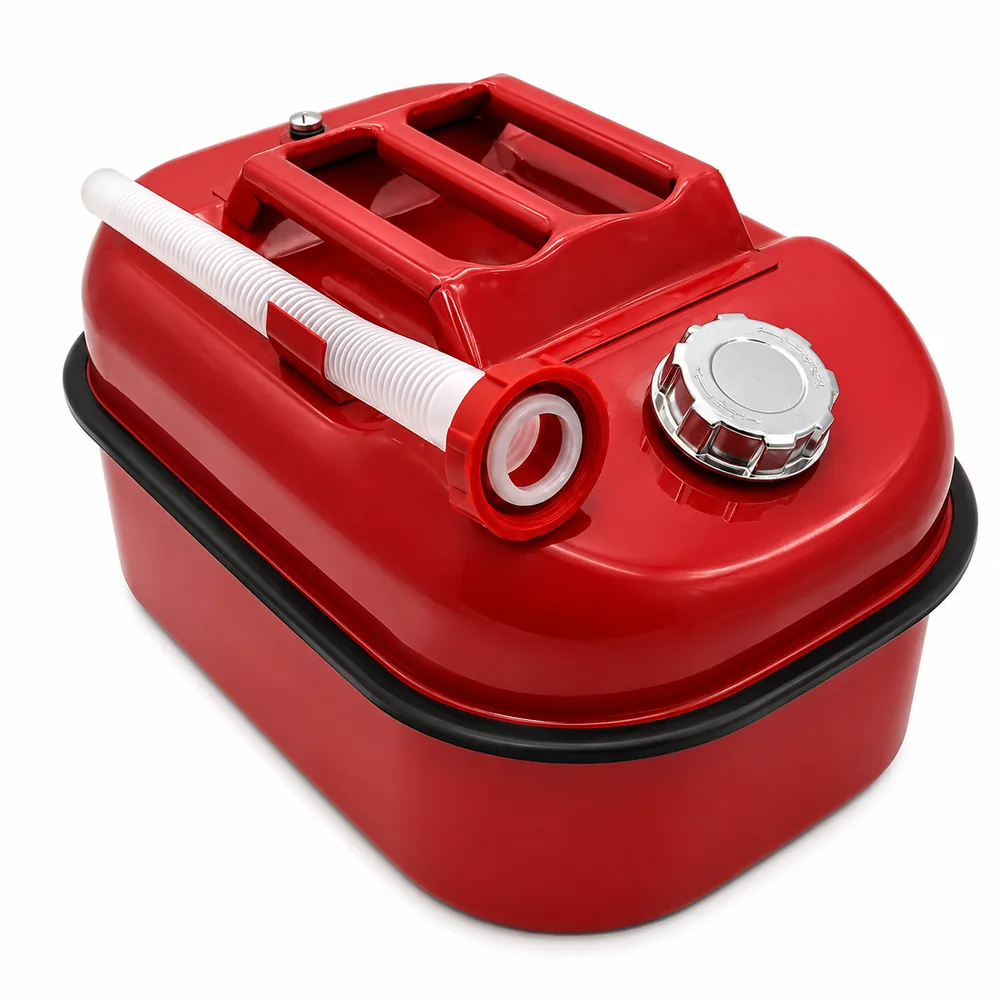 20L Horizontal Agricultural Fuel Can |
A 20 litre horizontal can in 0.8 mm galvanised steel, shaped to sit on a machine frame. |
| Mounting a NATO-pattern can on a vehicle or trailer | 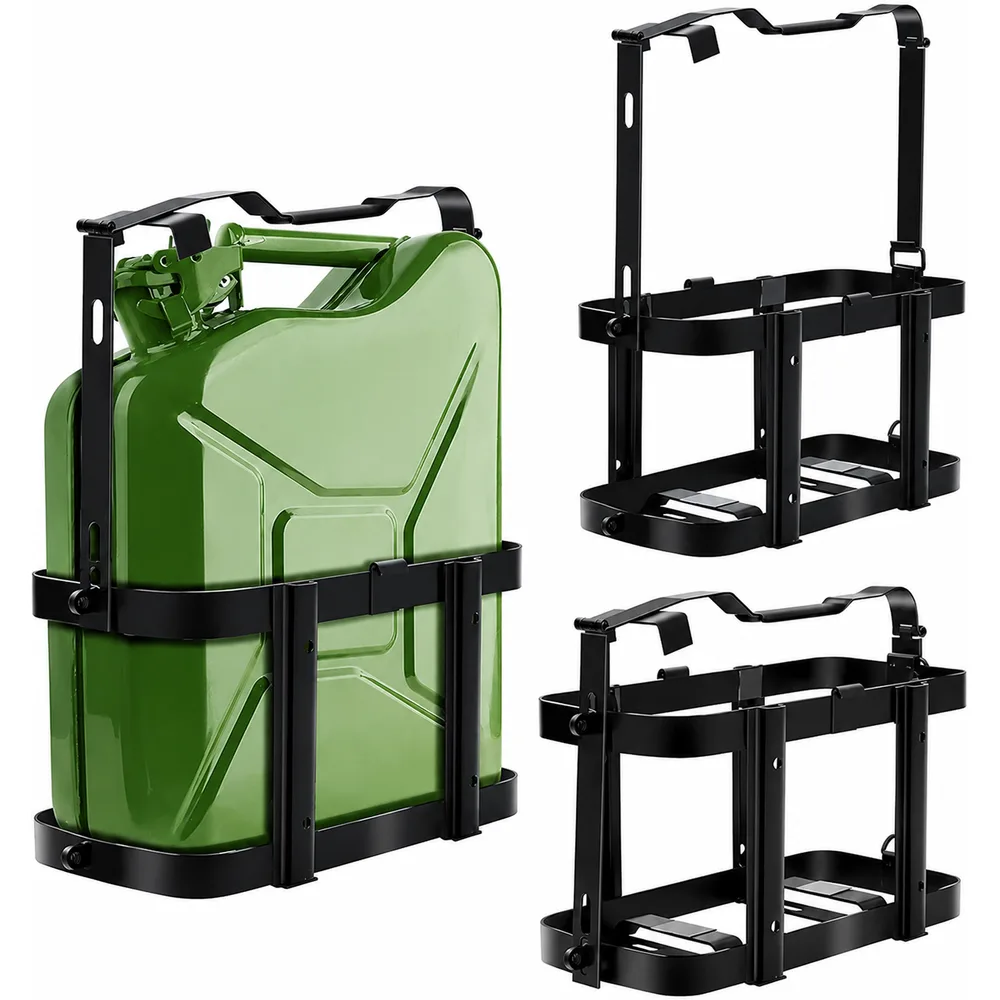 Jerry Can Holders & Mounts |
Steel holders with strap and buckle, tooled to our own can geometry. |
| Mower, chainsaw and outboard filler necks | 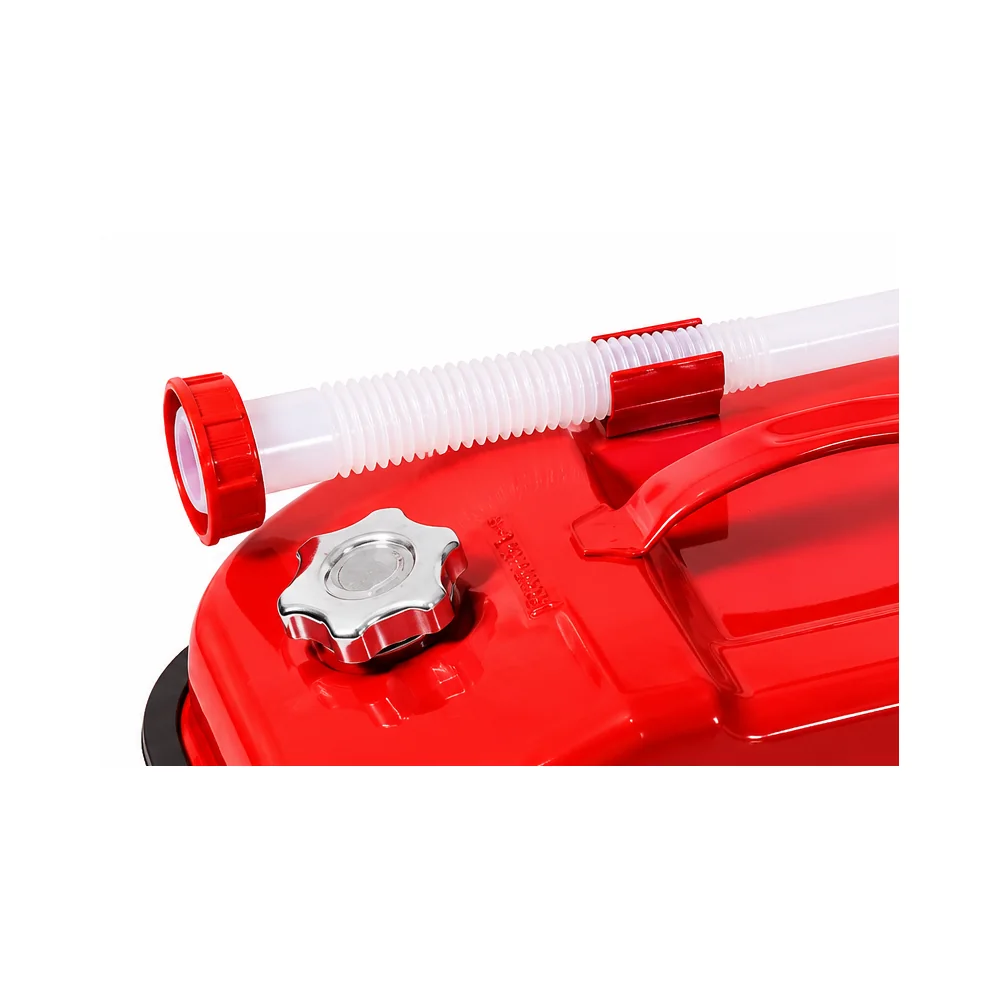 Pouring Spouts & Nozzles |
Rigid, flexible and auto-shutoff spouts, each matched to the neck of the can. |
Any colour. No rule in Great Britain sets one for diesel, and the Petroleum (Consolidation) Regulations 2014 set label words and no colour, even for petrol. Where a scheme does set a colour, diesel is yellow: California’s CP-501, and olive yellow (RAL 1020) in Australia’s AFAC guideline. Avoid red, which reads as petrol, and mark the can DIESEL.
Many factories press the pattern, because nobody owns it and no body certifies a can as NATO. That makes the maker matter more than the shape. We make NATO-pattern steel cans in Vietnam and China to one specification. Ask any maker for the UN certificate number covering the design, the steel gauge and the interior coating, and ask for a sample first.
A steel or fuel-grade plastic jerrican of 10 or 20 litres, UN-marked if it travels. The Petroleum (Consolidation) Regulations define petrol by a flash point below 21 °C, so the 10 litre plastic limit for petrol cans does not apply to diesel and a 20 litre plastic can is an option. Steel takes more knocks in the field. Keep the can to diesel, label it, and keep AdBlue in its own can.
In Great Britain, a metal can of 20 litres or less or a plastic can of 10 or less, marked PETROL and HIGHLY FLAMMABLE. Steel is the usual choice because it does not let petrol through the wall and can be bonded to earth. Plastic needs fluorinated or barrier HDPE. A US consumer sale adds EPA rules on the spout and closure.
Yes, within two sets of limits. HSE counts up to 30 litres of petrol in at most two suitable containers in a vehicle toward your storage total. For road carriage, a private individual is exempt from ADR up to 60 litres per container and 240 litres per vehicle (DfT Guidance Note 23). Stand the can on the ground to fill it, then strap it upright in the vehicle.
A gas can is the US name for a petrol can. A jerry can is the 20 litre three-handle pattern. A US 5-gallon gas can holds 18.9 litres, a litre less than a 20 litre jerry can, which holds 5.28 US gallons. Jerry cans are made for fuel and for water, so the interior and the markings decide what each can holds.
Yes, in a fuel-grade can of the right size. A plastic petrol container in Great Britain may hold no more than 10 litres, so a 20 litre plastic can is for diesel. Untreated HDPE lets petrol through its wall, so choose fluorinated or barrier HDPE with a UN 3H1 mark if it travels (steel vs HDPE). Plastic dangerous-goods jerricans have a five-year life from manufacture (ADR 4.1.1.15).
The spout that fits the can’s own neck and cap thread. Spouts come rigid (European DSE pattern), flexible long-nose and auto-shutoff, and each is sold against a specific can. The US military specification describes the 20 litre can with a flexible spout. A spout from another maker may not seal, so ask the maker to confirm the fit against the can’s neck before you buy.
Avoid it where you can. A full 20 litre diesel can weighs about 20 kg, so two cans add 40 kg high on the vehicle before the rack and the rest of the load, and they raise the centre of gravity. Check the roof load rating in the vehicle handbook, and mount fuel low and between the axles in a holder with a strap.
A full, sealed steel can kept cool, dark and out of living space. Plastic suits long storage only if it is fluorinated or barrier HDPE. Petrol ages faster than diesel and faster again with ethanol, so date the can and rotate stock. A stabiliser goes into fresh fuel and does nothing for old (storing fuel safely). A home in Great Britain may keep 30 litres without notice and 275 litres with written notice.
The standards and regulations this page relies on, at their issuing body. Where a market rule is named here, check the current revision before you specify against it.
Last reviewed by Clarence Cheang, Co-Founder.
Tell us your market, your fuel and your volumes. We come back with a specification sheet and a quotation.