Fortitude21
Home  /  Overland and expedition

Overland and expedition water and fuel storage

Carrying enough water and fuel for the distance, in cans that survive the trail.

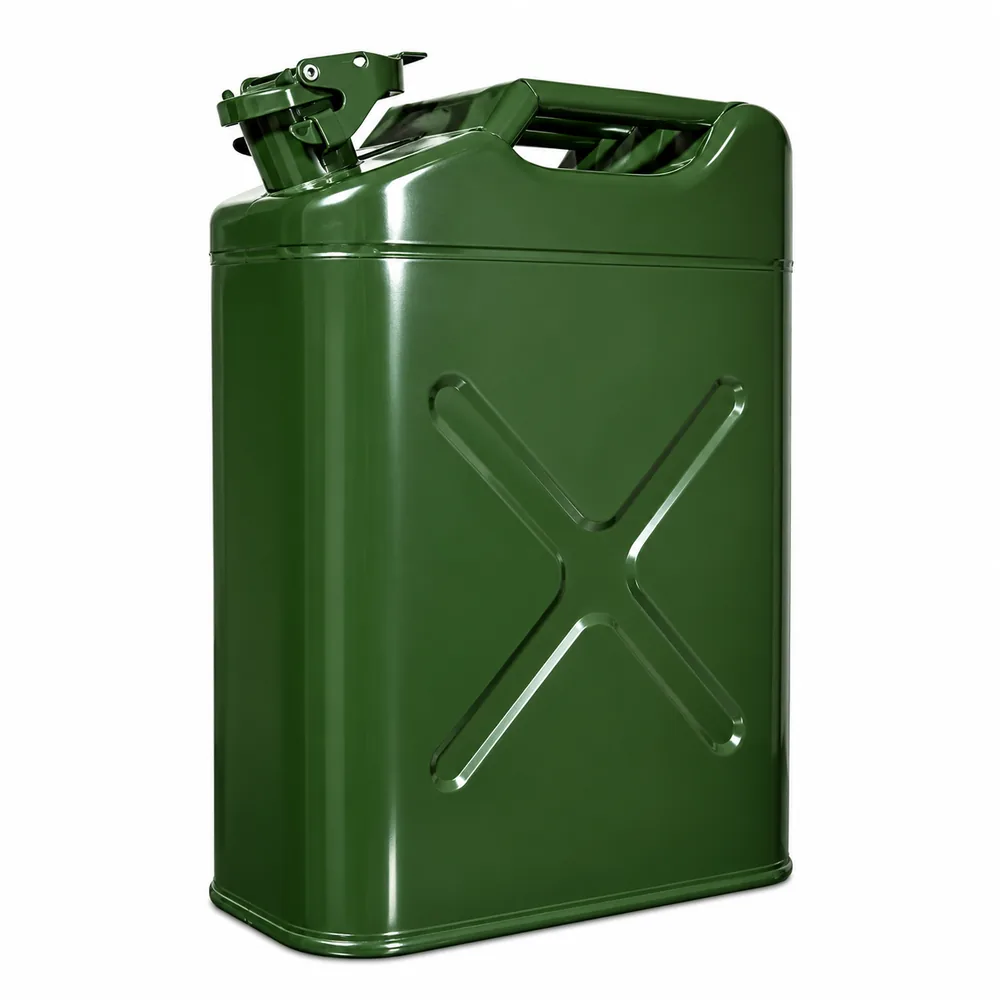
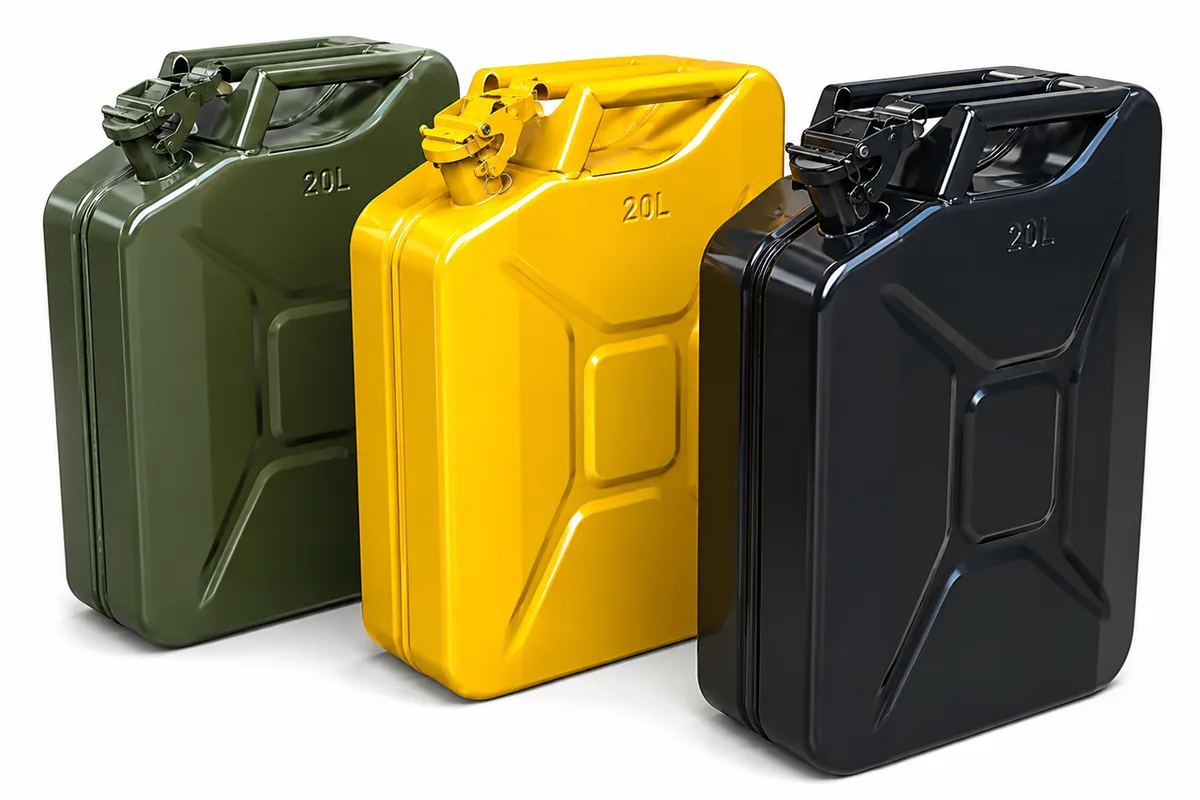
Olive, yellow and black NATO-pattern steel jerry cans
NATO-pattern cans, mounted low and lashed down.

Overland travel is a logistics problem: enough water and fuel to reach the next resupply, carried in containers that take a beating and mount to the vehicle.

Plan the range

Fuel range is your tank plus what you carry, so extra fuel cans extend how far you go between stations. Water is a daily figure: plan a per-person, per-day volume for the days between resupply, as in emergency water storage. Use the sizing calculator to turn days and people into a container count. Then add a return-leg reserve on top. The stretch that strands people is the ground past the last fuel stop, where a headwind, soft sand or a wrong turn burns more than the map predicts. Carry enough to get back to that station, not only out to the turnaround.

The arithmetic is worth doing on paper before it is done on a rack. Twenty litres of diesel weighs about 17 kg and 20 litres of water a flat 20, and a steel can adds roughly 4 on top. Four fuel cans and two water cans is therefore around 130 kg of liquid and container before a single item of camping equipment, a fridge, a second battery or a passenger. Against a typical mid-size 4x4 payload of 600 to 900 kg, the liquids alone claim a fifth of it.

Which reframes the range question. Extra fuel does not extend range for free; it spends payload that recovery gear, water and spares are also competing for, and an overloaded vehicle uses more fuel to carry the fuel. The honest planning order is to fix the water first because it is non-negotiable, then fuel to the return-leg reserve, then decide what the remaining payload supports.

Planning the rangeSize fuel on the longest confirmed gap between refuelling points, not the average, then add margin for detours and for the extra consumption sand, altitude and a loaded rack cause. Longest gap
Not the average distance
Real economy
Loaded, not the brochure figure
Add margin
Detours, sand, altitude
Mount low
Weight high hurts handling
A stage plan built on optimistic fuel economy is the usual reason vehicles run dry. Water is sized separately, on people and days.

Two liquids, two materials

Keep water and fuel in separate, clearly different cans, and never swap them. Water wants food-grade stainless or HDPE; fuel wants steel or a fuel-grade plastic. Colour-code and label so there is no confusion in the dark. Hold that discipline for the whole trip. A can that once held diesel never carries drinking water again, whatever you scrub it with, so the colour and the label have to stay honest.

Honest labelling means marking the can rather than the cap, because caps get swapped at the first spill and a swapped cap moves the label with it. A mark on the body, ideally moulded or etched rather than stuck on, survives a season of dust, fuel and sun in a way a sticker does not. Where a fleet runs several vehicles, use the same colour convention across all of them: a crew that learns one system and meets another at night is the case the convention exists to prevent.

Water is sized differently from fuel

Fuel is sized on distance and consumption, which is arithmetic. Water is sized on people and days, which is a different calculation with a different failure mode: running low on fuel strands a vehicle, running low on water endangers the occupants, and the two should never share a contingency margin.

The planning figure most expedition guidance settles on is a minimum of three to four litres per person per day in heat for drinking alone, before cooking or washing. Against the Sphere standard of 15 litres for full domestic use, that gap is the compromise overland travel makes, and it is why a separate hygiene supply is usually planned around available resupply rather than carried.

The consequence for containers is that water and fuel end up in different formats for good reasons. Water benefits from stainless or food-grade HDPE that cleans and reuses across trips; fuel needs a coated or barrier container it will never share. Two liquids, two materials, permanently separate cans.

Kilograms on a loaded 4x4 Four 20 litre fuel cans and two water cans come to about 130 kg filled, against a typical mid-size 4x4 payload of 600 to 900 kg and a dynamic roof rating near 100 kg. KILOGRAMS ON A LOADED 4X4 One full water can 24 kg One full diesel can 21 kg Rack plus two roof cans 95 kg Four fuel, two water 130 kg
A mid-size 4x4 payload runs 600 to 900 kg, so the liquids alone claim about a fifth before a fridge, a second battery, recovery gear or a passenger. The highlighted bar is the one to check against your vehicle: manufacturers typically rate a roof at 75 to 100 kg DYNAMIC, and a rack plus two full cans is already there with nothing else on top.

Weight, payload and where it sits

Water and fuel are heavy, and payload is finite on a loaded vehicle. Aluminium saves weight where every kilogram counts; steel gives durability at lower cost. Read aluminium vs steel. Placement matters as much as total mass. A full can on the roof raises the centre of gravity and makes the vehicle roll into corners and lean on side slopes. A can hung off the rear bumper sits behind the axle, so its weight swings on rough ground and lightens the steering. Carry the heavy liquids low and between the axles, and treat the roof and the rear overhang as last resort.

The roof has a published limit that most people never look up, and it is lower than the rack suggests. Vehicle manufacturers typically rate a roof for a dynamic load in the region of 75 to 100 kg, meaning while the vehicle is moving, and the static limit for a parked vehicle with a roof tent is a separate and much larger figure. A rack of its own can weigh 40 to 50 kg. Two full 20-litre cans add nearly 50. That is the dynamic rating consumed by the rack and two cans, with nothing else on the roof.

The rear overhang fails differently and it is a lever rather than a limit. Weight hung behind the rear axle presses the rear down and lifts the front, taking load off the steering axle exactly when you need it, and it swings through a larger arc than anything between the axles when the vehicle yaws. A swing-out carrier that feels solid in a car park behaves like a pendulum on corrugations. Neither position is forbidden; both are worse than low and central, and both should be a decision rather than a default.

Where the weight should sitLow and between the axles is best. The roof raises the centre of gravity against a dynamic rating near 100 kg, and the rear overhang acts as a lever on the steering axle. Low, centred Roof Rear swing-out Keeps handling Keeps handling: suitable for Low, centred Keeps handling: not suitable for Roof Keeps handling: conditional for Rear swing-out~ Within rated load Within rated load: suitable for Low, centred Within rated load: conditional for Roof~ Within rated load: suitable for Rear swing-out Easy to reach Easy to reach: conditional for Low, centred~ Easy to reach: not suitable for Roof Easy to reach: suitable for Rear swing-out Survives corrugations Survives corrugations: suitable for Low, centred Survives corrugations: conditional for Roof~ Survives corrugations: conditional for Rear swing-out~
Manufacturers typically rate a roof at 75 to 100 kg DYNAMIC, and a rack plus two full 20-litre cans is already there with nothing else on top. Weight behind the rear axle lifts the front, taking load off the steering axle exactly when you need it, and swings through a larger arc in a yaw.

Mount it so it can't move

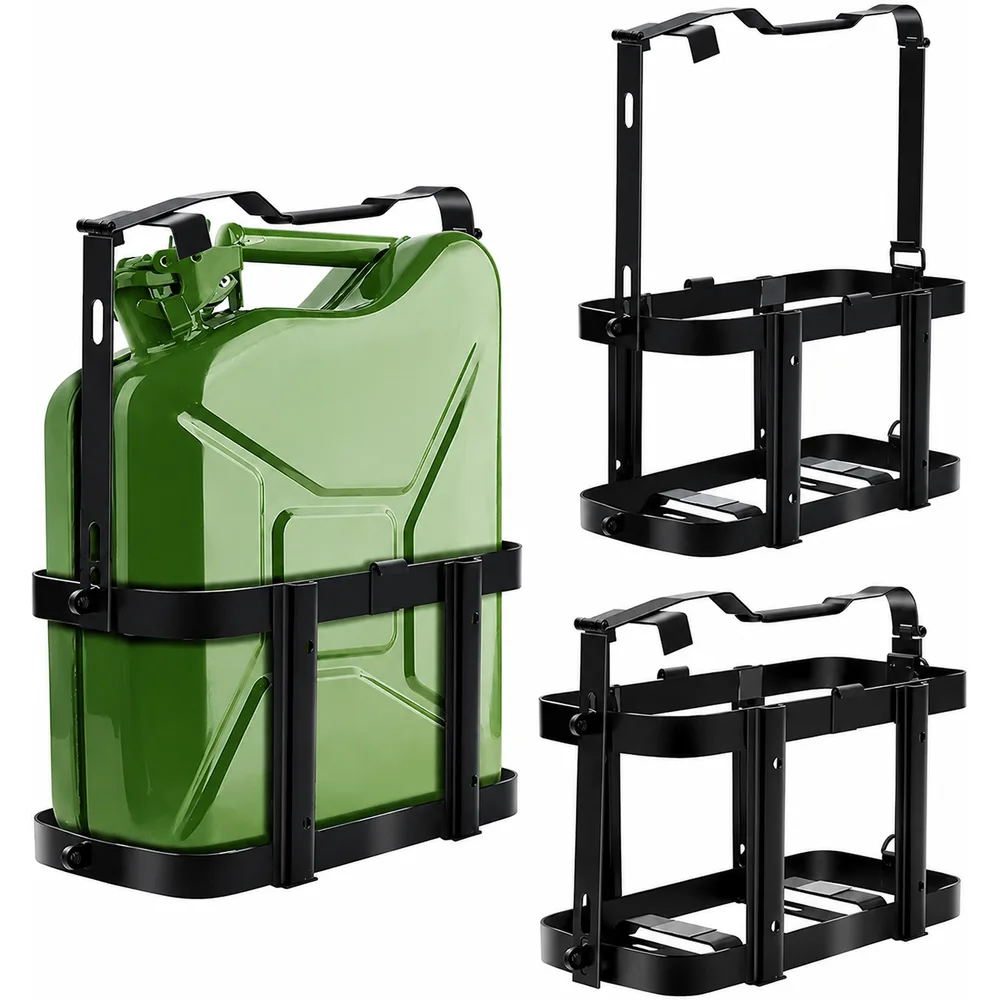
The NATO pattern helps here: cans seat in the racks, carriers and holders already fitted to overland vehicles, so a NATO-pattern can mounts without new hardware. Read the NATO pattern guide. Fit is only half of it. A full can that works loose becomes a projectile in a rollover or a hard stop, so clamp it in a holder and add a strap or tie-down that survives corrugations without chafing through. Check the mounts after the first rough day, because vibration finds every loose bolt. See jerry can holders.

Corrugated road is a fatigue test rather than a rough ride, and it is worth thinking of it that way. A washboard surface drives the suspension at a frequency that gets into everything bolted to the vehicle, and a full can is a heavy mass on the end of a bracket. What fails is rarely the can: it is the bracket, the weld on the carrier, or the bolt that backed off half a turn a day for four days.

Two habits cover most of it. Torque-check the mounts at the end of the first hard day and then on a schedule rather than when something rattles, because by the time a mount rattles the hole has already elongated. And put a compliant layer between the can and the holder, a rubber pad or a strap under tension, so the can is clamped rather than free to move a millimetre and hammer. A can that can move a millimetre will find that millimetre a hundred thousand times.

Low-profile cans for tight spots

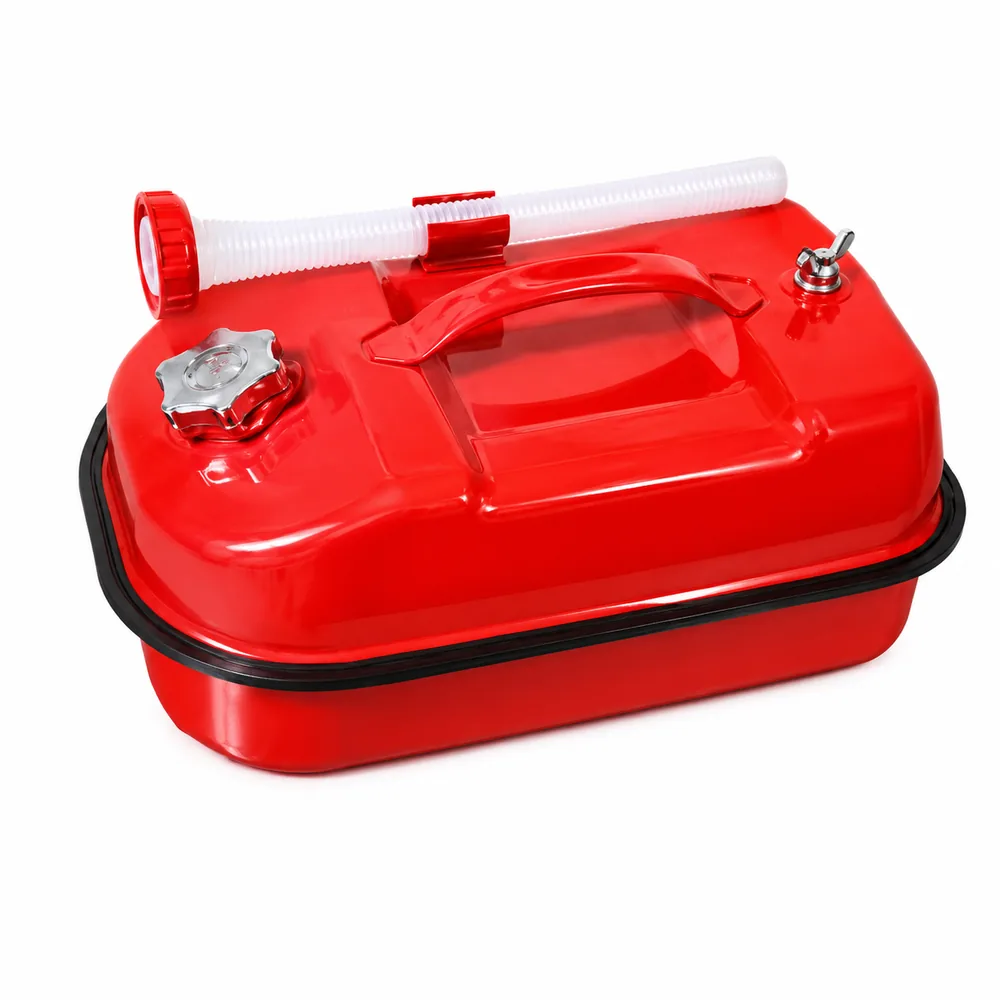
An upright can does not fit every gap. Along the chassis, under a rack or beside a drawer system, a horizontal or low-profile can uses space an upright wastes and keeps the weight low while it does. Read horizontal and under-seat cans for the shapes that slide into those spots.

A low-profile can also changes how it has to be secured. An upright is held against tipping and a horizontal is held against sliding, which is a different strap direction and a different bracket. Fitting an upright holder on its side is the improvisation to avoid: it grips the wrong faces, and the can works loose over exactly the terrain the low mounting was chosen for.

Working out the range you actually needCarried fuel is sized from the gap between resupply points and the consumption the terrain imposes, not from the size of the tank. Longest gap
Between two certain resupply points
Real consumption
Loaded, off road, not the brochure
Subtract the tank
What the vehicle already carries
Carry it
Plus a margin, not a round number
The second box is where plans go wrong. A loaded vehicle in sand can use half again what the same vehicle uses on a road, and the margin has to be built on the worse figure.

Carry a spare cap and spout

The cap and the pour spout are the parts you lose or split first, and a can you cannot seal or pour is dead weight on the rack. Pack a spare of each before you leave. A good spout also keeps fuel off the paint and off your hands at a windy roadside fill. Browse caps and closures and pouring spouts.

The wider spares principle is to carry the parts that strand you rather than the parts that fail most. A dented body is ugly and still holds fuel. A split gasket, a lost cap or a cracked spout turns a full can into ballast, and none of the three is findable in a rural town. They also weigh almost nothing and take no space, which makes them the cheapest insurance on the vehicle.

Two liquids, two materialsFuel and water want opposite things from a container, which is why one material for both is a compromise on the more important of the two. Fuel Water Steel or lined steel Steel or lined steel: suitable for Fuel Steel or lined steel: conditional for Water~ Stainless Stainless: conditional for Fuel~ Stainless: suitable for Water HDPE, untreated HDPE, untreated: not suitable for Fuel HDPE, untreated: suitable for Water HDPE, fluorinated HDPE, fluorinated: suitable for Fuel HDPE, fluorinated: conditional for Water~ Aluminium Aluminium: conditional for Fuel~ Aluminium: not suitable for Water
No row is a clean yes in both columns. Carrying both liquids in the same specification of can means one of them is in the wrong container, and it is usually the water.

The common mistake

Two errors do most of the damage. The first is mounting fuel high and heavy, which trades handling for convenience and shows up on the first steep descent. The second is planning fuel and water only as far as the turnaround, then finding the last station shut on the way home. Load low, and plan the leg past the last resupply.

Both errors share a cause, which is planning the trip rather than the return. Fuel and water get sized against the distance out, mounting gets decided by what is convenient while the vehicle is being packed, and neither decision is tested until the vehicle is loaded, hot and a long way from anywhere. Working the return leg first, with a headwind and a closed station in it, produces different answers to both questions.

What Fortitude21 fits

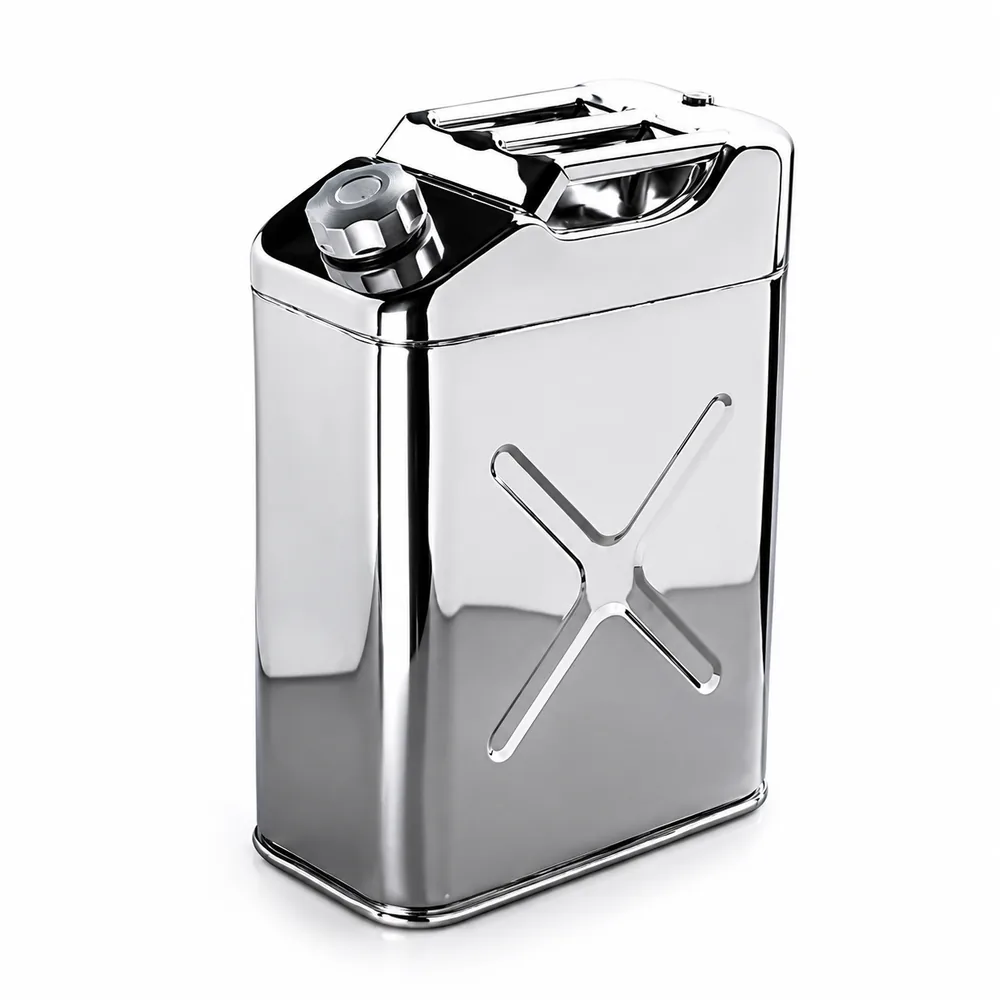
Our NATO-pattern steel, stainless and aluminium cans mount in standard carriers and suit expedition use. See the fuel and water ranges.

Where the weight should sitCarried liquid is the heaviest single item most overland vehicles add, and where it is mounted changes the handling more than how much it weighs. Good Poor Low and between the axles Low and between the axles: suitable for Good Low and between the axles: not suitable for Poor Inside the wheelbase Inside the wheelbase: suitable for Good Inside the wheelbase: not suitable for Poor On the roof On the roof: not suitable for Good On the roof: suitable for Poor Behind the rear axle Behind the rear axle: not suitable for Good Behind the rear axle: suitable for Poor Split side to side Split side to side: suitable for Good Split side to side: not suitable for Poor
The roof is where cans end up because it is where the space is. Twenty litres up there does more to a vehicle centre of gravity than sixty litres under the floor.

Match the can to the job

Mount it low, keep the liquids apart. Here is the expedition kit from our line.

Your use caseRecommended canWhy this one
Fuel, where every kilogram counts 20L Aluminium NATO Can20L Aluminium NATO Can The lightest body, for a weight-critical build.
Fuel, durability over weight 20L NATO Steel Fuel Can20L NATO Steel Fuel Can Tough NATO steel, seats in standard carriers.
Drinking water on the trail 20L Stainless Steel Water Can20L Stainless Steel Water Can Food-grade stainless, cleans and reuses for years.
Fuel in a tight chassis spot Horizontal Galvanised Can — 5L / 10L / 20LHorizontal Galvanised Can — 5L / 10L / 20L Low-profile, carries the weight down low.
Mounting and retention Jerry Can Holders & MountsJerry Can Holders & Mounts Holds the can so it cannot work loose on corrugations.

Common questions

How much fuel should I carry for an overland trip?

Size on the longest gap between confirmed refuelling points, not the average, then add a margin for detours and for the extra consumption that sand, altitude and a loaded roof rack cause. A stage plan built on optimistic fuel economy is the usual reason vehicles run dry.

Where should jerry cans be mounted on a vehicle?

Low and central where possible, because full cans high on a roof rack raise the centre of gravity and hurt handling badly. Rear-door and swing-away carriers keep the weight low and the cans accessible. Fuel and water should be mounted apart to reduce the chance of the wrong can being used.

Should overland water be carried in steel or plastic?

Stainless for the long-term store, because it blocks light, resists taint and cleans reliably between trips. Food-grade HDPE for the working can that gets refilled and emptied often, where weight and cost matter more than storage life.

References

The standards and regulations this page relies on, at their issuing body. Where a market rule is named here, check the current revision before you specify against it.

Last reviewed .

Talk to us about your fuel programme

Tell us your market, your fuel and your volumes. We come back with a specification sheet and a quotation.

Chat on WhatsApp