
Both carry fuel and both certify to a UN code. The choice comes down to payload, toughness and cost.
Both metals carry petrol, diesel, kerosene and JP-08, and both certify to a UN packaging code. So the fuel almost never decides this. Weight, toughness and cost do, and they usually point at one metal before you reach the bottom of the spec sheet.
Aluminium is worth its premium for exactly one reason, and it is not durability or fuel performance. It is mass. Aluminium runs around 2.7 g/cm³ against roughly 7.85 for steel, close to a third the density, so an aluminium can is noticeably lighter empty than the steel can beside it. Full of fuel the gap narrows, because the fuel weighs the same in either body. Empty, and multiplied across a pallet or an airlift, the saving is real. If nobody on your side is counting kilograms, the decision is already made: buy steel and keep the difference.
The density ratio flatters the comparison, though, and it is worth knowing why before you budget a saving off it. Aluminium's stiffness falls almost exactly as far as its weight does: about 69 GPa of elastic modulus against roughly 200 for steel, so a panel of the same thickness is around a third as stiff. Designers make that back by thickening the wall, and every millimetre they add gives some of the weight back. A real aluminium can is lighter than a real steel can, and by considerably less than two-thirds.
The same swap shows up in handling. A thicker, softer wall takes a knock differently from a thin, springy one, and aluminium conducts heat about four times as readily as steel, so fuel inside an aluminium body tracks the ambient temperature faster through the day. Neither changes the decision on its own. Both are reasons to buy against a measured empty weight for the exact model rather than against a number worked out from the periodic table.
Aluminium earns its keep where payload is rationed. Aviation ground support and air-mobile defence units pay for every kilogram they fly. Overland and expedition builds carry fuel on roof racks and rear swing-outs, where weight sits high and works against the handling. Motorsport and recovery crews lift cans by hand all day. In those jobs the lighter can is the point, not a luxury. Outside them it is cost without a return.
Air freight is the clearest case, because the saving is priced explicitly. Carriers charge on the greater of actual and volumetric weight, and a pallet of jerry cans is dense enough that actual weight always rules, so every kilogram out of the can comes straight off the airway bill on every shipment for the life of the contract. Nothing else on the specification sheet works that way.
The vehicle case is subtler and often larger. Fuel carried on a roof rack or a rear swing-out sits high and behind the axle, where it does the most damage to handling and the most work on the mounting. Cutting the empty weight there improves the vehicle rather than merely the load figure, which is why overland and expedition builders will pay a premium that a warehouse would refuse. Our overland storage guide works through where the weight actually sits.
Steel is the forgiving metal. Drop a full steel can on a hard edge and it dents, and a dent still holds fuel. Aluminium is stiffer and less ductile, so the same abuse can crack it, usually at a seam or a weld where repeated flexing concentrates stress. A can bolted to a vehicle frame lives under constant vibration, and an under-specified or badly mounted aluminium body fatigues there first. Steel tolerates a decade of tailgates and wash-down bays. If the can will be thrown around, or mounted somewhere that shakes, steel is the safer body and the cheaper one.
The mechanism behind that is fatigue, and it is the one material property where the two metals differ in kind rather than degree. Steel has an endurance limit: below a certain stress amplitude it survives effectively unlimited cycles. Aluminium alloys have no such limit. Damage accumulates at any amplitude, so an aluminium body on a vibrating mount has a finite life however lightly it is loaded, and the only questions are how many cycles and where the crack starts.
In practice it starts at a seam, a weld or a mounting hole, because those are where stress concentrates and where the metal was worked. That is why mounting quality matters far more for aluminium than for steel: a rigid bracket that transmits every road input into a welded corner will find the limit years earlier than a compliant one. Specify the mount with the can, not after it.
Alloy selection carries the rest. Formed fuel and marine containers are normally made from the 5000-series aluminium-magnesium alloys, 5052 and 5754 among them, which are chosen for formability and for corrosion resistance in salt air rather than for peak strength. A quotation that names an alloy has told you something; one that says only aluminium has not.
A steel fuel can is only as good as its internal coating. Bare steel rusts, the rust contaminates the fuel and blocks filters, so the wetted surface has to be lined for hydrocarbon service, and any lining is a part that can chip. Aluminium sidesteps the problem. It is inert enough against petrol, diesel and kerosene to run bare, with no liner to blister or flake into the tank. For a can that gets refilled for years that is a quiet advantage: one fewer thing to fail. It is also why the wrong interior, not the wrong metal, is the single most common defect in a cheap fuel can.
Ask what the lining is and how it was applied. A hydrocarbon-service lining on steel is a thin cured film, and its failure modes are all about adhesion: a holiday left by poor coverage, a chip from a dropped filler nozzle, or blistering where the film lifts from the substrate and traps liquid behind it. Once it lifts, the corrosion runs under the coating where nobody can see it, and the first symptom the operator meets is a blocked filter.
Ethanol blends make that harder, because ethanol is a solvent that some older linings were never formulated against and because it carries water into the fuel. Aluminium is untroubled by ethanol and takes the blends without a material change. It is worth noting the exception, though: methanol attacks aluminium, so a methanol-blend fuel or a methanol-based cleaning regime is one place the metal's usual immunity does not apply.
Aluminium grows its own oxide skin and re-grows it when scratched, so it needs no galvanizing and carries no paint to fail. On a boat or a coastal site, that self-repair is worth having. Steel has to earn its corrosion resistance with a zinc coat or a powder finish, and once that finish is breached the steel underneath begins to rust. Both last for years when they are looked after. Aluminium simply asks for less looking after.
The exception is galvanic corrosion, and it catches people precisely because aluminium is otherwise so tolerant. Aluminium is anodic to both carbon and stainless steel, so wherever the two metals touch in the presence of salt water the aluminium is the one that corrodes, and it corrodes fastest at the contact. An aluminium can clamped into a steel rack with stainless fasteners on a coastal site is the textbook arrangement for it. The remedy is an isolating pad or bush and a non-metallic washer under the fastener, specified with the mount rather than improvised on site.
The other limit is chemical. Aluminium's protective oxide dissolves in strong alkali, above roughly pH 9, so caustic cleaners strip the very layer the metal relies on. Steel is indifferent to that but vulnerable to acid, which aluminium tolerates better. It is another reason to keep both metals to fuels and inert liquids and to check the chemical compatibility guide before putting anything else in either.
Neither metal is fussy about fuel. Both take petrol, diesel, kerosene and JP-08 without a material change. Neither is for strong acids, alkalis or aggressive cleaning chemicals, and aluminium in particular should be kept to fuels and inert liquids rather than pressed into general chemical duty. Methanol is the exception worth naming: it attacks aluminium where ethanol does not, so a methanol blend or a methanol-based cleaning regime rules the metal out even though every other fuel on the list is fine.
Confirm the exact liquid before assuming either metal will hold it, and say what else the can will meet in service rather than only what goes inside. A caustic wash-down attacks aluminium through its own oxide, an acidic cleaner attacks steel, and both arrive from outside the container where a compatibility chart is looking inside it. The liquid picks the metal; the cleaning regime can un-pick it.
Aluminium melts at about 660 °C. Carbon steel melts above 1,400 °C and keeps useful strength far past the point where aluminium has gone. In a fire that difference decides how long a container holds its contents, and holding fuel for longer is the entire purpose of a safety can.
That is why fire-code containers are steel rather than aluminium, and why the safety-can route in the United States runs through steel bodies. If your buyer is specifying against a fire code rather than a transport code, the weight argument stops applying and the metal is chosen for you. Our note on storing fuel safely covers where those rules bite.
Aluminium costs more per can, in the metal and in the forming. The premium buys weight reduction and nothing else. It does not buy a tougher can, a longer fuel life or an easier certification. The common and expensive mistake is to read “aluminium” as “better” and pay for it on a job that never leaves the ground, where a coated steel can does the identical duty for less. Buy aluminium when a spreadsheet somewhere counts the kilograms. Buy steel when it counts the cans.
Price the premium against the thing it buys rather than against the unit. If the saving is three kilograms a can and the can flies, the premium is competing with an airfreight rate charged on every shipment for the life of the contract, and it usually wins. If the can sits in a yard, the premium is competing with nothing at all. The same number is a bargain or a waste depending entirely on whether anything downstream is priced by weight.
Both metals certify for dangerous-goods transport. In a UN packaging marking a steel jerry can reads 3A1 and an aluminium one reads 3B1, where 3 is the jerry can, A is steel and B is aluminium, and 1 is a non-removable head. The approval belongs to a specific design made at a specific plant, proven by drop, stack, leakproof and pressure tests, so ask for the certificate and test report for the exact can you are buying rather than a generic claim. Our guide to UN packaging codes walks through the full marking.
| Factor | Aluminium | Galvanized steel |
|---|---|---|
| Empty weight | About a third lighter | Heavier |
| Impact behaviour | Stiffer, can crack at seams | Dents, keeps holding |
| Interior | Runs bare, no liner | Needs a hydrocarbon-service coating |
| Corrosion | Self-passivating, no coating | Needs galvanizing or paint |
| Vibration and mount duty | Fatigues if under-mounted | Very tolerant |
| Unit cost | Higher | Lower |
| UN code | 3B1 | 3A1 |
| Best for | Payload-critical: aviation, overland, marine | Field and industrial duty at lower cost |
We build the 20L Aluminium NATO Can for weight-critical loads, and a full steel fuel range for everything that values toughness and price over mass. Both share the NATO pattern, so they seat in the same carriers and racks. Tell us whether your load counts kilograms or counts cans, and we point you at the metal that lands cheapest against the job. If you are weighing materials more broadly, our guide to choosing a jerry can starts one level up.
The material decision points at a can. Here is where each one sits in our line, from fuel through water.
| Your use case | Recommended can | Why this one |
|---|---|---|
| Fuel, where weight is the constraint | 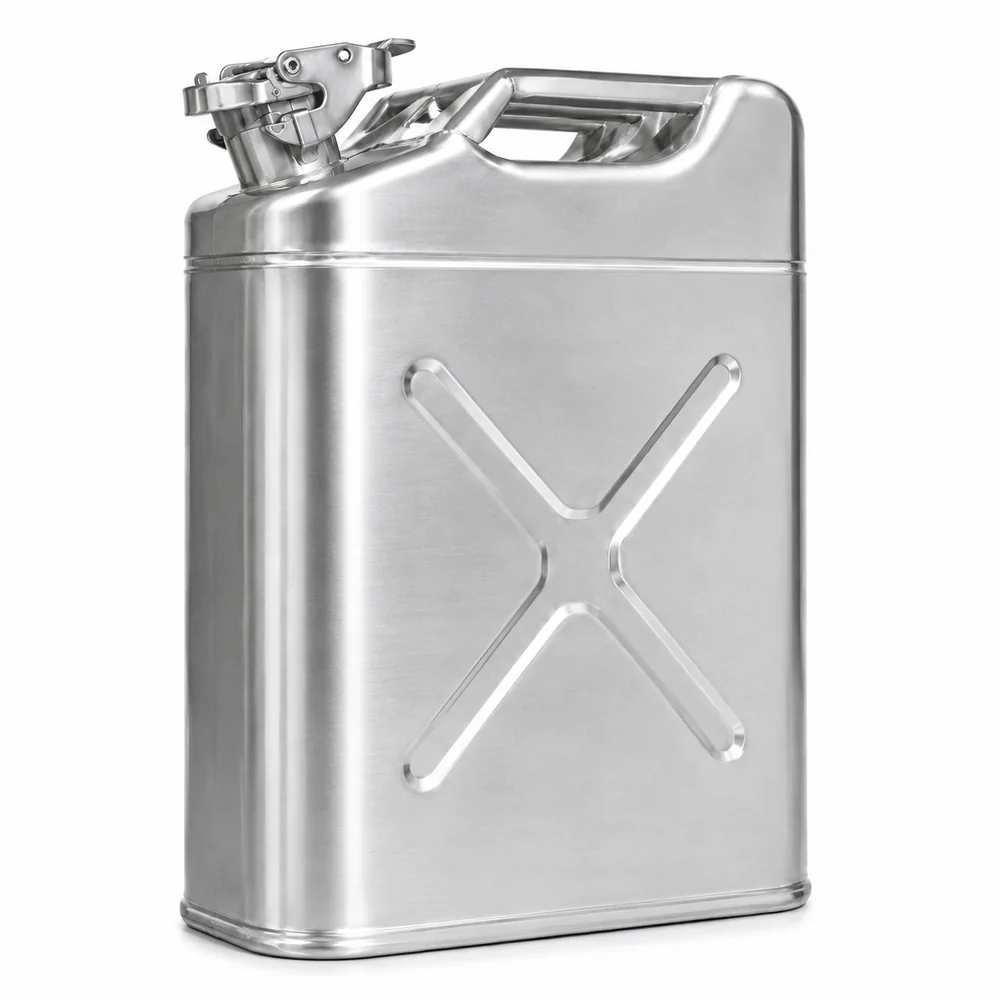 20L Aluminium NATO Can 20L Aluminium NATO Can |
The lightest body, for airlift, overland and motorsport. |
| Fuel, field and general duty | 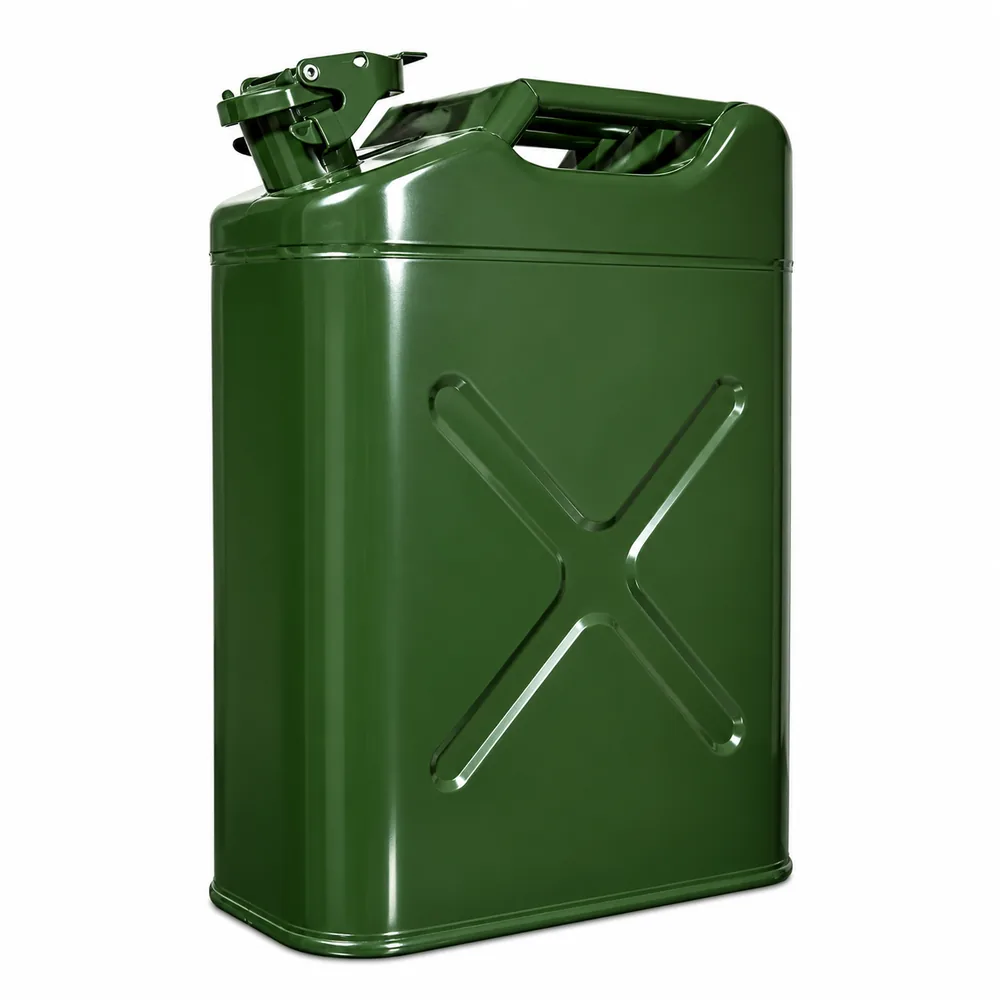 20L NATO Steel Fuel Can 20L NATO Steel Fuel Can |
The NATO steel workhorse: tough, internally coated, UN-marked. |
| Fuel, at a fixed refuelling point | 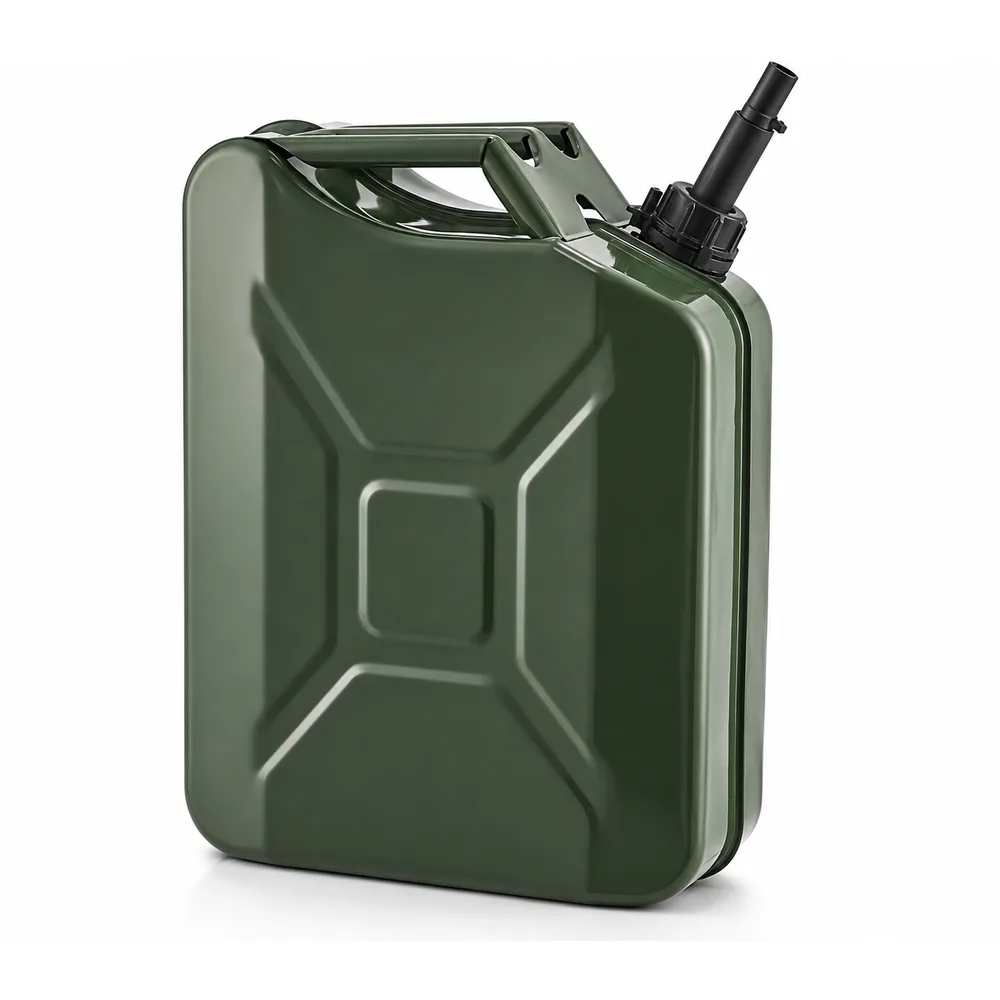 20L Steel Fuel Tank with Spout 20L Steel Fuel Tank with Spout |
Stands and pours through a tap, for the bench or the yard. |
| Fuel, lying flat under a seat or locker | 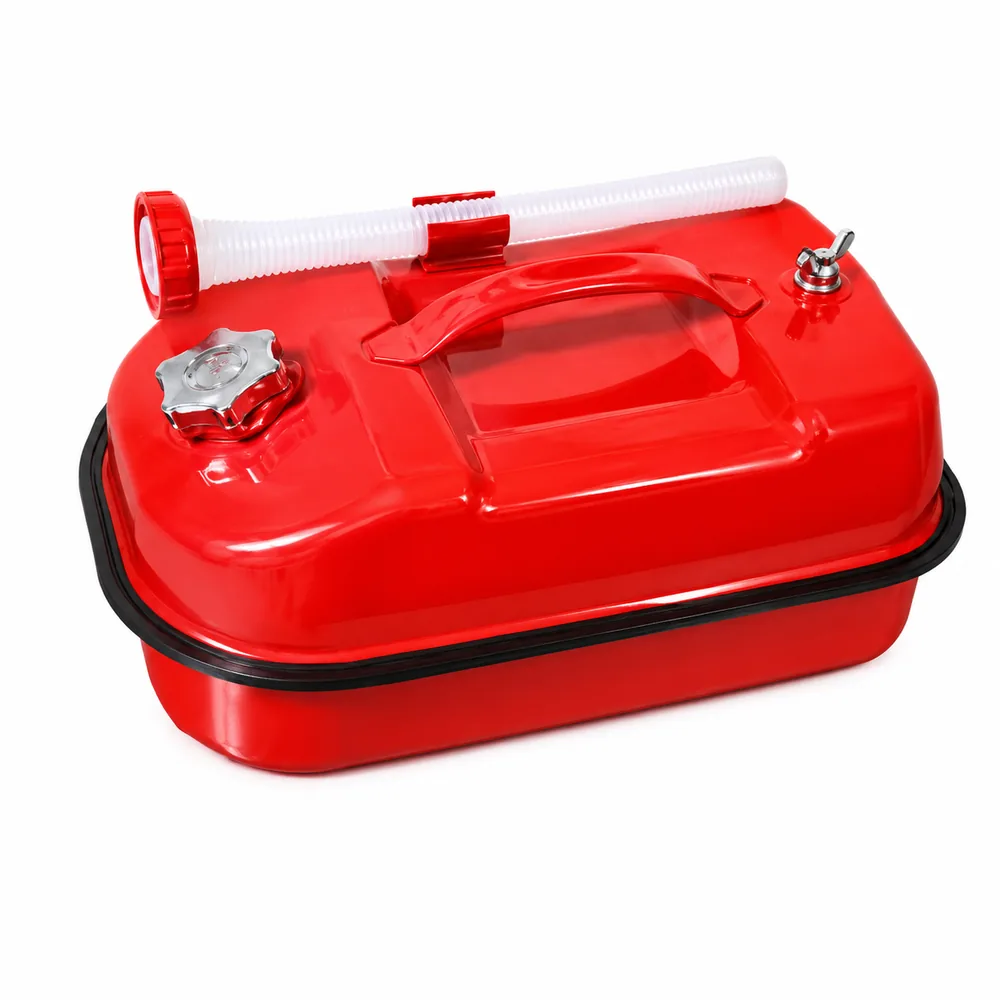 Horizontal Galvanised Can — 5L / 10L / 20L Horizontal Galvanised Can — 5L / 10L / 20L |
Low-profile galvanised, for boats, ATVs and machine frames. |
| Potable water or food-grade liquids | 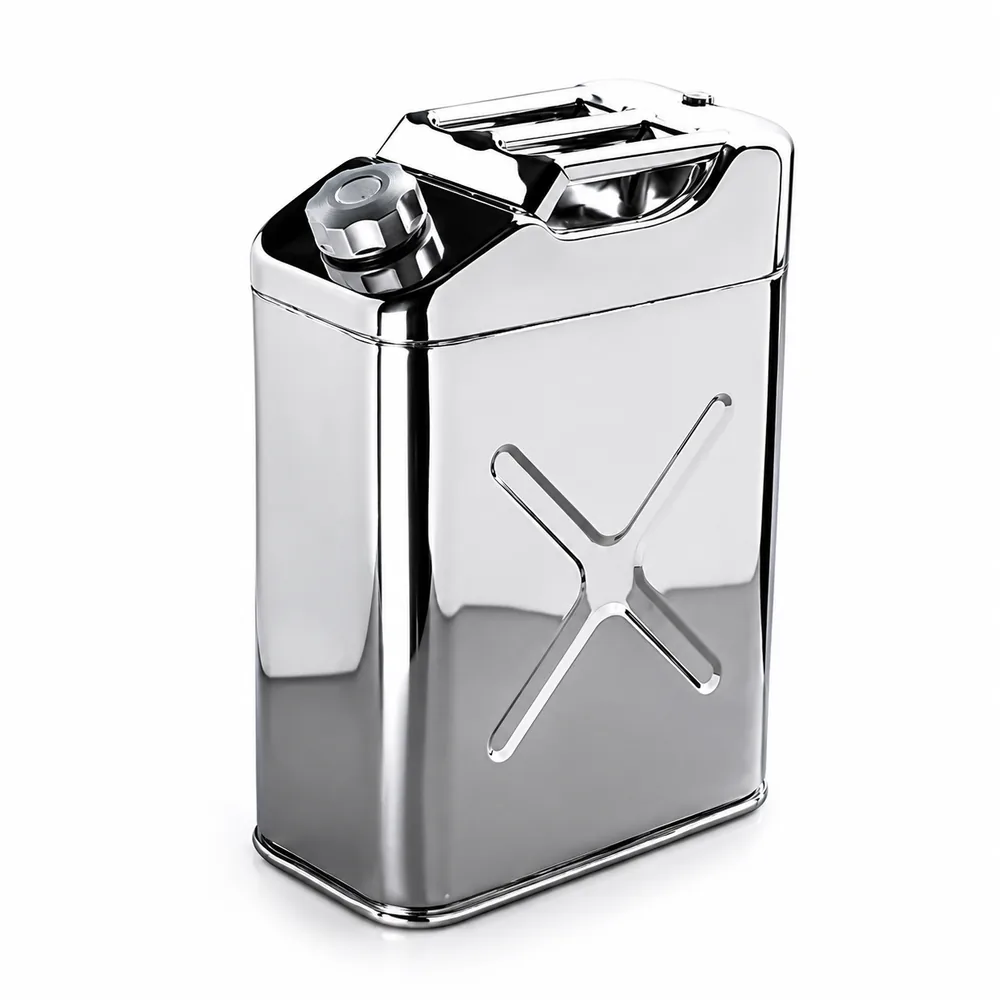 20L Stainless Steel Water Can 20L Stainless Steel Water Can |
AISI 304 stainless across the wetted path, no liner to fail. |
| Oil and workshop fluids | 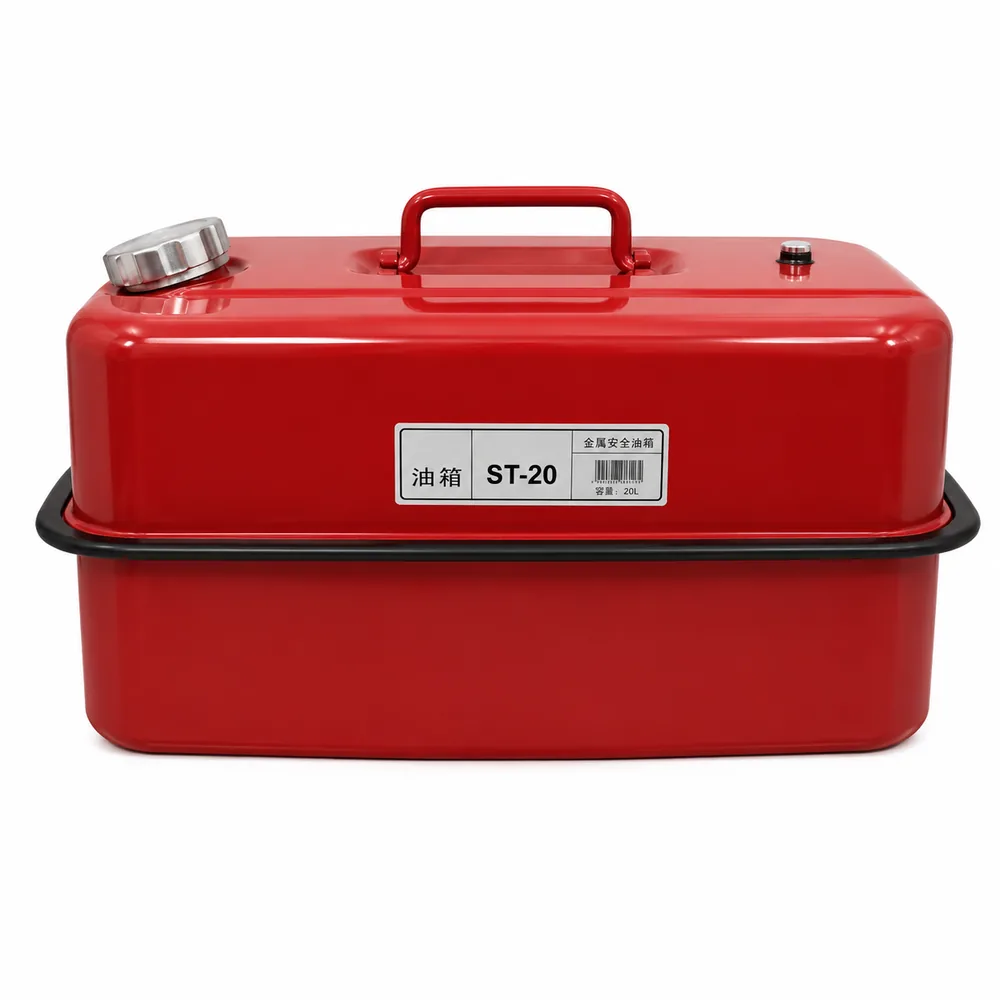 20L Steel Oil Tank 20L Steel Oil Tank |
Upright steel, built to decant lubricants and oils. |
| Industrial chemicals at pallet volume | 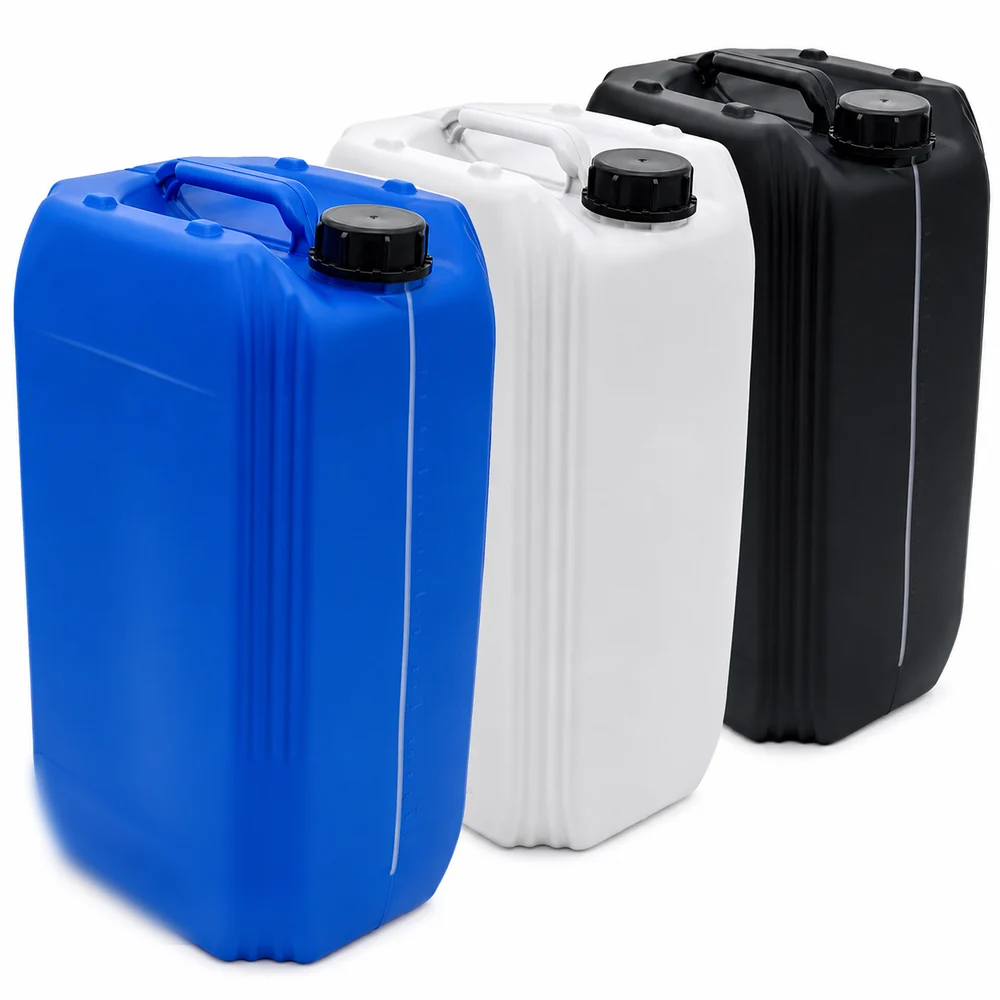 25L Stackable Plastic Jerrycan 25L Stackable Plastic Jerrycan |
Stackable UN-rated HDPE for decanting and distribution. |
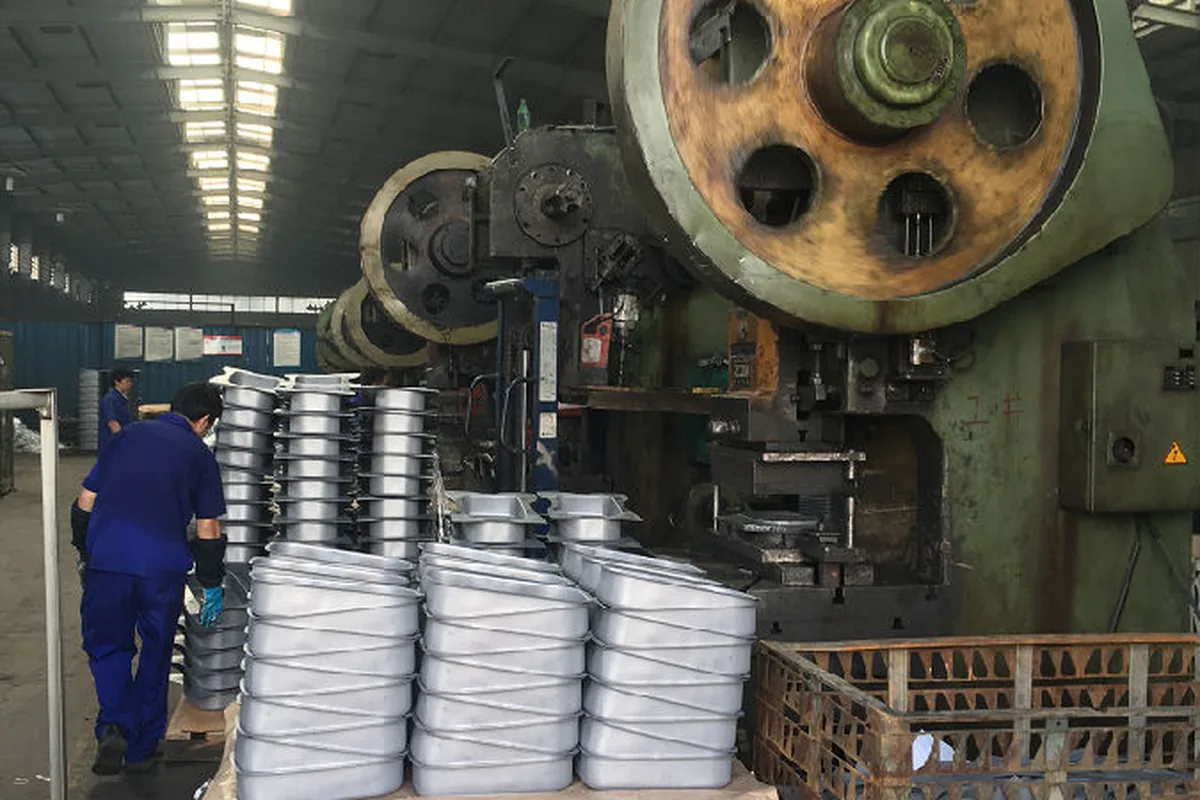
Aluminium sheet costs several times more than cold-rolled steel per kilogram, and deep-drawing it needs slower press cycles and more tool maintenance. The premium buys weight saving and corrosion resistance without a coating, which matters for aviation, marine and expedition use and rarely elsewhere.
Yes for petrol and diesel. Aluminium is not suitable for strong alkalis or for storing certain chemicals that attack the oxide layer. It is also unsuitable for DEF, and for long-term potable water where stainless or food-grade HDPE is the correct choice.
Roughly 40 to 50 percent of the empty can weight against pressed steel in the same 20 litre format. Against a filled weight of about 15 kilograms of petrol or 20 kilograms of water, the saving is real for aircraft and manpack use and marginal for vehicle-mounted duty.
The standards and regulations this page relies on, at their issuing body. Where a market rule is named here, check the current revision before you specify against it.
Last reviewed .
Tell us your market, your fuel and your volumes. We come back with a specification sheet and a quotation.