
What SPCC, SPHC, SECC, SGCC, SS400 and DC01 mean, which sheet suits a pressed, welded and coated can, and how to write the steel into an order.
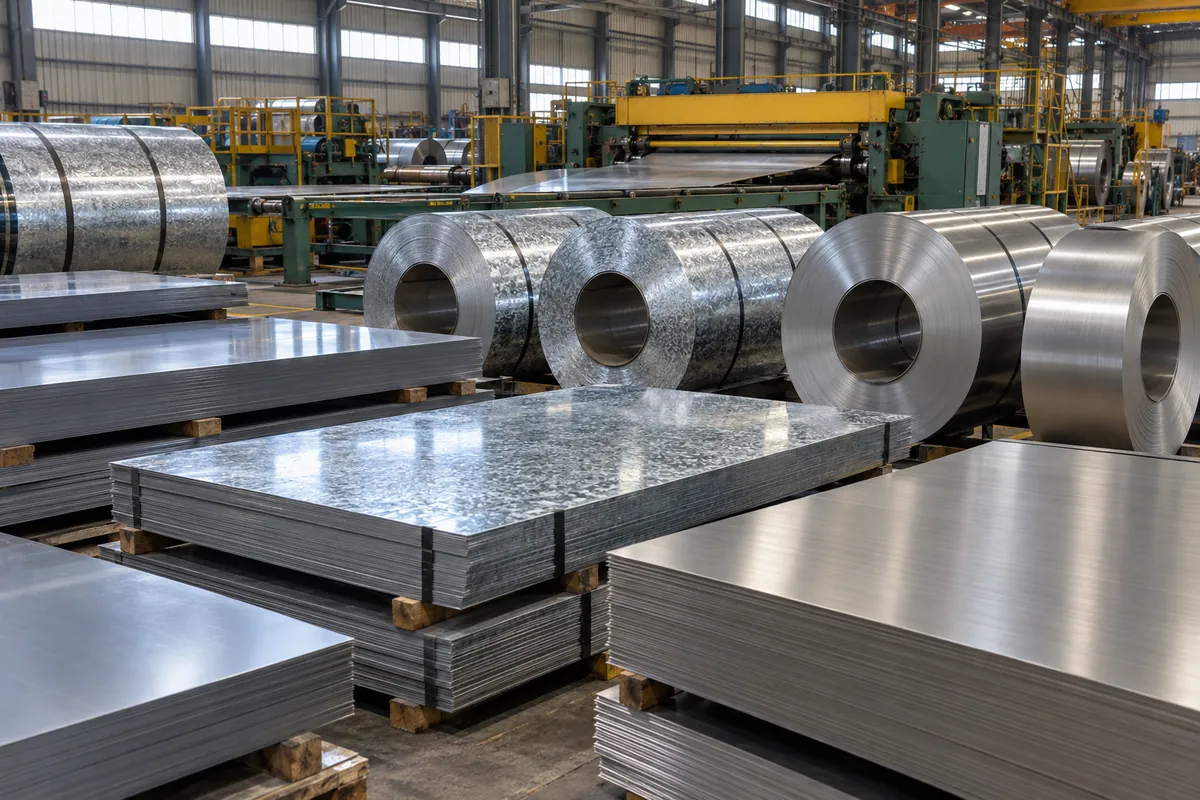
SPCC is cold-rolled carbon steel sheet of commercial quality under the Japanese standard JIS G 3141, with at most 0.15% carbon, and EN 10130 DC01 is its nearest European grade. It suits bending and simple pressing, and it rusts unless it is painted, galvanised or lined. SPHC is hot-rolled from 1.2 mm, SS400 is structural steel, and SECC and SGCC are zinc-coated sheet.
Quick answer: What is SPCC steel?
SPCC is the commercial-quality grade of cold-rolled carbon steel sheet in Japan’s JIS G 3141, capped at 0.15% carbon. Its closest European match is DC01 under EN 10130. It takes bending and simple pressing but rusts unless painted, galvanised or lined. Plain SPCC has no guaranteed strength; specify SPCCT for a tensile strength of at least 270 N/mm².
Work it out
SPCC is the grade symbol for cold-reduced carbon steel sheet and strip of commercial quality in JIS G 3141, current edition 2021. SPC marks cold-reduced sheet, as SPH marks hot-rolled sheet, and the last letter gives the forming quality: C commercial, D drawing and E deep drawing, with F and G for the non-ageing deep and extra-deep drawing grades. ISO 3574 is the international standard for the same class of sheet.
Nippon Steel calls SPCC the cold-rolled grade in greatest demand, made for bending and simple forming, and lists drums, refrigerators and cabinets among its uses. Its extract of JIS G 3141 allows up to 0.15% carbon, 1.00% manganese, 0.100% phosphorus and 0.035% sulphur. Tables on the web often quote different limits from the 1996 edition, so check which edition a mill certificate follows.
The standard sets no tensile or elongation figure for plain SPCC. Order SPCCT, which is SPCC with a tension test, and the mill guarantees at least 270 N/mm² tensile strength and, at 0.6 to 1.0 mm, 36% elongation. Without the T, a buyer has chemistry limits and no mechanical guarantee.
Down the JIS ladder, carbon falls and the guaranteed stretch rises, which is what a deep pressing asks of the sheet.
| JIS G 3141 grade | Carbon, max | Manganese, max | Elongation at 0.6–1.0 mm | Nearest EN 10130 grade |
|---|---|---|---|---|
| SPCC, commercial | 0.15% | 1.00% | None guaranteed; 36% as SPCCT | DC01 |
| SPCD, drawing | 0.10% | 0.50% | 38% | DC03 |
| SPCE, deep drawing | 0.08% | 0.45% | 40% | DC04 |
DC01 vs SPCC: ArcelorMittal lists DC01 as the counterpart of SPCC, DC03 of SPCD and DC04 of SPCE. The European grade carries guarantees that plain SPCC lacks. EN 10130 sets DC01 at 140 to 280 MPa yield, 270 to 410 MPa tensile and at least 28% elongation from 0.7 to 3 mm, or 26% from 0.5 to 0.7 mm. It caps carbon at 0.12% and manganese at 0.60%. EN measures elongation over an 80 mm gauge length and JIS on its own test piece, so the percentages in the two standards do not line up.
Ageing matters on a pressed part. Nippon Steel warns that stretcher strains, lines on a formed surface, can appear as soon as a week after temper rolling, and roller-levels sheet before forming where they are likely; SPCF and SPCG carry a six-month non-ageing guarantee. A NATO-pattern can has a recessed top and a pressed cross on each face (the NATO pattern explained), so the press shop picks the quality its tooling needs, and that grade belongs on the specification.
SPHC is hot-rolled mild steel sheet of commercial quality under JIS G 3131:2018, the hot-rolled counterpart of SPCC. Nippon Steel’s extract caps it at 0.12% carbon, 0.60% manganese, 0.045% phosphorus and 0.035% sulphur, with at least 270 N/mm² tensile strength and 27 to 31% elongation by thickness. Nippon Steel makes hot-rolled sheet from 1.2 to 25.4 mm. Cold-reduced sheet is rolled again from hot-rolled coil, thinner and smoother.
The ISO standards state the trade-off. ISO 3573 says hot-rolled sheet suits uses where oxide, scale or the surface imperfections under them are not objectionable, and does not suit uses where the surface is of prime importance. ISO 3574 describes cold-reduced sheet as suitable for those surface-critical uses. Pickling in hydrochloric acid strips the scale from hot-rolled coil, which is then oiled against rust (Nippon Steel).
The dangerous-goods rules accept both for drums. The note to ADR and RID 2025, 6.1.4.1.1, names ISO 3573 hot-rolled and ISO 3574 cold-reduced sheet as suitable steels for carbon steel drums, and adds tinplate (ISO 11949) and related sheet for drums under 100 litres. For steel jerricans, 6.1.4.4.1 asks for steel of a suitable type and adequate thickness and names no standard. Every wall on our jerry can range, 0.5 to 0.9 mm, is thinner than Nippon Steel’s hot-rolled sheet, and our can bodies are pressed from cold-rolled sheet.
SS400 is a structural steel, bought by strength. JIS G 3101, rolled steels for general structure, sets it at 400 to 510 N/mm² tensile strength and at least 245 N/mm² yield up to 16 mm, and Nippon Steel’s extract limits only phosphorus and sulphur, at 0.050% each. Up to 5 mm thick it must stretch 21% before it breaks, where SPCCT must reach 38% at 1.6 to 2.5 mm on the same JIS test piece. SPCC is the sheet for pressing; SS400 is the steel for frames.
Q235 is a Chinese carbon structural steel, a grade of GB/T 700-2006. In its European Technical Assessment ETA-15/0395, DIBt compares Q235B with S235JR under EN 10025-2 and records 235 MPa minimum yield up to 16 mm and 370 to 500 MPa tensile, for welded, bolted or riveted structures. Nippon Steel’s hot-rolled sheet, SS400 included, starts at 1.2 mm, thicker than any wall we press into a can.
SECC is cold-rolled sheet with an electrolytic zinc coat under JIS G 3313:2021, made from 0.4 to 3.2 mm. Its coating classes E8 to E32 carry a reference 10 to 40 g/m² of zinc on each face, with minimums from 8.5 to 34.0 g/m², and Nippon Steel sells it for appliances, office machines, steel furniture and cars. SGCC is hot-dip galvanised sheet on a cold-rolled base under JIS G 3302:2022, from 0.25 to 3.2 mm, in designations from Z06, 60 g/m² over both faces, to Z60 at 600 g/m².
EN 10346 is the European standard for hot-dip coated sheet, with forming grades from DX51D to DX58D. Its Z designations also count both faces: Z275 is 275 g/m², a typical 20 µm on each face in thyssenkrupp’s table, where SECC class E16 carries about 3 µm. In thyssenkrupp’s ratings, Z100 sheet at 7 µm a side suits corrosivity category C2 and Z275 category C3 at most. Corrosion protection and galvanizing works out zinc life by site.
Zinc changes how the sheet welds and what it may hold. Resistance welding galvanised sheet takes more current and electrode force, a fusion weld burns the zinc off the seam, and the fume carries zinc oxide, so thyssenkrupp calls extraction essential. Where the zinc is scratched through, the coating around the scratch dissolves and forms a protective film over the bare steel (Nippon Steel). Zinc can leach into what a can holds, and the US FDA Food Code keeps galvanised metal off food-contact surfaces used with acidic food, so galvanised cans carry fuel and oil and not drinking water.
Yes. SPCC carries no zinc and no chromium, and the mill protects it with a light film of oil. Nippon Steel warns that unpacked sheet may rust if left exposed, that humidity over 70% speeds rusting and that sea-salt particles cause rust even at 60% or less. It advises storing sheet below 60% humidity, and notes that most cold-rolled sheet is painted in use, for appearance and against rust.
A can pressed from SPCC needs protection on both faces. Outside, that means paint, powder or zinc. Inside, ADR 6.1.4.4.4 requires a protective coating wherever the steel does not suit the contents, one that keeps its protective properties in normal carriage. Our 20 L NATO steel fuel can is 0.6 mm cold-rolled steel, lined for hydrocarbons and powder coated olive drab. Check the contents against the chemical compatibility guide before you fix the lining.
A galvanised or painted can is carbon steel under a coating; a stainless can is an alloy steel that needs none. Galvanised steel vs mild or normal steel is the same sheet with and without its zinc. The contents decide between them.
| Can body | Protection | Carries | Our wall |
|---|---|---|---|
| Painted cold-rolled steel | Powder coat outside, lining inside | Petrol, diesel, kerosene, JP-8; water with a potable-water interior | 0.5–0.6 mm, 0.9 mm to order |
| Galvanised steel | Zinc on both faces; lined build for JP-8 | Petrol, diesel, kerosene, oils | 0.6–0.8 mm |
| Stainless steel, AISI 304 | Its own chromium oxide film | Drinking water, food-grade liquids | 0.7–0.8 mm |
| Tinplate | Tin, often with lacquer inside | Paint, oils, adhesives, solvents | 0.20–0.38 mm |
Stainless costs more and needs no lining, so it goes where a coating must not touch the contents: drinking water and food. AISI 304 holds in fresh water, and chlorides from salt air or cleaners can pit it, which is the case for 316 (stainless 304 vs 316). Galvanised steel protects a scratch that would start rust under paint, and it suits fuel and oil. Tinplate is packaging steel (tinplate and F-style cans). For plastic and aluminium bodies, read steel vs HDPE and aluminium vs steel.
The sheet for a jerry can body has to press without splitting at the radii, weld along its seams and hold a coating for the life of the can. Pressing points to cold-rolled sheet of commercial or drawing quality, under 1 mm thick. For the seams, ADR and RID 2025, 6.1.4.4.2, require steel jerrican chimes to be seamed or welded and body seams above 40 litres to be welded, and Nippon Steel lists gas, submerged-arc and resistance welding for its cold-rolled sheet.
For the coating, a dull finish holds press lubricant evenly and gives paint better adhesion (Nippon Steel), and pre-galvanised sheet brings its zinc to the press. Hot-rolled and structural sheet starts above can gauge at Nippon Steel, which leaves cold-rolled sheet painted after forming, pre-galvanised sheet and stainless steel.
ADR and RID 2025 set no thickness for a steel jerrican. Paragraph 6.1.4.4.1 asks for steel of adequate thickness for the capacity and intended use, and the drop, stacking and pressure tests on the design type prove it. Under 6.1.5.1.2 a design type is defined by design, size, material and thickness, manner of construction and packing, so a thinner wall or a different steel is a different design from the one the certificate covers.
Steel drums over 100 litres carry their nominal metal thickness embossed on the bottom, such as “1.0-1.2-1.0” for top head, body and bottom head (6.1.3.2). Jerricans carry no such mark, so the figure comes from the supplier, in millimetres, for the exact product (jerry can buyer checklist).
| Container | Sheet | Wall |
|---|---|---|
| NATO steel cans, 10 and 20 L | Cold-rolled steel | 0.5 or 0.6 mm; 0.9 mm to order |
| Horizontal galvanised can, 5–20 L | Galvanised sheet | 0.6 mm; 0.7–0.8 mm in the heavier build |
| Upright fuel tank, oil tank, 25 and 30 L NATO cans | Galvanised sheet, or stainless on the NATO cans | 0.8 mm |
| Stainless water cans, 5–20 L | AISI 304 stainless | 0.7–0.8 mm |
| Tins, pails and buckets | Tinplate | 0.20–0.38 mm |
| 205 L steel drum, for comparison | Carbon steel | Body 0.8–0.9 mm, heads 1–1.2 mm (drum guide) |
Ask whether a quoted gauge counts the zinc. EN 10346:2015 defined thickness as that of the coated product, while Nippon Steel applies JIS G 3302 tolerances to the nominal thickness plus a coating allowance of 0.054 mm for Z27, which is 9% of a 0.6 mm wall. Gauge also sets weight: our 20 L NATO fuel can weighs about 3.1 kg empty at 0.6 mm, and the 0.9 mm build puts 50% more steel in every wall.
A quotation that says “steel” or “galvanised” fixes nothing you can test. Four lines do. Name the grade and its standard, such as SPCD to JIS G 3141 or DC03 to EN 10130. Give the thickness in millimetres and say whether it counts the coating. Name the coating by designation, such as Z275 or E16, with the paint system and the lining. Then ask for the mill’s inspection certificate to EN 10204, type 3.1, for the coil the cans came from.
For dangerous goods, the steel sits inside a larger approval. A UN 3A1 can is certified per design type and made under quality assurance the competent authority accepts, so the grade and gauge on your specification should match the design on the certificate. Read the mark with the UN packaging code decoder and the code in UN 3A1 explained. Steel containers imported into the EU also fall under CBAM.
We press steel jerry cans in Vietnam and China to one specification managed from Singapore. All three bodies come from us: cold-rolled steel with an interior specified for the contents and a powder coat outside, in a RAL colour for private label; galvanised sheet; and AISI 304 stainless for water. Walls run from 0.5 to 0.9 mm on the steel cans and 0.20 to 0.38 mm on our tinplate tins and pails.
Our factories hold ISO 9001, 14001 and 45001, and we hold UN certification for our dangerous-goods jerrican designs, certified per design type and made under quality assurance the competent authority accepts. Ask at enquiry for the steel grade, the coating designation and the lining system for the design you order, and tell us the contents and where the cans will live. We supply finished containers, not sheet or coil.
| Your use case | Recommended can | Why this one |
|---|---|---|
| Fuel, cold-rolled steel body | 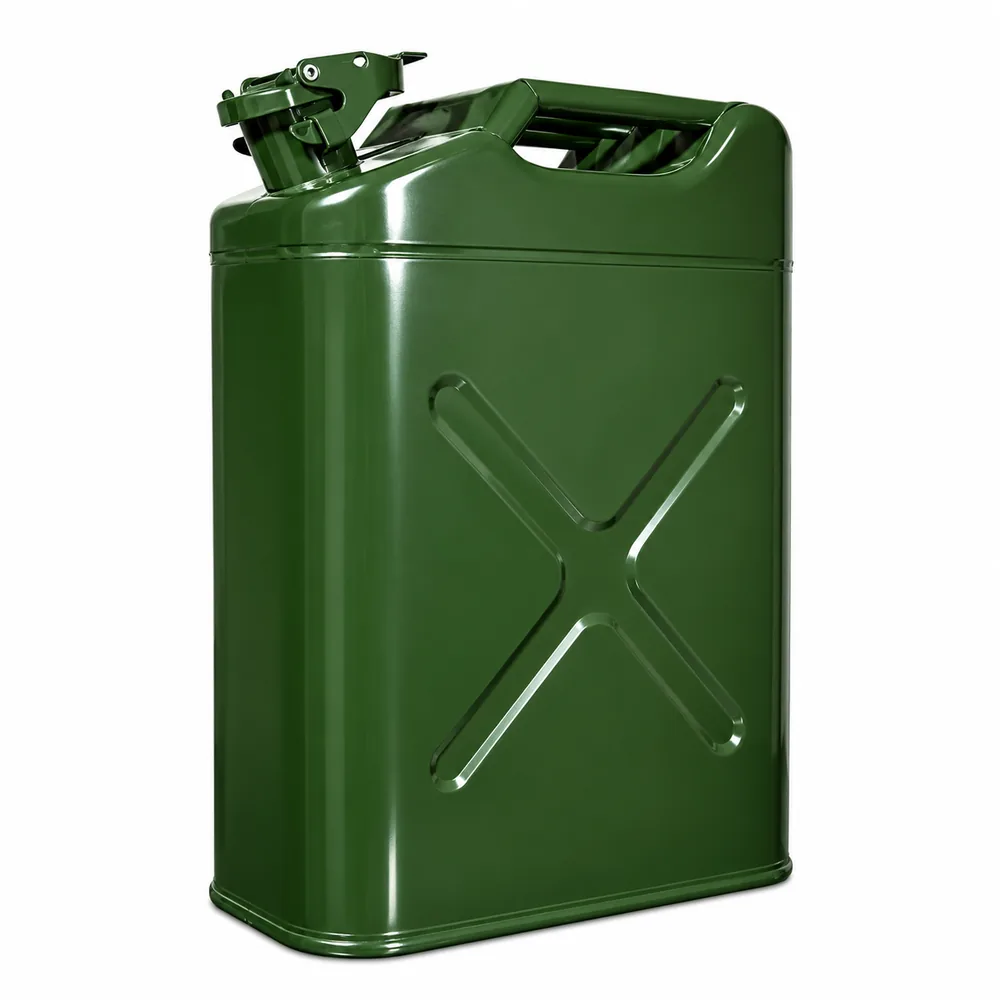 20L NATO Steel Fuel Can |
Pressed from 0.6 mm cold-rolled steel, 0.9 mm to order, lined for hydrocarbons and powder coated. |
| Fuel, galvanised body | 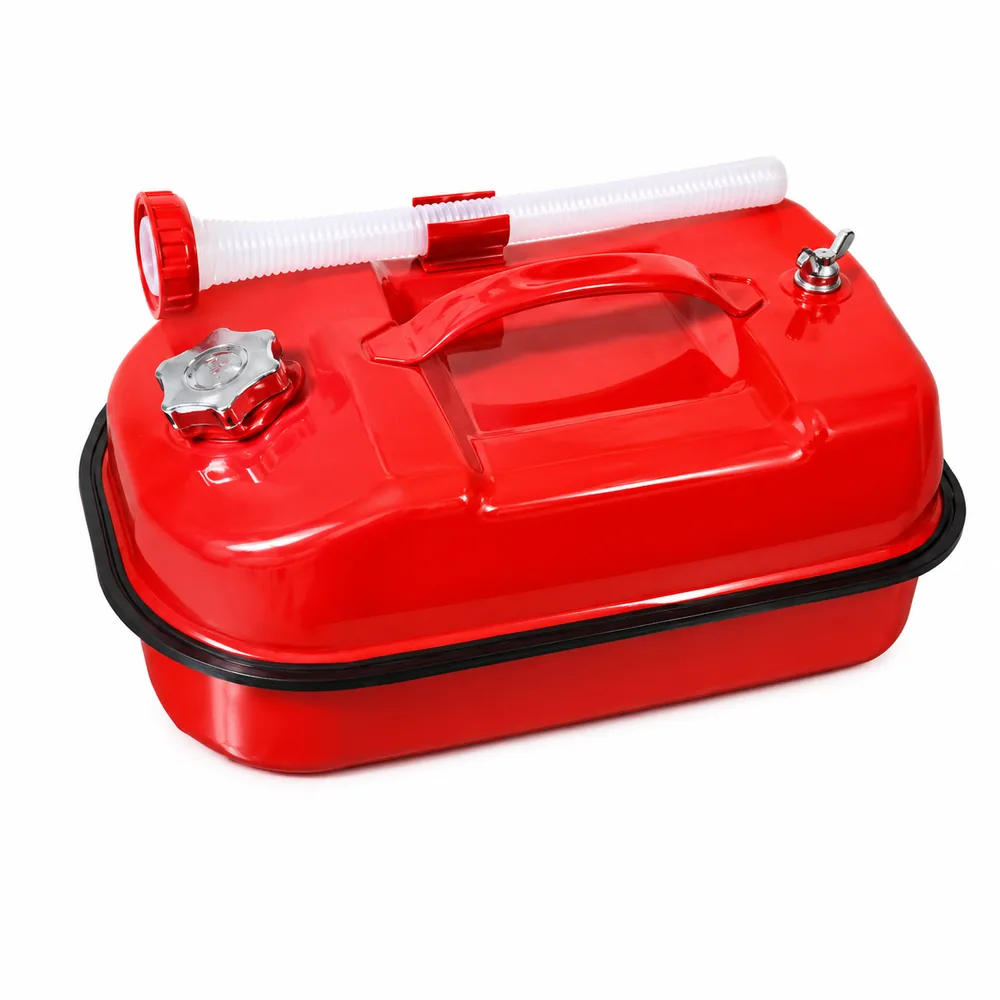 Horizontal Galvanised Can — 5L / 10L / 20L |
Galvanised sheet at 0.6 mm, 0.7 or 0.8 mm in the heavier build, bare inside or lined for JP-8. |
| Larger NATO cans | 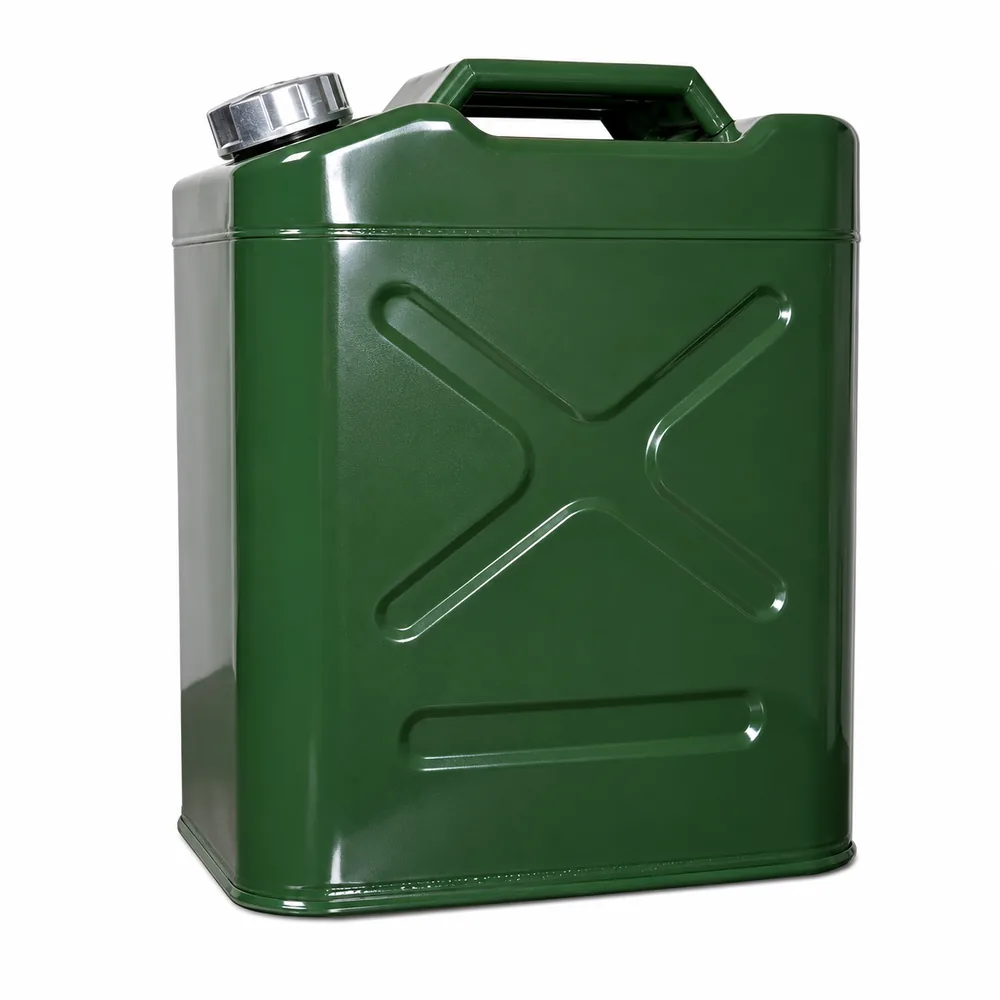 25L & 30L NATO Can |
The 25 and 30 litre pattern in 0.8 mm galvanised sheet or 0.8 mm stainless. |
| Drinking water | 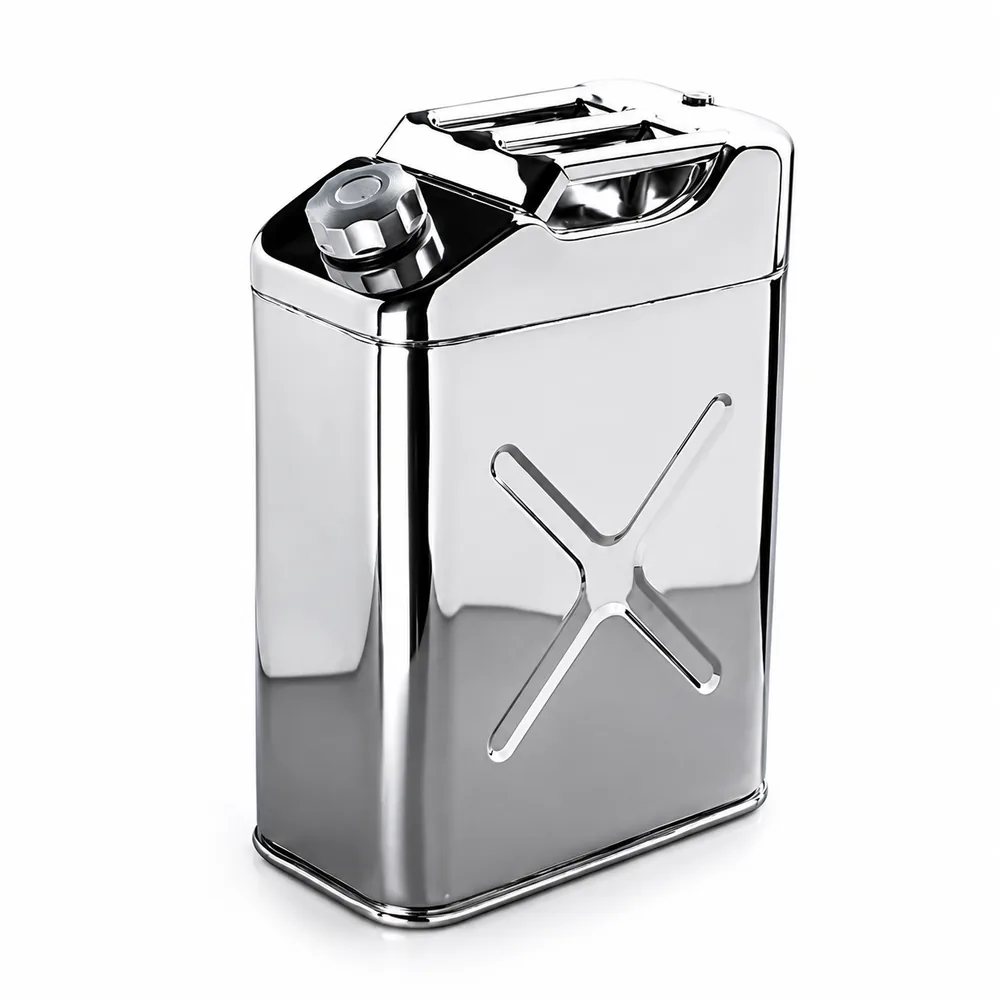 20L Stainless Steel Water Can |
AISI 304 stainless at 0.8 mm, with no zinc and no lining in the wetted path. |
| Tinplate pails | 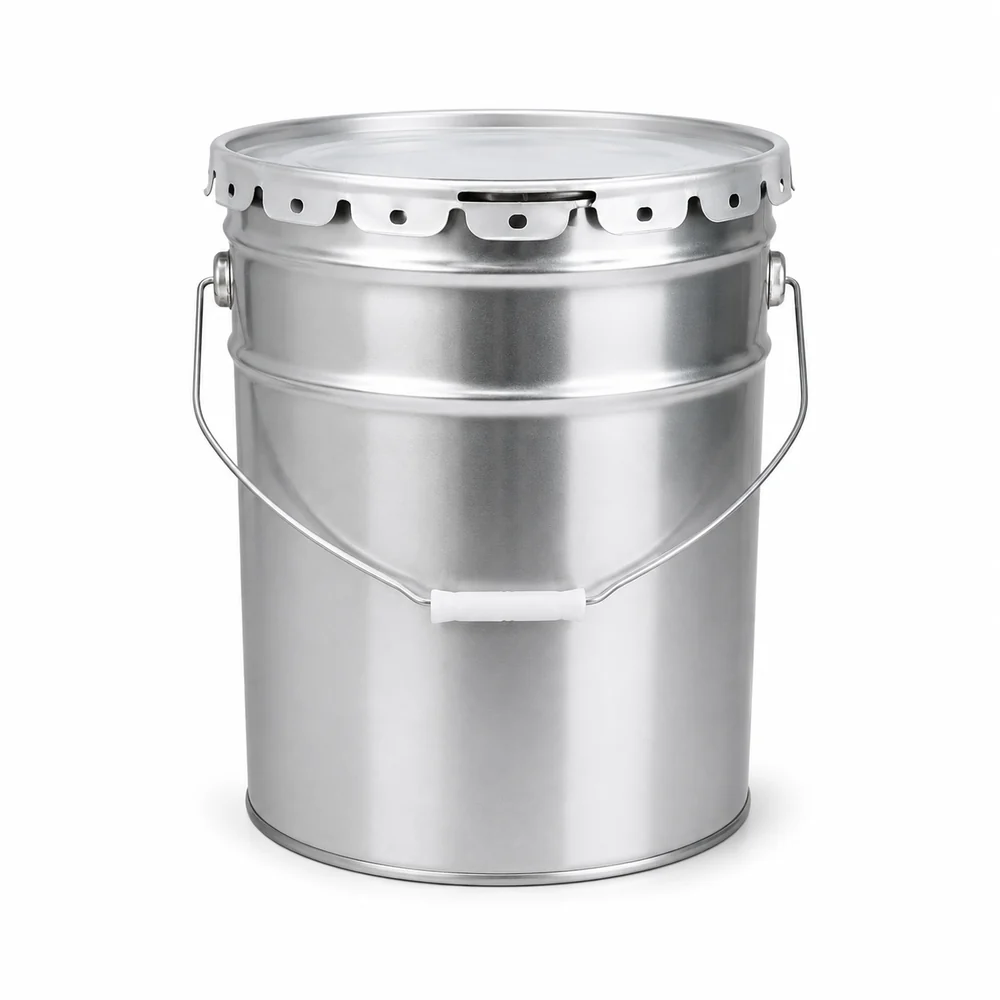 Metal Pail with Flower Lid or Lever Ring, 4L to 35L |
Tinplate steel from 0.25 to 0.38 mm, 4 to 35 litres, with a flower lid or lever ring. |
| Small tins | 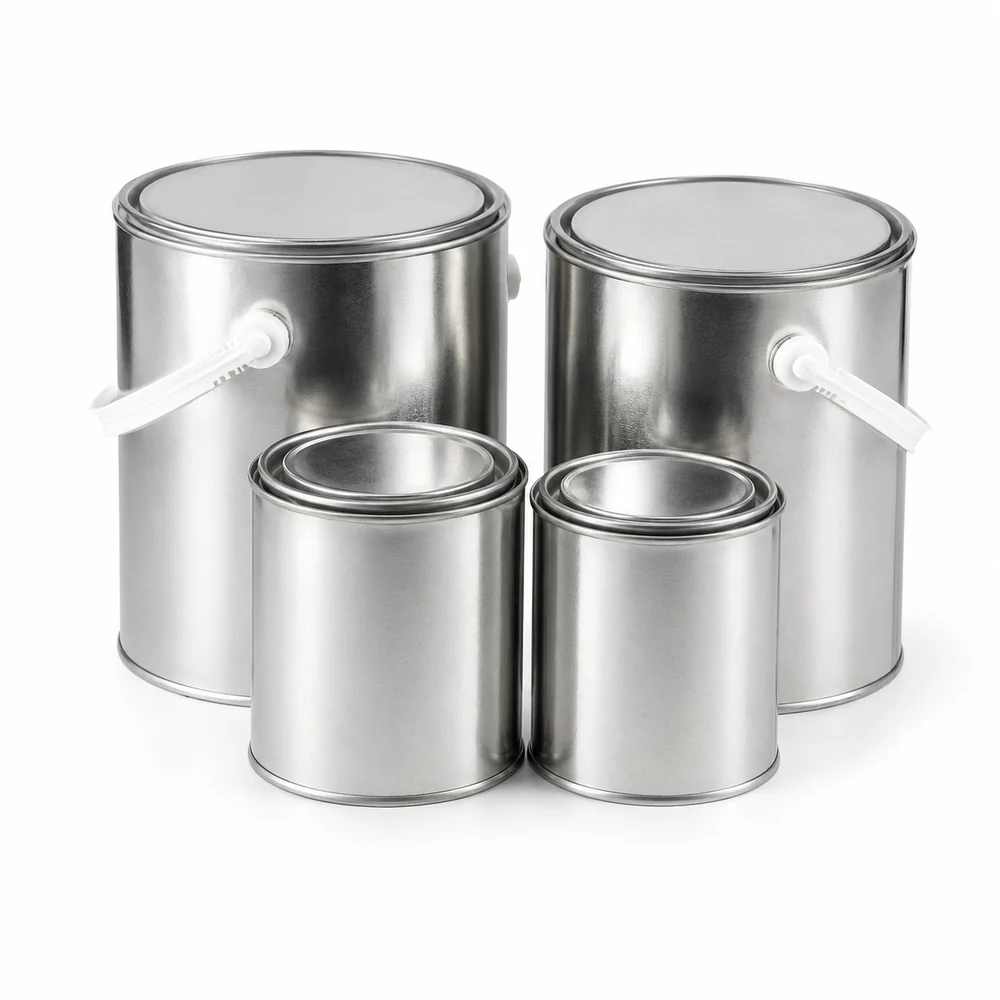 Round Metal Tin Can, 50ml to 6L |
Tinplate from 0.20 to 0.25 mm, 50 ml to 6 litres, with gold or clear lacquer inside. |
In US environmental rules, SPCC is the EPA's Spill Prevention, Control, and Countermeasure rule for oil, 40 CFR part 112, and has nothing to do with steel. It applies where a facility stores more than 1,320 US gallons of oil above ground, counting only containers of 55 gallons or more (112.1(d)(2)(ii)). Our SPCC secondary containment page sizes the containment the rule asks for under drums and IBCs.
All three are US environmental plans, for different risks. An SPCC plan prevents and contains oil discharges under 40 CFR part 112. A Facility Response Plan, under 40 CFR 112.20, prepares for a worst-case oil discharge at larger stores, such as 42,000 US gallons or more where oil is transferred over water to or from vessels. A SWPPP, a stormwater pollution prevention plan, comes with Clean Water Act permits, such as EPA's for construction sites disturbing 1 acre or more.
Yes on both counts. SPCC is a grade of cold-reduced carbon steel sheet under JIS G 3141, with at most 0.15% carbon, 1.00% manganese, 0.100% phosphorus and 0.035% sulphur in Nippon Steel's extract of the standard. It carries no alloying against corrosion and no coating beyond a light oil film, so it rusts wherever water and air reach the bare steel.
Yes, in the everyday sense of low-carbon steel. Japanese standards use the term on the hot-rolled side: JIS G 3131, the SPHC standard, is titled hot-rolled mild steel plates, sheet and strip. Galvanised steel is the same low-carbon steel with zinc on it, so galvanised steel vs mild steel, or vs normal steel, compares one sheet with and without its coating. The steel carries the load and the zinc protects it.
SPCC-SD is SPCC in standard temper (S) with a dull finish (D). JIS G 3141 also offers 1/8, 1/4, 1/2 and full hard tempers, marked 8, 4, 2 and 1, and a bright finish, marked B. Nippon Steel says the dull finish holds press lubricant evenly and gives better paint adhesion, while the bright, mirror-like finish suits decorative plating. For a can body that will be painted, the dull finish is the one to name.
Yes. Nippon Steel lists gas, submerged-arc and resistance welding for its cold-rolled sheet. It runs seam welding at 1.5 to 2 times the current and 1.2 to 1.6 times the pressure of a spot weld, on surfaces free of oxide, paint and dust. Galvanised sheet needs more current and electrode force, loses its zinc at a fusion weld and gives off zinc oxide fume, so thyssenkrupp calls extraction essential.
Yes, for sheet bought today. Sheet sold as galvanised iron, or GI, is zinc-coated steel. The standards it is made to all specify a steel base, among them JIS G 3302 hot-dip zinc-coated steel sheet, EN 10346 continuously hot-dip coated steel and ASTM A653 zinc-coated steel sheet. Ask for the standard and the coating designation, such as Z275, because the name alone fixes neither.
Each protects a different way, and together they last longest. Zinc corrodes in place of the steel, so a scratch through it stays clean while zinc remains around it. Powder is a barrier that works until it chips, then rust starts at the chip and creeps under the film. Powder over zinc gives both. Our NATO fuel cans are powder-coated cold-rolled steel, and the horizontal galvanised can takes a RAL powder coat for private label.
Tinplate is steel and aluminium is a separate metal. Tinplate is thin low-carbon steel sheet with a tin coat, so a magnet picks it up and it is recycled with steel scrap; our tins and pails use 0.20 to 0.38 mm. Aluminium is non-magnetic, lighter for the same size and less stiff. Tinplate vs steel is a question of coating, since tinplate is steel sheet with tin on both faces.
No. We make finished containers in Vietnam and China: steel and stainless jerry cans, tinplate tins and pails, and spill containment. When you buy sheet elsewhere, name the grade and standard, the thickness and whether it counts the coating, the coating designation, and the EN 10204 inspection certificate you need. When you buy cans from us, give the contents and the market, and we match the sheet and coatings to them.
The standards and regulations this page relies on, at their issuing body. Where a market rule is named here, check the current revision before you specify against it.
Last reviewed by David Guru, Co-Founder & Business Development Director.
Tell us your market, what the containers will hold and your volumes. We come back with a specification sheet and a quotation.