
Three gates and a ten-check scorecard that separate a good steel or plastic jerry can from a poor one.
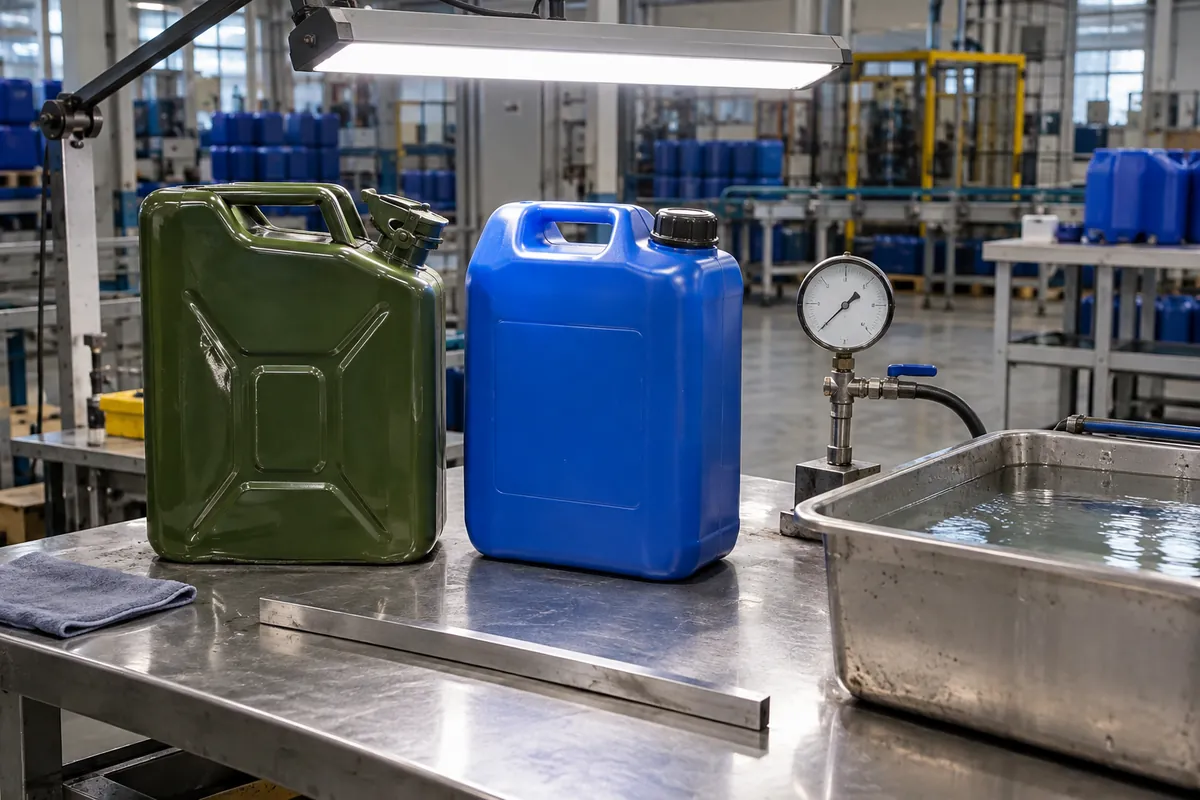
The best jerry can passes three gates: the right material for the liquid, a can lawful in your market and a UN mark with papers behind it. It then scores 90% or more on ten written checks: steel gauge, welds, lining, gasket, closure and, for plastic, fluorination, UV protection and age. Use the scorecard below to rank any shortlist.
Quick answer: What is the best jerry can?
No single can wins: the liquid picks the material and the market picks the rules. A good can clears three gates (a material that suits the liquid, legality in your market and a UN mark backed by its certificate), then scores 90% or more on our ten written checks, from steel gauge and lining to gasket and closure.
No single can wins. UN approval, EPA and CARB certification and AS/NZS 2906 set pass-or-fail requirements, so none ranks one maker above another, and a can that suits petrol does not suit drinking water. The liquid picks the material, the market picks the rules, and the checks below show whether one particular can earns its place (see how to choose a jerry can).
| Liquid | Cans that pass | Check first |
|---|---|---|
| Petrol (gas) | Coated steel, stainless steel or aluminium; fluorinated or barrier HDPE | Your market’s size and marking rule |
| Diesel and kerosene | Coated or stainless steel; fuel-grade HDPE | The UN letter on the mark |
| Drinking water | AISI 304 stainless; steel with a potable-water interior; food-grade HDPE | The food-contact declaration. Never a can that held fuel |
Run three gates first. A can that fails one does not get scored.
Score each check that applies: 2 points for a written answer with a number or document reference, 1 for a verbal or general answer, 0 for none or a wrong one. Divide by the most the can could earn. Order at 90% or more. From 70% to 89%, get the missing papers and a sample first. Under 70%, walk away. These bands are our rule of thumb. No standard sets them.
| Check | Full marks | Zero marks |
|---|---|---|
| 1. Certificate and test report | Current certificate and report for this design; any plant named is the one shipping your order. US: the maker’s report and latest retest | Photo of a stamped can; plant name blacked out |
| 2. Gauge (steel) | Thickness in mm for the exact product | “Heavy duty”, no figure |
| 3. Seams and welds (steel) | Seam type stated; strip-welded handles | Spot-welded handles, or no answer |
| 4. Inside lining (coated steel) | Lining system named for your fuel, with film thickness | “Coated” and nothing more |
| 5. Outside finish (steel) | Galvanising process and coating weight, powder-coat spec or stainless grade | “Galvanised”, no process |
| 6. Gasket | Compound named and matched to the liquid | “Rubber”, or a water gasket in a fuel can |
| 7. Closure, neck, spout | Neck standard named (DIN 45, 51 or 61), venting stated, spout certified with the can | Cap and spout picked on size alone |
| 8. Barrier (plastic, fuel) | Fluorination level or barrier wall named, with a permeation rate | “Fluorinated”, no level |
| 9. UV, date, weight (plastic) | UV protection stated; month and year on the can; unit weight held | No date, no UV answer, drifting weight |
| 10. Sample | Sample matches the paperwork and passes a fill-and-invert check | Sample differs from the specification |
Steel checks cover coated and stainless cans. Maximum: coated steel 16 points (checks 1 to 7 and 10), stainless 14 (no lining), plastic fuel can 12 (checks 1 and 6 to 10). Compare percentages.
A UN mark reads in a fixed order (ADR 2025, 6.1.3.1): the UN symbol; the packaging code; a letter with the relative density; the test pressure in kPa; the last two digits of the year; the State; and the maker’s identification. The mark sits on a non-removable component, not on the cap alone, and stands at least 6 mm high on a can of 30 litres or less.
Match the letter to your liquid. X covers packing groups I, II and III, Y covers II and III, and Z covers III only. Petrol is group II (UN 1203), so the can needs X or Y. Diesel (UN 1202) and kerosene (UN 1223) are group III, so any letter serves. A mark with no relative density covers liquids up to 1.2, which includes petrol and diesel.
The mark shows that a can matches a tested design type. It does not show that its wall suits your liquid (ADR 6.1.3.1, Note 1). The certificate and test report do that, and ADR 6.1.5.8 requires the report to be available to users (UN certificates and test reports). Match the maker’s code in the mark to the certificate, and read any mark part by part with the UN packaging code decoder.
ADR sets no steel gauge for a jerrican. Paragraph 6.1.4.4.1 asks for steel of “adequate thickness” for the capacity and use and gives no figure. The number has to come from the supplier, in millimetres, for the exact product. Our 20 L NATO steel fuel can is 0.6 mm cold-rolled steel as standard with a 0.9 mm build to order, and our stainless NATO can is 0.8 mm. State the gauge you need before you compare quotes.
ADR 6.1.4.4.2 allows mechanically seamed or welded body seams on a steel jerrican of 40 litres or less, so ask which the design uses. Handle welds, the perimeter seam and the breather are in genuine vs fake NATO jerry cans.
ADR 6.1.4.4.4 requires an internal protective coating where the steel does not suit the contents, and requires it to hold up in carriage. A named system with a film thickness answers that; “coated” does not. Outside, ask which galvanising process and what coating weight (corrosion protection and galvanizing).
A sound steel can leaks at the closure or, once the lining fails, through rust. The US item description for a 20-litre military fuel can names the compound: a fluoroelastomer with a durometer hardness of 60 ± 5 and a maximum swell of 10% (A-A-59592A, 3.2.12.1). Jerry can closures and caps compares nitrile, EPDM and FKM.
For a replacement spout or cap, match the neck standard first. In the US the spouts, caps and gaskets provided with a consumer container count as part of it (40 CFR 59.611(b)), and a vent the operator can open must close by itself (59.611(c)(1)(ii)). In Great Britain the container must prevent the escape of liquid or vapour, let petrol be poured safely and stand steady (Schedule 3, paragraph 1(d)). Ask the maker which spout and vent are certified with the can; venting and pressure explains the trade-off.
A tap, pump or transfer fitting replaces the closure, so the same neck and gasket checks apply (pouring and transfer). For a holder, measure the can: our 20 L steel fuel can is 34 × 16 × 46 cm and our 20 L stainless NATO can 35.2 × 18 × 47.5 cm (see mounting and handling). Test a sample as the US military does: fill it with water, close it, invert it for 30 minutes and look for rupture, cracks or moisture outside (A-A-59592A, 3.2.9).
Plastic cans carry three limits that steel does not. Age comes first: ADR 4.1.1.15 allows five years from manufacture for carrying dangerous goods in a plastic jerrican, and the month and year sit on the can. Light comes second: where a plastic can needs UV protection, ADR 6.1.4.8.2 asks for carbon black or other suitable pigments or inhibitors that stay effective for the life of the packaging. A Great Britain petrol container must not degrade significantly in ultraviolet light (Schedule 3, paragraph 1(c)).
Permeation comes third, and the UN mark alone does not settle it. ADR 6.1.4.8.7 caps permeability for flammable liquids at 0.008 g per litre per hour at 23 °C, but 6.1.5.7 tests polyethylene designs only if they are approved for benzene, toluene, xylene or preparations containing them. A UN 3H1 mark therefore does not show that the design passed. Ask which liquids the test report covers and for the fluorination level or barrier wall by name (HDPE grades and fluorination).
US consumer rules add numbers: EPA allows 0.3 g of hydrocarbon per gallon per day, venting and permeation together (40 CFR 59.611(a)), and gives a consumer container a useful life of five years from sale (59.611(d)). Unit weight is the proxy for wall thickness (ADR 6.1.4.8.4): a can lighter than your last order has less plastic somewhere, so ask the maker to hold it.
A steel can keeps vapour in for years: its wall lets no fuel through, and the five-year period of use applies to plastic alone. The checks that matter are the lining and the gasket. The fuel ages on its own schedule, so date the can and rotate stock (storing fuel safely). A fluorinated plastic can also works for storage; the date on the can starts the ADR clock for carrying dangerous goods in it.
In Great Britain, HSE lets you keep up to 30 litres of petrol at home without telling anyone, in containers of up to 20 litres in metal or 10 litres in plastic. Larger stores need notice or a licence (UK petrol container rules).
Stainless steel in AISI 304 across the wetted path, steel with a potable-water interior specification, or food-grade HDPE with its documents. A galvanised or lined fuel can is no water can, and a can that has held fuel stays out of water duty (stainless steel vs plastic water containers). In the EU, Regulation (EC) 1935/2004, Article 3(1), bars food-contact articles from transferring constituents that endanger health, change the food’s composition to an unacceptable degree or spoil its taste and smell.
Under Article 16(1), a specific EU measure requires a written declaration of compliance. Plastics have one, Regulation (EU) No 10/2011, so ask for it for the spout, liner or tap seat. Metals have none, so ask the maker for its own statement on the body and the gasket. We hold no WRAS, NSF/ANSI 61 or EU drinking-water positive-list approval; see WRAS approval explained, NSF/ANSI 61 explained and food-contact and water certification.
A can that scores 100% can still be unlawful in one market, so check the rule where it will be sold, filled or used.
| Market | Rule | What to read on the can |
|---|---|---|
| Great Britain, petrol | Petroleum (Consolidation) Regulations 2014, Schedule 3, paragraph 1 | Nominal capacity 20 L or less in metal, 10 L or less in plastic; total capacity 10% to 15% above nominal; PETROL, HIGHLY FLAMMABLE, hazard sign, capacity, maker and month of manufacture |
| United States, consumer sale | 40 CFR part 59, subpart F; CARB CP-501 | EPA emission control label and month and year of manufacture (59.615); California adds red for gasoline, yellow for diesel, blue for kerosene, with the fuel named |
| United States, CPSC rules | 16 CFR parts 1460 and 1461 | Child-resistant closure since 17 January 2009 on gasoline, kerosene and diesel containers up to 8.45 gallons, to ASTM F2517-22e1 for those made from 22 December 2022; flame mitigation device on consumer containers of 5 gallons or less |
| Australia | AS/NZS 2906:2001; WorkSafe Victoria | Containers up to and including 25 L; Victoria treats a jerrican with both the UN mark and the AS 2906 mark as compliant |
Scope decides who is caught. The EPA rule excludes containers under 0.25 or over 10 US gallons (about 0.95 to 37.9 litres) and approved safety cans (59.605). The CPSC flame rule covers consumer containers of 5 US gallons or less (1461.2), about 18.9 litres, so a 20 litre can (5.28 gallons) sits outside it. More on each market: EPA and CARB, AS/NZS 2906 and AFAC, jerry can colours.
No standard or scheme answers that, and a brand on a label does not name the maker. The UN mark does: ADR 6.1.3.1(g) requires the maker’s name or another identification set by the competent authority, and the certificate names the holder and, under some authorities, each approved production site. Ask who made the can and under which certificate number.
The best metal jerry can scores highest on checks 1 to 7 and 10 with papers you can read. The NATO shape proves nothing, because nobody certifies the pattern (the NATO jerry can pattern explains why). Put the same questions to us.
We hold UN certification for our dangerous goods jerrican designs, certified per design type and made under quality assurance the competent authority accepts. Our factories hold ISO 9001, 14001 and 45001. The 20 L NATO steel fuel can has an internal coating for hydrocarbons and states its gauge on its product page. Ask us for the certificate number covering the design you order and the plant named on it.
Our product pages give gauge, finish and closure type; ask at enquiry for the lining system, the gasket compound and, on plastic, the fluorination level. We hold no EPA or CARB certification, no AS/NZS 2906 certification, no AFAC listing, and no WRAS, NSF/ANSI 61 or EU drinking-water approval. Tell us your market and liquid, and we confirm what applies and what we would need to obtain.
| Your use case | Recommended can | Why this one |
|---|---|---|
| Petrol, diesel or kerosene in steel | 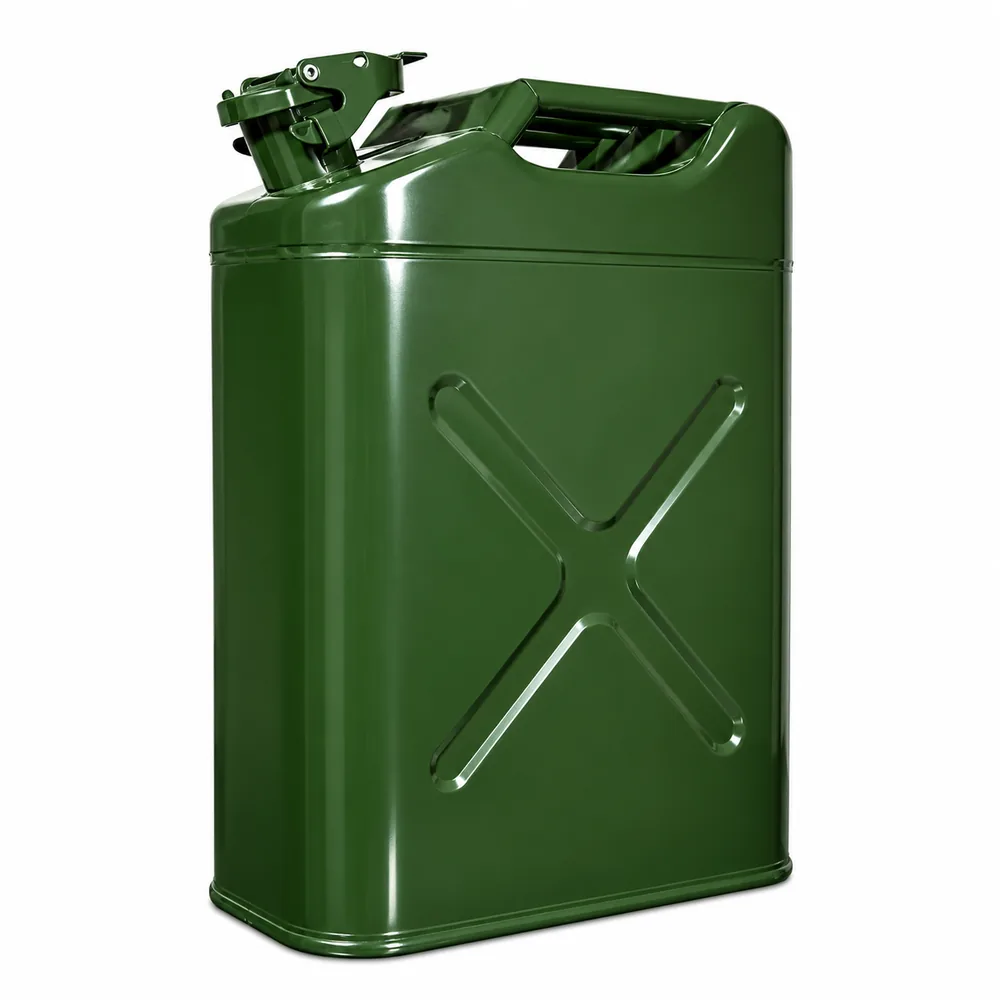 20L NATO Steel Fuel Can |
Gauge and closure stated on the page; hydrocarbon lining; UN-marked steel. |
| Fuel where a coating is a risk | 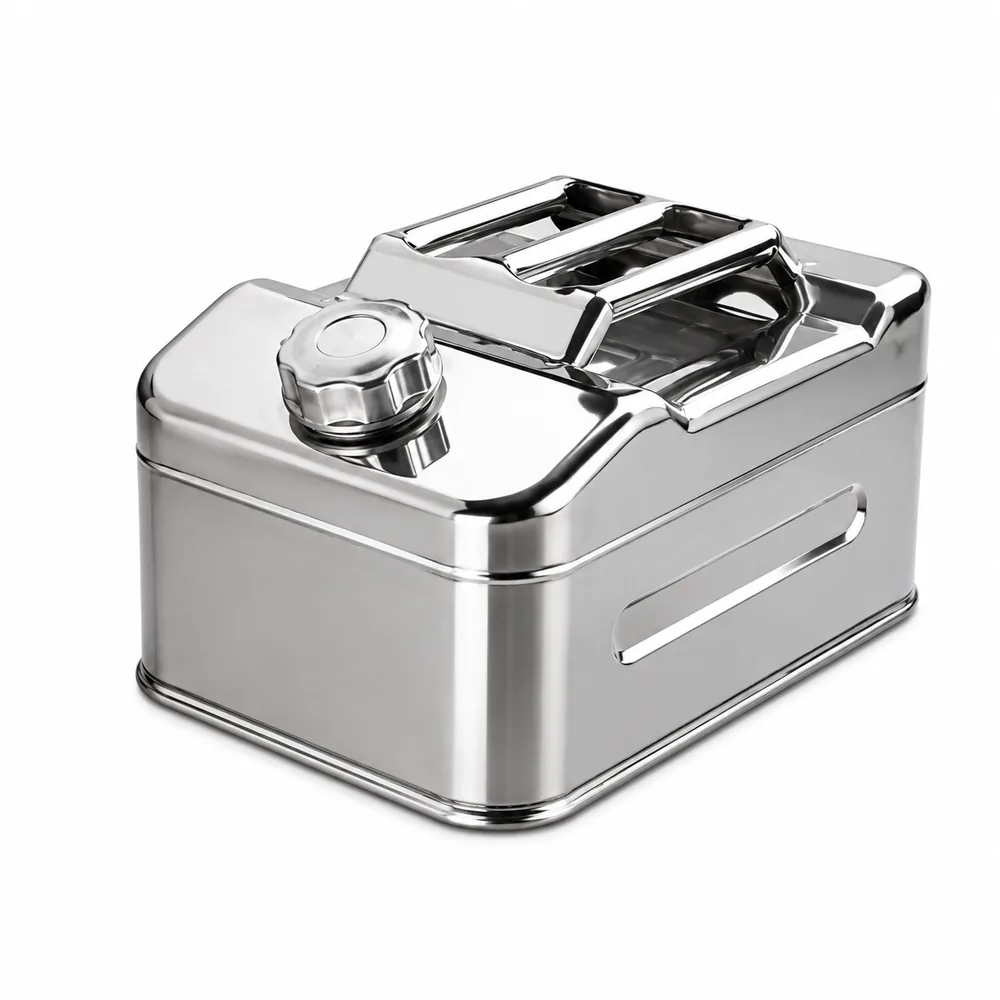 Stainless NATO Can — 10L / 20L |
0.8 mm stainless, with no paint to chip. |
| Drinking water | 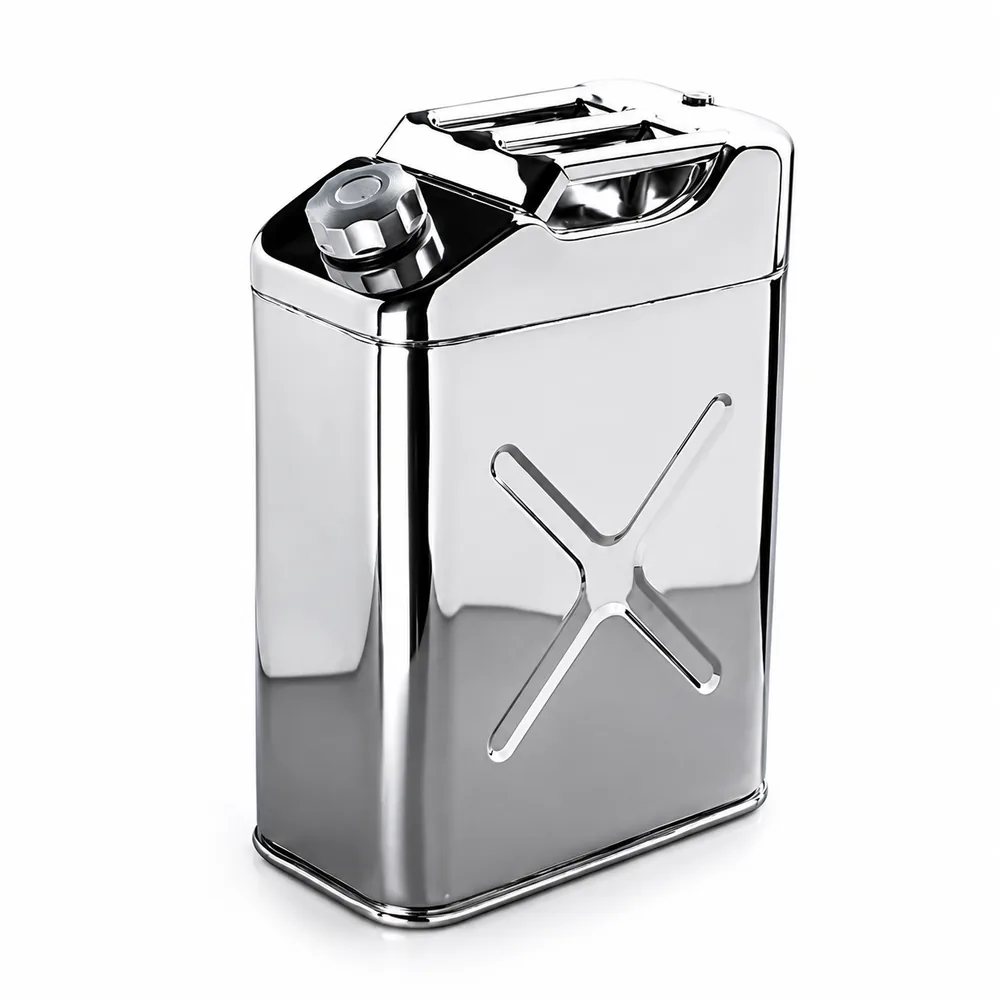 20L Stainless Steel Water Can |
AISI 304 food-grade stainless across the wetted path. |
| Plastic for permeating liquids | 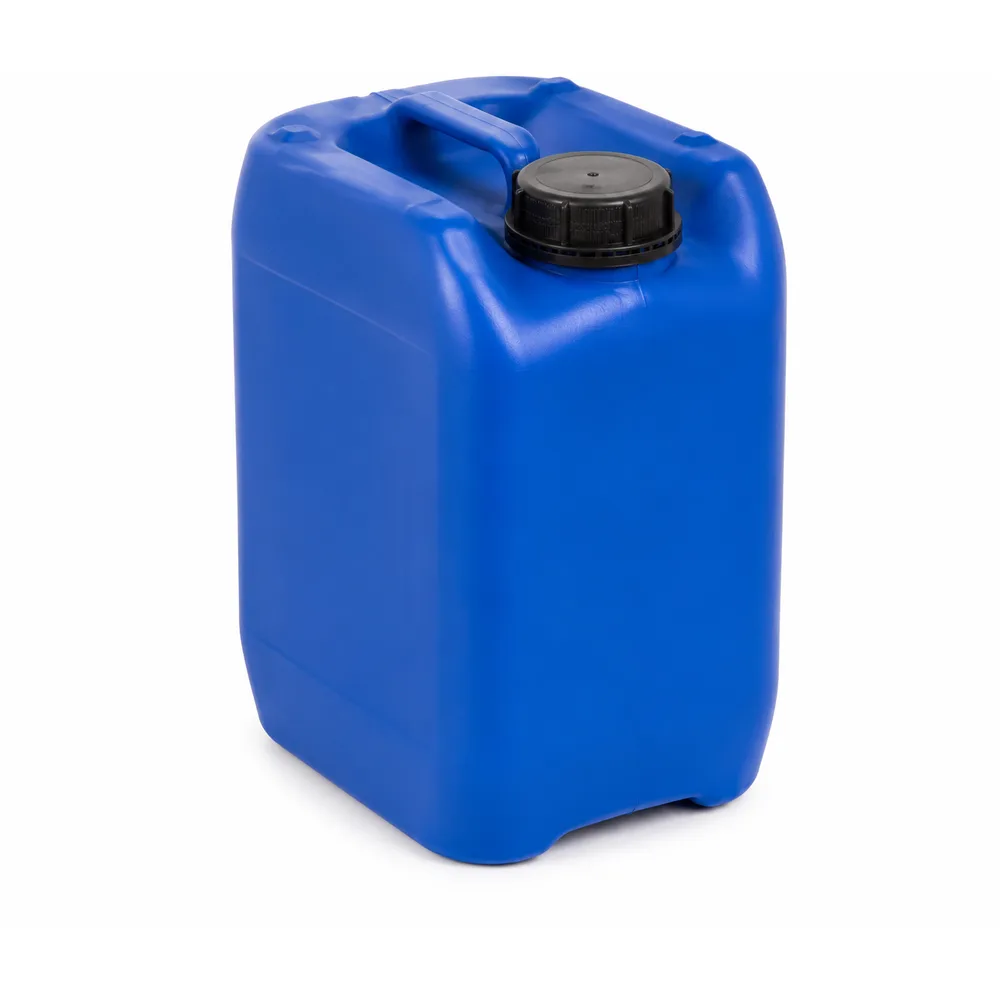 Fluorinated HDPE Jerrycan |
Fluorinated interior; ask for the level and the liquids on its test report. |
| Decanting and distribution in plastic | 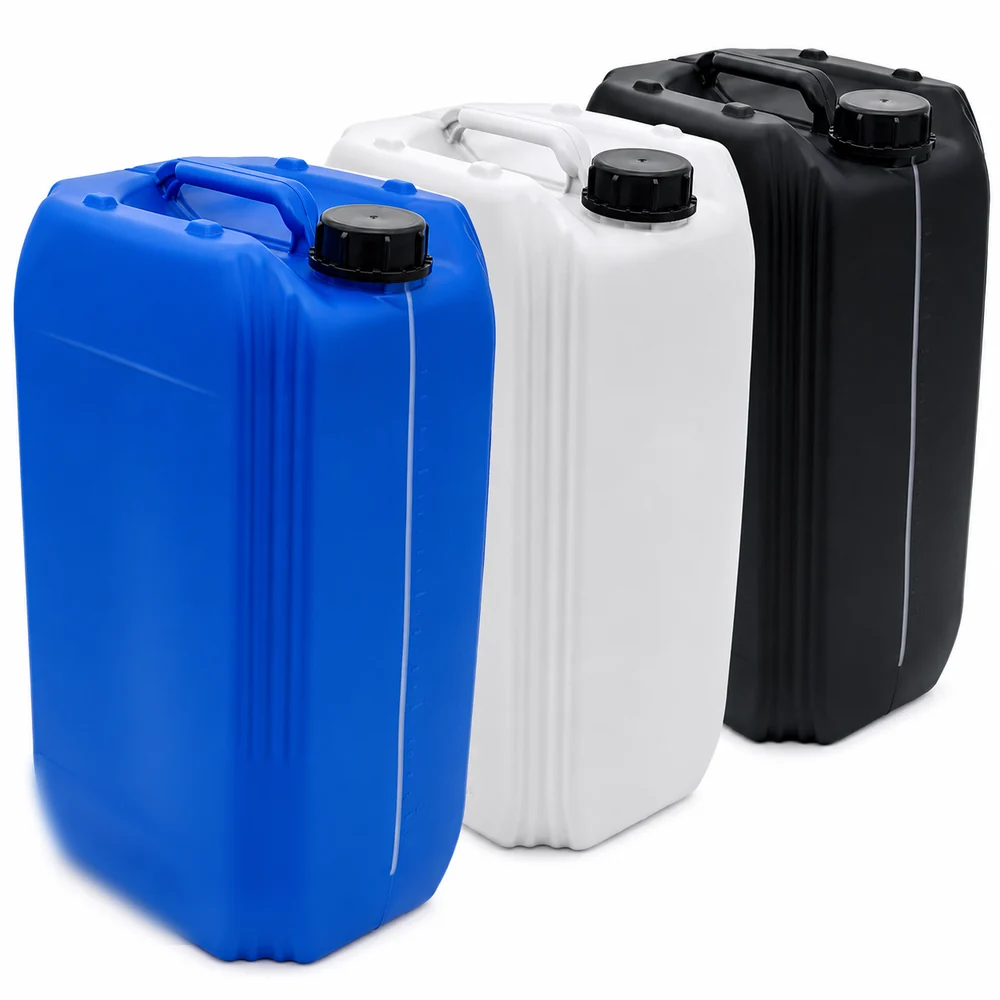 25L Stackable Plastic Jerrycan |
L-ring HDPE, UN 3H1 available; use the fluorinated can for fuels and solvents. |
| Replacement caps and gaskets | 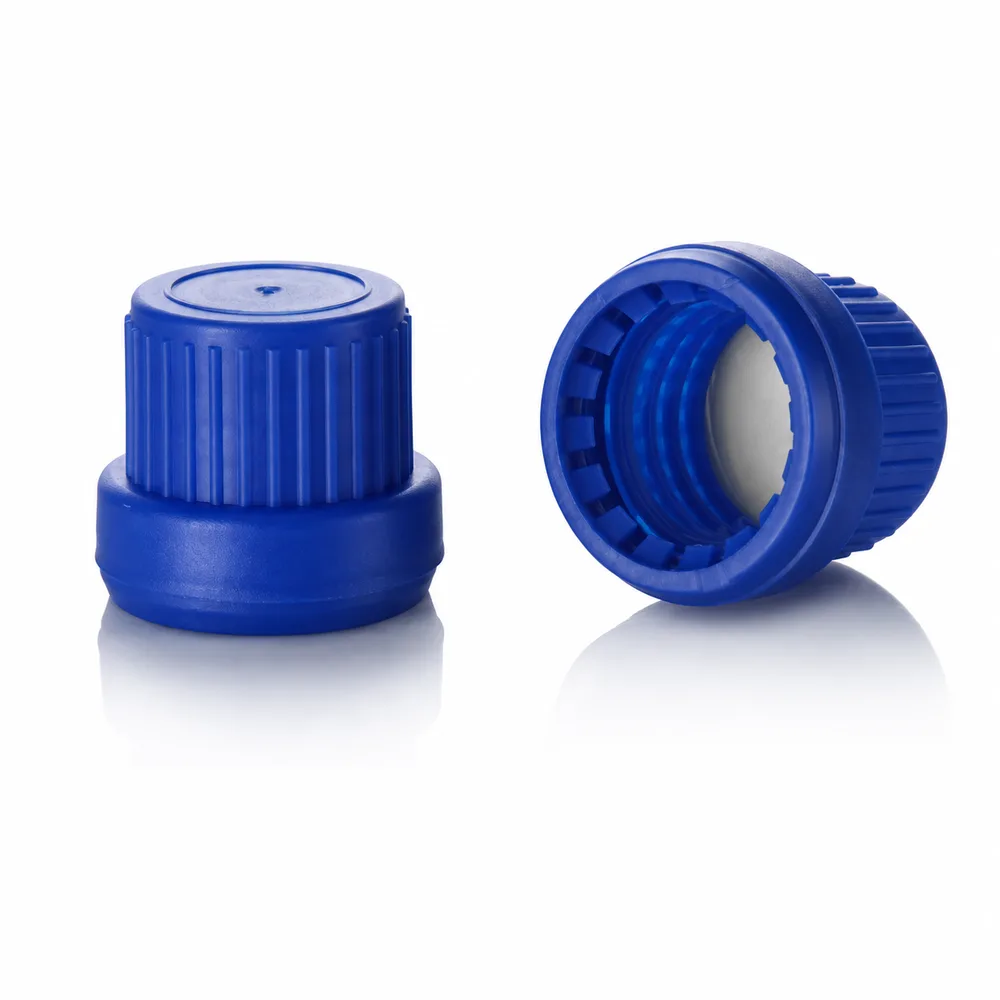 Caps, Closures & Gaskets |
DIN 45, 51 and 61 necks; ask for the gasket matched to your liquid. |
| Holders for vehicles and walls | 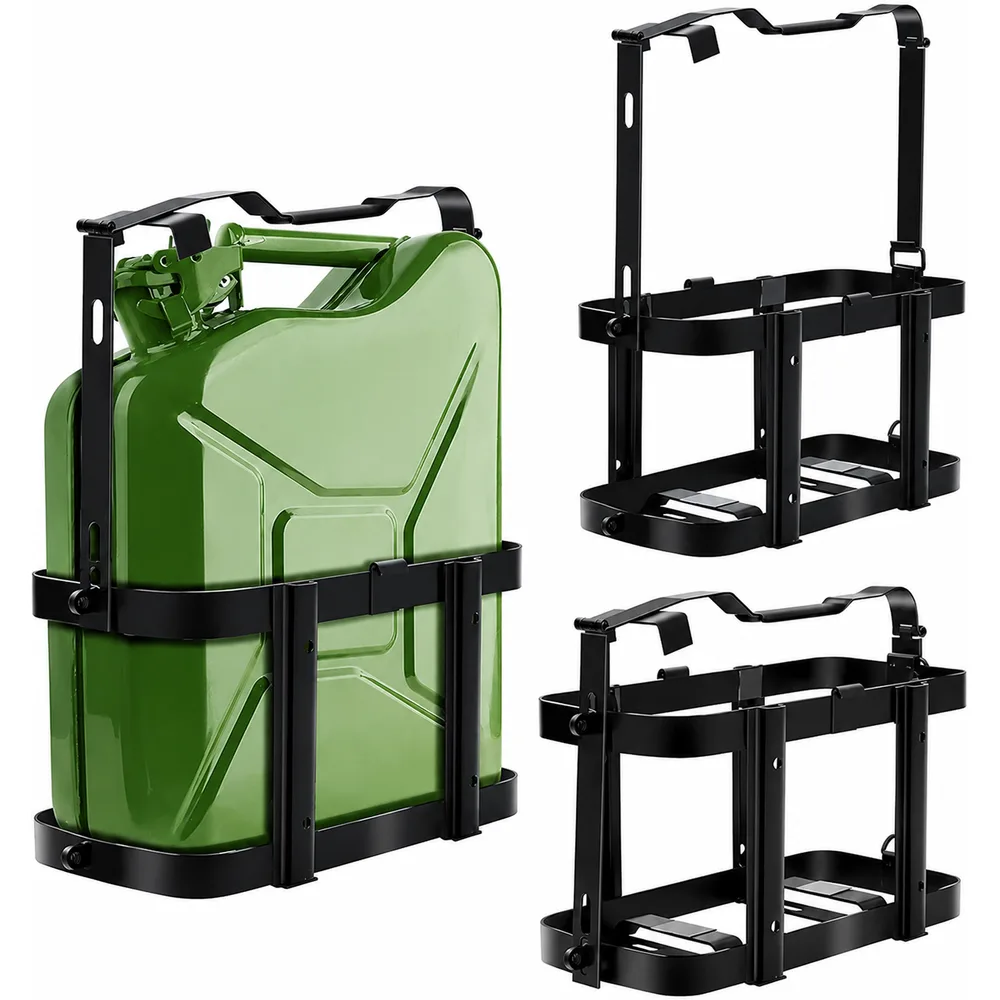 Jerry Can Holders & Mounts |
Tooled to our own can geometry. |
A small can sized to the tank, with a spout that fits the neck. A 3 to 5 litre can is easier to pour than a 20 litre can held at arm’s length. In Great Britain a petrol can may hold up to 20 litres in metal or 10 litres in plastic. In the US a consumer gas can carries the EPA emission control label, and the spout and cap supplied with it count as part of the certified container. Run the scorecard on any can you shortlist.
A 20 litre steel can with a lining named for fuel, or a fuel-grade HDPE can, with a spout that reaches the tank neck. The Great Britain petrol container limits do not reach diesel, so a 20 litre plastic can is an option there. The UN letter can be X, Y or Z because diesel is packing group III (UN 1202). In England, a farm holding more than 1,500 litres of fuel oil in total falls under the SSAFO rules.
An upright steel NATO-pattern can in a holder, or a stainless one where salt and scratches would break a coating. Mount it low and central in the holder, and keep it off the roof where you can. In Great Britain HSE allows up to 30 litres of petrol in at most two suitable containers in a vehicle, and that counts toward the 30 litres you may keep at home without telling the authority. Measure the can against the holder before you buy either.
A small steel reserve can that fits the pannier or rack. Our 3 litre compact fuel can is sized for motorcycles, ATVs and small plant. Check the same things on a small can as on a large one: a gasket matched to the fuel, a closure that does not weep on rough ground, and a spout that fits the tank neck. Our fuel cans by job guide covers the formats.
A steel can in a size the locker takes, in stainless where salt would break down a coating. Boat Safety Scheme advice limits spare petrol to 30 litres, in cans of up to 10 litres if plastic and 20 litres if metal, stowed upright and protected from pressurisation. Our horizontal stainless can comes in 5, 10 and 20 litres, so ask the maker how a horizontal can must lie. Check the gasket too, because a sound steel can fails at the closure before the body.
Steel passes three checks that plastic meets only with conditions. A steel wall lets no fuel through, needs no UV additive and has no five-year limit under ADR 4.1.1.15. Plastic needs no inner lining or rust protection, but for fuel it must be fluorinated or built with a barrier layer, and a dangerous goods can carries a date within five years. Steel vs HDPE fuel cans compares the two in full.
Not by itself, because price appears on none of the documents that prove quality. Two cans at different prices can carry the same code and the same letter. Ask each seller for the gauge in millimetres, the lining and gasket by name, and the certificate number with the plant on it, then compare the scores on the scorecard.
No standard or test scheme names one. UN approval, EPA and CARB certification and AS/NZS 2906 set pass-or-fail requirements, and online roundups use their authors’ own criteria. The UN mark names the maker or the identification the authority assigned, the certificate names the holder, and the scorecard grades the can in your hand. Ask who made the can and under which certificate number.
No. A spout fits the neck standard it was made for: a DIN 51 spout fits a DIN 51 neck, not a DIN 45 or DIN 61 one. In the US the spouts, caps and gaskets provided with a consumer gas can count as part of the container (40 CFR 59.611(b)), and the CPSC definitions reach aftermarket spouts (16 CFR 1460.2). Ask the can’s maker which spout is certified with it.
Five years for carrying dangerous goods. ADR 4.1.1.15 counts from the date of manufacture, and the month and year are on the can. The competent authority can approve another period, and some substances set a shorter one. EPA gives a US consumer gas can a useful life of five years from sale. Retire any can with a split or cracked wall at any age.
A 20 litre metal can or a 10 litre plastic can, which are the Great Britain limits for petrol containers. HSE lets you keep up to 30 litres at home without telling anyone. From 30 to 275 litres you notify the Petroleum Enforcement Authority in writing, and above 275 litres you need a licence. Diesel and water cans sit outside those petrol rules.
Yes, when the metal and its inside suit drinking water. AISI 304 stainless across the wetted path needs no liner, and steel needs a potable-water interior specification. A can built for fuel is not a water can, and a can that has held fuel stays out of water duty. The EU has no specific measure for metals, so ask the maker for a written food-contact statement covering the body and the gasket.
The standards and regulations this page relies on, at their issuing body. Where a market rule is named here, check the current revision before you specify against it.
Last reviewed by David Guru, Co-Founder & Business Development Director.
Tell us your market, what the containers will hold and your volumes. We come back with a specification sheet and a quotation.