
Why it is called a jerry can, who designed it, how to spell it, and what separates a jerrican from a gas can or a safety can.
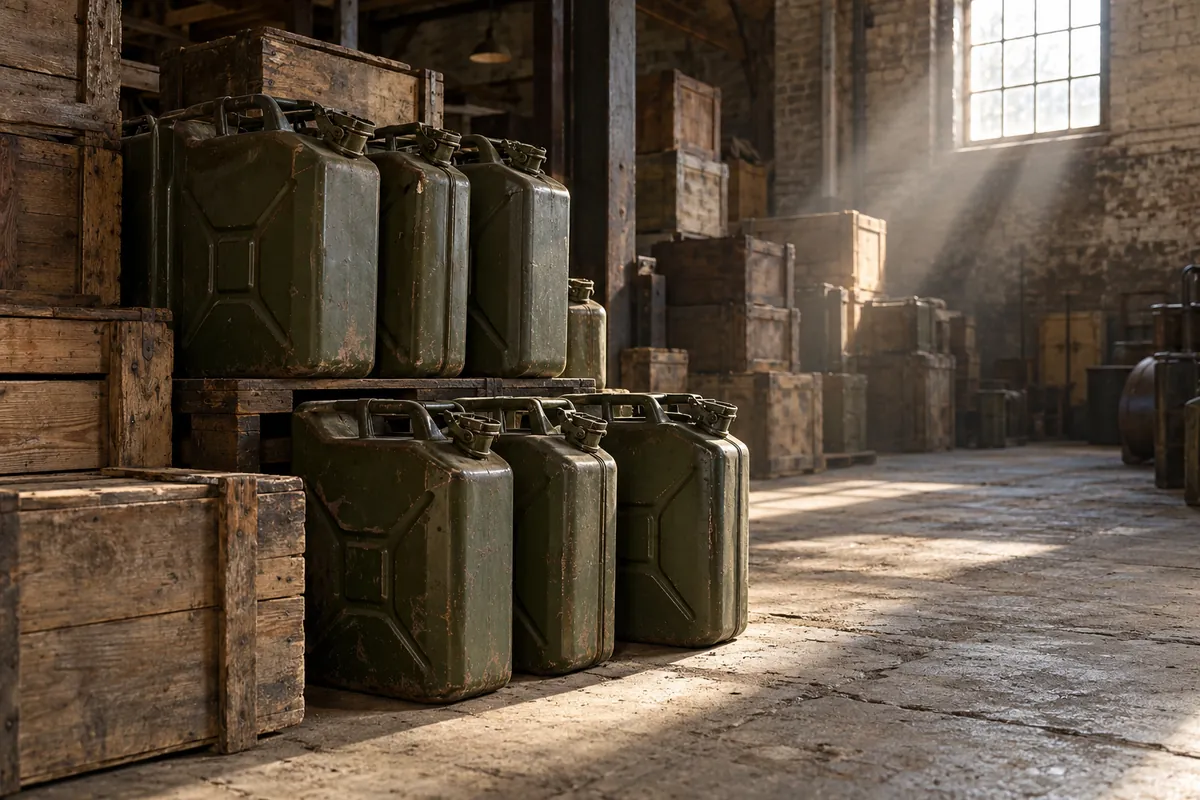
A jerry can, a jerrycan and a jerrican are one container: a flat-sided metal or plastic can of rectangular cross-section, most often holding 20 litres. British troops named it after Jerry, their slang for a German, because it copies a German army fuel can of the late 1930s. Gas can, petrol can and fuel can are regional names for the same shape, and each market applies its own rule.
Quick answer: Where does the name jerry can come from?
From Jerry, British slang for a German. British troops gave the flat-sided can that name because it copies a German army design of the late 1930s; the earliest dated document we found is German patent DE 945314, filed by Ambi-Budd Presswerk GmbH on 22 June 1938. Merriam-Webster dates the word jerrican to 1943.
Work it out
The name comes from Jerry, British slang for a German. Merriam-Webster dates Jerry to 1915, marks it dated British slang and notes that most uses disparage. It dates the word jerrican to 1943 and derives it from Jerry plus can, after the can’s German design. Dictionary.com places the origin in 1940–45.
Museums and military historians agree on the copying. The Imperial War Museums’ catalogue entry for a British can made in 1943 says it was copied from the captured German petrol can, which is where the name comes from. The US Army’s official history of the campaign in Europe says the British named the jerrican and that the Americans, following them, copied the German container after finding its merits. US supply staff also called it the blitz can, a term Dictionary.com lists as military usage.
German engineers designed it in the late 1930s, and no single inventor holds the credit. The earliest dated document we found is German patent DE 945314, filed on 22 June 1938 by Ambi-Budd Presswerk GmbH and published on 5 July 1956. It names six inventors, with Vinzenz Grünvogel first. The patent describes a pressed sheet-metal container with three parallel handles: one person carries it by the middle handle, or two people carry it by one outer handle each. A vent tube in the filler neck lets the can fill to the brim, and the handles form a surface for another can to stack on.
Later histories give a different start. They credit the engineering firm Müller of Schwelm with developing the can in 1937 to a Grünvogel design, and some place a similar can with the Ambi-Budd name in use in 1936. We found no museum record, patent or archive entry that confirms 1936 or 1937, so the 1938 filing is the earliest document we can point to, and the can may be older. Those histories call the military model the Wehrmacht-Einheitskanister, meaning armed forces standard can. The patent uses no such name.
Richard M. Daniel’s 1987 article in Invention & Technology gives the usual account of how the Allies got the design. In summer 1939 an American engineer, Paul Pleiss, set off from Berlin for India in a car carrying three cans that a German colleague took from a stockpile at Tempelhof Airport. The car reached New York in summer 1940. Pleiss sent one can to Washington, where the War Department chose an updated First World War ten-gallon container instead, and had a second flown to London. Daniel adds that British troops first met the can in Norway in 1940. He is the only source we found for the Pleiss story, and he quotes the official record as saying only that a sample reached the Quartermaster General’s office in summer 1940.
The Imperial War Museums record over 50,000,000 jerricans produced between mid-1942 and 1945. The US Army held about 12,000,000 cans before the Normandy landings, planned for 800,000 new ones a month, and by mid-October 1944 could not account for 3,500,000. The NATO jerry can pattern page covers the design itself: the handles, the pressed cross and the stacking shape.
All three are correct, and they name the same container. Merriam-Webster lists jerrican as the headword with jerry can as the variant, Dictionary.com leads with jerry can, and museums, armies and regulators spell it jerrican.
| Source | Spelling | Context |
|---|---|---|
| Merriam-Webster | jerrican, or jerry can | First known use 1943 |
| Dictionary.com | jerry can, also jerrycan and jerrican | Origin 1940–45 |
| Imperial War Museums | Jerrican | British can of 1943 |
| US Army history, 1944–45 | jerrican | Campaign in Europe |
| 49 CFR 171.8; ADR 2025, 1.2.1 | jerrican | US and European transport rules |
Use jerry can or jerrycan in copy for shoppers. Use jerrican in specifications, transport papers and anywhere the UN packaging rules apply, because those texts define the word. Both 49 CFR 171.8 and ADR define a jerrican as a metal or plastic packaging of rectangular or polygonal cross-section, and ADR adds one or more orifices. Our own product names use jerrycan. The jerry can glossary defines the other terms a buyer meets.
Gas can is the US name, short for gasoline can. Petrol can is the British one. Fuel can covers petrol, diesel and kerosene, and jerry can names the shape. One can carries several names: a 20 litre steel NATO-pattern can is a jerry can and a fuel can everywhere, and a gas can in the US when it is marketed to consumers.
| Name | Where you meet it | How the law words it |
|---|---|---|
| Jerry can, jerrycan | Britain and worldwide | Jerrican: a metal or plastic packaging of rectangular or polygonal cross-section (49 CFR 171.8) |
| Gas can | United States | Portable fuel container: a reusable container designed and marketed for consumers, for gasoline, diesel fuel or kerosene (40 CFR 59.680) |
| Petrol can | Britain | Portable petrol storage container: any container designed, manufactured or sold for storing petrol and carried by hand (2014 Regulations, regulation 2) |
| Fuel can | Everywhere | No definition of its own; the US rule names gasoline, diesel and kerosene |
| Safety can | US workplaces | Approved container of 5 gallons or less with a spring-closing lid and spout cover (29 CFR 1910.106(a)(29)) |
| Kanister | Germany | The German word for the container, from Italian canestro, a basket; a Benzinkanister holds petrol (DWDS) |
The US rule turns on the buyer: a consumer product. The British rule turns on the contents and the carrying: petrol, in a container made to be carried by hand. Petrol under the 2014 Regulations means a liquid with a flash point under 21 °C, so a diesel can falls outside them. The US definition covers gasoline, diesel and kerosene together, so a US diesel can and gas can differ in colour and label only. The jerry can colours guide sets out those labels.
Four rules apply in four situations, and each situation has its own name for the can. The figure shows which sizes and fuels each rule covers.
Transport. A UN-marked jerrican has passed the UN performance tests for its design, and dangerous goods travel in such packaging. UN jerricans go up to 60 litres (49 CFR 178.511 and 178.509; ADR 6.1.4.4).
US gas can. The EPA rule in 40 CFR part 59, subpart F, applies to portable fuel containers made on or after 1 January 2009 (59.600) and requires a certificate of conformity (59.601). It excludes approved safety cans and any container under 0.25 or over 10.0 US gallons (59.605), so a 20 litre can, at 5.3 gallons, falls inside it when marketed to consumers. A covered can may not exceed 0.3 grams of hydrocarbon emissions per gallon per day (59.611). The EPA and CARB guide covers the spout, cap and permeation detail.
US safety can. OSHA defines a safety can as an approved container of not more than 5 gallons with a spring-closing lid and spout cover, designed to relieve internal pressure in a fire (29 CFR 1910.106(a)(29)). The construction rule adds a flash-arresting screen (29 CFR 1926.155(l)) and calls for approved safety cans or DOT-approved containers for 5 gallons or less of flammable liquid (1926.152(a)(1)). Five US gallons is 18.9 litres, so a 20 litre can sits over the OSHA limit. The UL 30 listing standard reaches 5.3 gallons and splits safety cans into Type I, with one opening for pouring and filling, and Type II, with a separate opening for each. OSHA’s text carries neither label.
British petrol can. Schedule 3 of the Petroleum (Consolidation) Regulations 2014 caps a portable petrol storage container at 10 litres nominal capacity in plastic and 20 litres in metal. It also requires the words PETROL and HIGHLY FLAMMABLE, a hazard warning sign, the nominal capacity and the maker’s name with the date and month of manufacture. See the UK petrol container rules.
A UN mark says the design passed the UN performance tests for dangerous-goods packaging. Approval is granted per design type, and the can is made under quality assurance that the competent authority accepts. The mark says nothing about the EPA, OSHA or British petrol rules above. Our UN specification packaging guide explains the whole mark.
The first digit of the code gives the packaging type, and 3 means jerrican (49 CFR 178.502(a)(1)). The letter gives the material: A for steel, B for aluminium and H for plastic. The last digit is 1 for a non-removable head and 2 for a removable head. An opening wider than 7 cm makes a can the removable-head type (178.511(b)(4) and 178.509(b)(5)).
| Code | Material and head | Largest capacity | Largest net mass |
|---|---|---|---|
| 3A1 | Steel, non-removable head | 60 L | 120 kg |
| 3A2 | Steel, removable head | 60 L | 120 kg |
| 3B1 | Aluminium, non-removable head | 60 L | 120 kg |
| 3H1 | Plastic, non-removable head | 60 L | 120 kg |
| 3H2 | Plastic, removable head | 60 L | 120 kg |
The packing group on the mark decides the fuel. UN 1203 petrol is packing group II and UN 1202 diesel is packing group III, so a jerrican for petrol carries a Y or X on its mark. Read any mark part by part with the UN packaging code decoder.
A water can is a jerry can used for water. The shape is the same, and the differences sit inside and on the label. Water is not dangerous goods, so a UN mark does not apply. Every surface the water touches must be made for food or drinking-water contact, and the can must never have held fuel.
Blue is the common habit for water, and some schemes give blue to kerosene, so mark the can WATER. The water and food-grade range, WRAS approval and NSF 61 guides cover the certificates a drinking-water buyer can ask for.
Yes. 49 CFR 171.8 and ADR define a jerrican as metal or plastic, and plastic jerricans carry the codes 3H1 and 3H2. The material changes the rules in two places: British law caps a plastic petrol container at 10 litres against 20 litres in metal, and the US EPA rule limits permeation through the wall, which a steel can does not have.
Our steel vs HDPE fuel cans guide works through permeation, service life and weight, and how to choose a jerry can puts the choice in order.
The UN rules draw the line by shape. A jerrican has a rectangular or polygonal cross-section and goes up to 60 litres. A drum is cylindrical, goes up to 450 litres in steel or plastic, and by definition excludes jerricans and wooden barrels (49 CFR 171.8, 178.504 and 178.509).
| Container | Defining feature | Against a jerrican |
|---|---|---|
| Drum | Cylinder, up to 450 L; pail-shaped packagings count as drums in UN terms | Round and larger; a 55 US gallon drum holds 208 L. See 205 litre drums |
| Pail | A cylindrical container with a handle, in other words a bucket | Open-top and round; a UN pail is a drum code such as 1H2. See pails and buckets |
| Carboy | A large glass or plastic bottle, often in a basket or crate, for corrosive liquids | A bottle, from Persian qarāba; a jerrican is a metal or plastic can with handles |
| Keg | A small cask or barrel of 30 gallons or less | Cask-shaped and round; a jerrican is flat-sided |
| Canister | An often cylindrical container for a named object or substance | English canister is a general word; German Kanister means a jerrican |
A 20 litre jerrican fills a third of the 60 litre limit, and the figure sets the limits beside common sizes. Our jerry can sizes chart lists dimensions from 3 to 30 litres, and UN packaging codes explained covers the drum and IBC codes.
We make the container this page names, in steel and in HDPE. The 20 litre NATO steel fuel can is a UN-marked jerrican: we hold UN certification for our dangerous-goods jerrican designs, certified per design type and made under quality assurance the competent authority accepts. Our factories hold ISO 9001, 14001 and 45001. The upright steel fuel tank is a 20 litre can outside the NATO pattern, finished in the RAL colours of your programme.
The NATO steel water can is for water only, and its interior specification decides drinking-water suitability, so ask for that in writing. The economy HDPE jerrycan carries no UN approval and is for non-hazardous liquids. We do not claim EPA, CARB, UL 30, FM, WRAS, NSF/ANSI 61 or AS/NZS 2906 status for any can on this page. Tell us the market and the contents, and we say which route applies before we quote.
| Your use case | Recommended can | Why this one |
|---|---|---|
| A UN-marked steel jerrican for petrol or diesel | 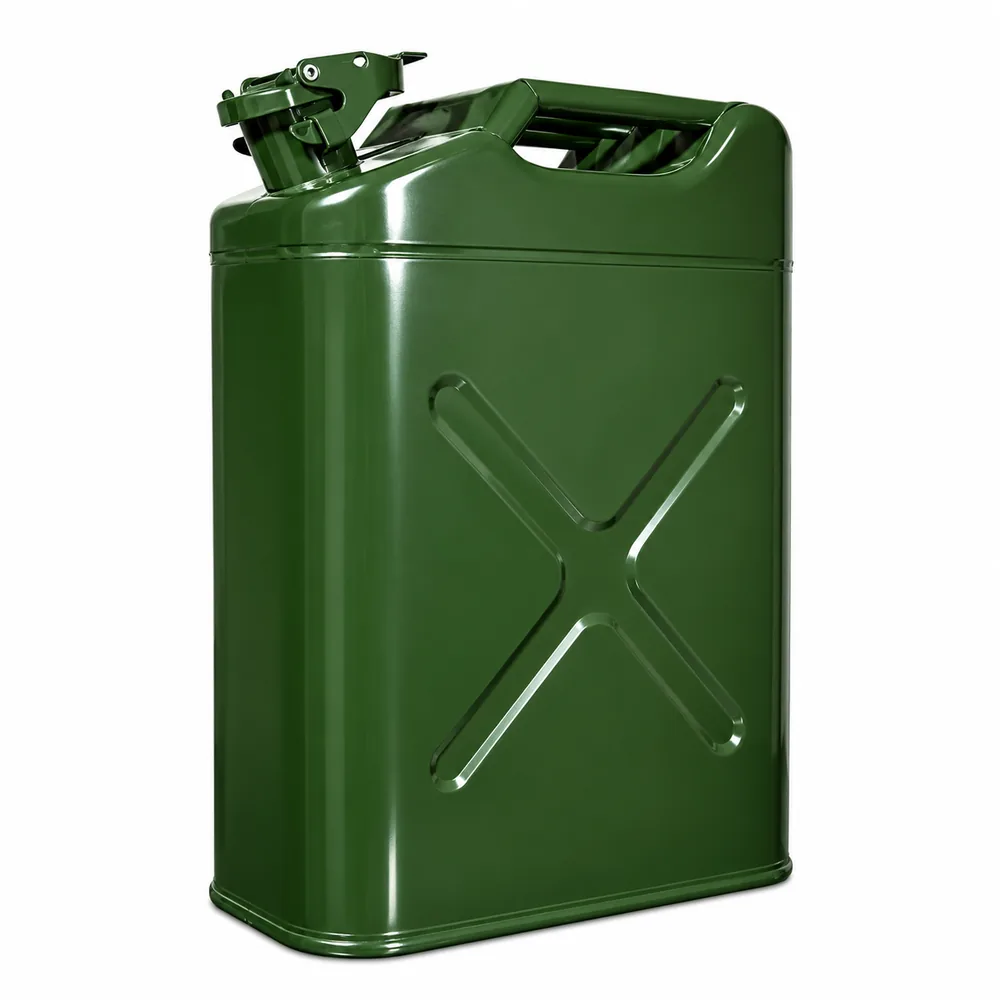 20L NATO Steel Fuel Can |
NATO-pattern pressed steel, coated inside for hydrocarbons, with a vented screw cap. |
| A water can in the same shape | 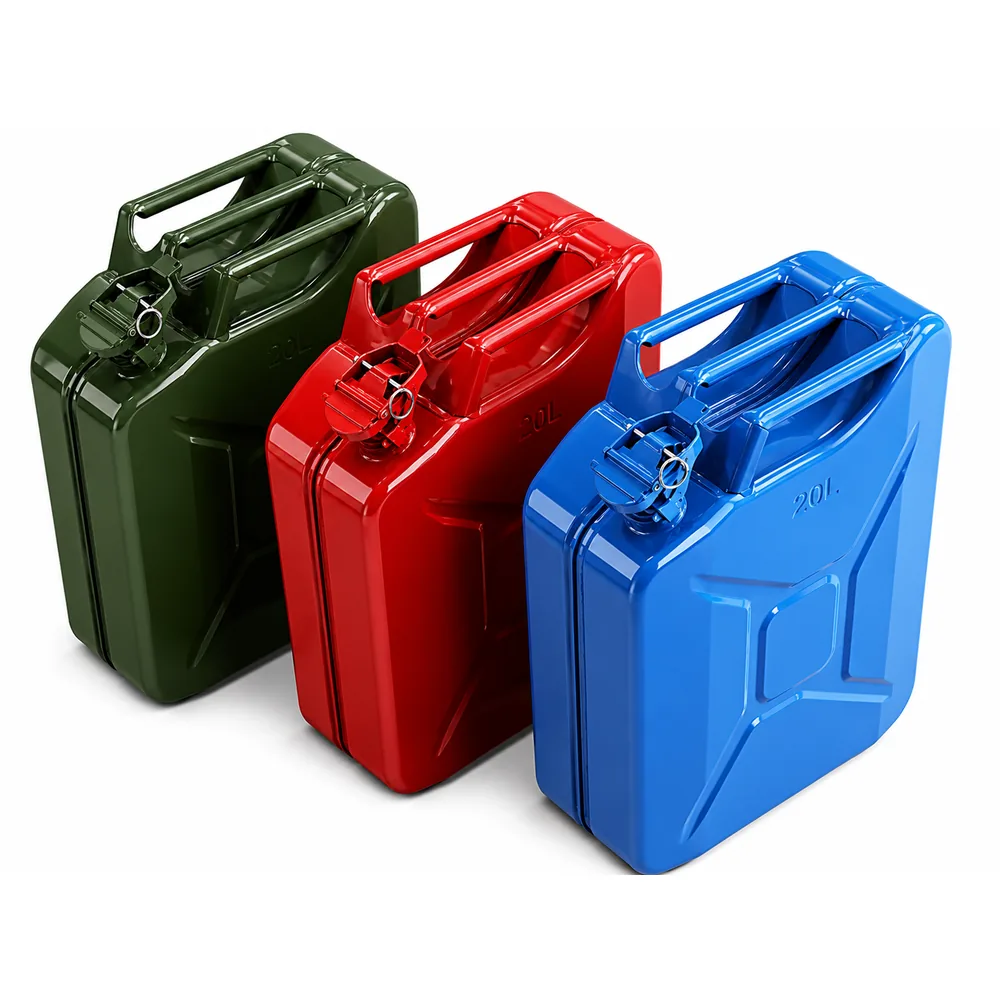 20L NATO Steel Water Can |
Blue finish and a potable-water interior specification; the interior decides drinking-water suitability. |
| A plastic jerrycan for non-hazardous liquids | 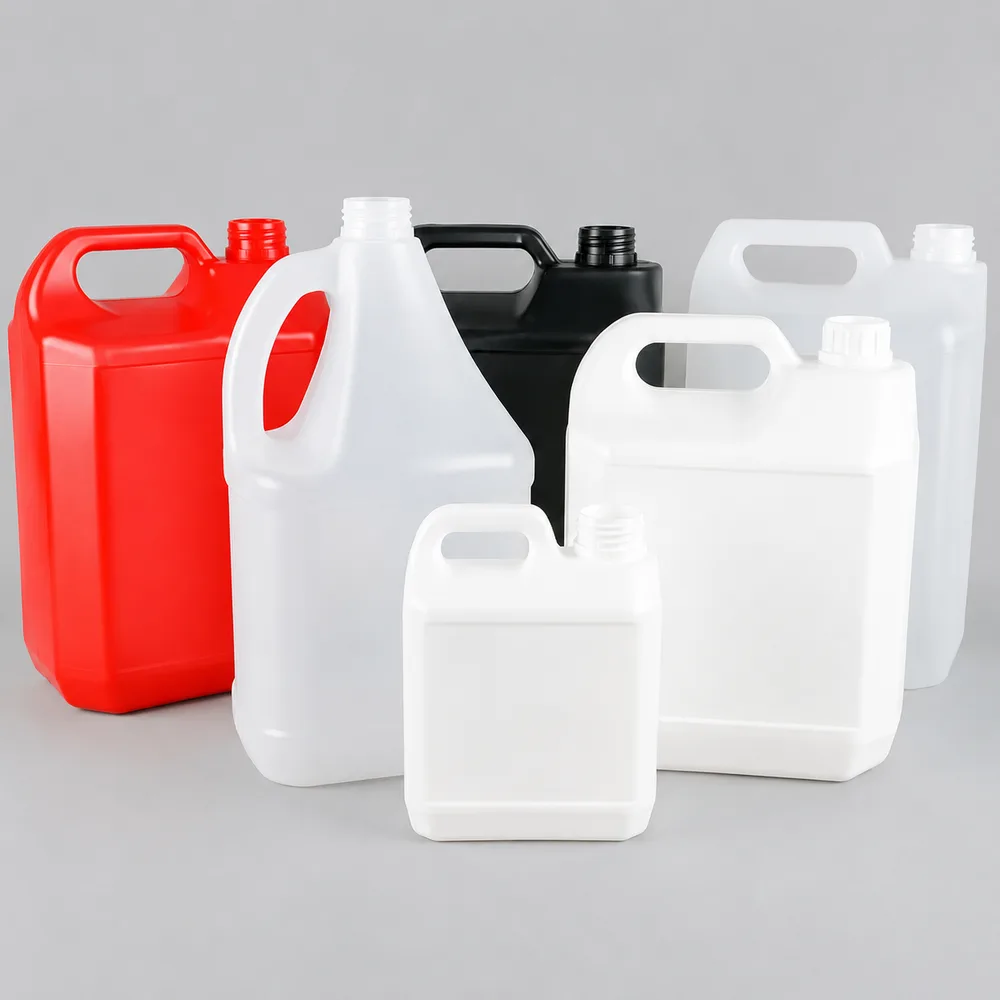 Economy HDPE Jerrycan — non-UN |
Stackable HDPE body with no UN approval, so not for fuel or other dangerous goods. |
| A steel fuel can outside the NATO pattern | 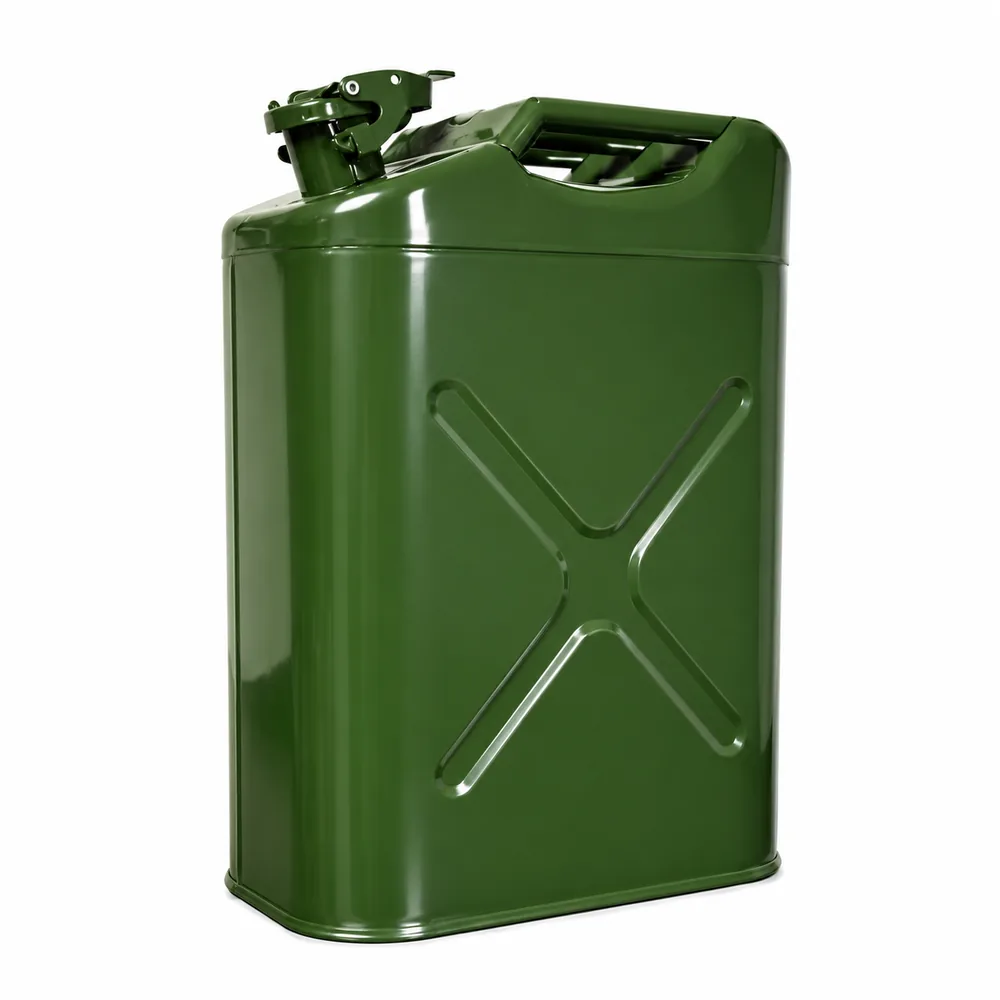 20L Upright Steel Fuel Tank |
Upright body coated inside for fuel and powder coated in the RAL colours of your programme. |
A jerry can is a flat-sided metal or plastic container for liquids, built with carrying handles and a sealed closure. Most hold 20 litres, and the UN packaging rules allow a jerrican to hold up to 60 litres (49 CFR 178.511 and 178.509). The name comes from Jerry, British slang for a German, because the Allies copied a German army design.
Jerry is dated British slang for a German, and Merriam-Webster dates it to 1915. The can took the word in the Second World War because the Allies copied a German design. Regulations avoid the slang and say jerrican, and the UN packaging system gives the shape the type number 3.
A jerry can carries and stores the liquids that vehicles, generators, tools and sites run on: petrol, diesel, kerosene, oil and water, and some chemicals. The interior and closure must suit the liquid, so a fuel can stays on fuel and a water can stays on water.
Jerrican is the regulatory spelling of jerry can. US and European transport law define it by shape and material: a rectangular or polygonal metal or plastic container, with ADR 2025 adding one or more orifices. In UN packaging codes the jerrican is type 3, as in 3A1 for steel and 3H1 for plastic.
A plastic jerry can is a jerrican moulded from HDPE. Its UN code is 3H1 for a non-removable head or 3H2 for a removable head, both with a 60 litre and 120 kg limit (49 CFR 178.509). For petrol in Great Britain a plastic container may hold 10 litres at most under Schedule 3 of the 2014 Regulations.
US federal law draws no line between them: 40 CFR 59.680 defines one portable fuel container for gasoline, diesel fuel and kerosene. The difference sits in colour and labelling, which California and some states set by fuel. In Great Britain petrol means a liquid with a flash point under 21 °C, so a diesel can falls outside the petrol container rules.
US patent 808,327, Metal barrel, was filed on 11 November 1904 and granted on 26 December 1905 to Henry Wehrhahn. It describes a steel barrel with a rolling hoop, so the barrel can roll on its side. The American Oil & Gas Historical Society credits his employer, the Iron Clad Manufacturing Company of Brooklyn, whose president was the journalist Nellie Bly, with the first practical 55-gallon steel drum.
The German can had a short spout with a locked, cam-operated cap that opened and closed without a tool or funnel. The US-designed copy, sometimes called the ameri-can, used a larger opening with a screw cap and a flexible nozzle. The Army history calls the nozzle the design’s greatest defect, because nozzles went missing and were hard to replace.
A 20 litre jerry can holds 5.28 US gallons or 4.40 imperial gallons, using 3.785 412 and 4.546 09 litres per gallon (NIST). Dictionaries describe the old can as holding about five US gallons, about 19 litres. Modern steel and plastic cans are made in metric sizes, so check the stamped capacity in litres.
No. A US safety can is an approved container of 5 gallons or less with a spring-closing lid and spout cover that relieves pressure in a fire (29 CFR 1910.106(a)(29)). A standard 20 litre jerrican has a screw or cam cap, no spring-closing lid and a capacity of 5.3 gallons, above the OSHA limit, so it falls outside that definition.
German engineers designed it in the late 1930s, and no single inventor holds the credit. The earliest dated document is German patent DE 945314, filed on 22 June 1938 by Ambi-Budd Presswerk GmbH, which names six inventors with Vinzenz Grünvogel first. Some histories credit the firm Müller of Schwelm in 1937, but no patent or archive record confirms that year. British and US forces later copied captured German cans.
The standards and regulations this page relies on, at their issuing body. Where a market rule is named here, check the current revision before you specify against it.
Last reviewed by David Guru, Co-Founder & Business Development Director.
Tell us your market, what the containers will hold and your volumes. We come back with a specification sheet and a quotation.