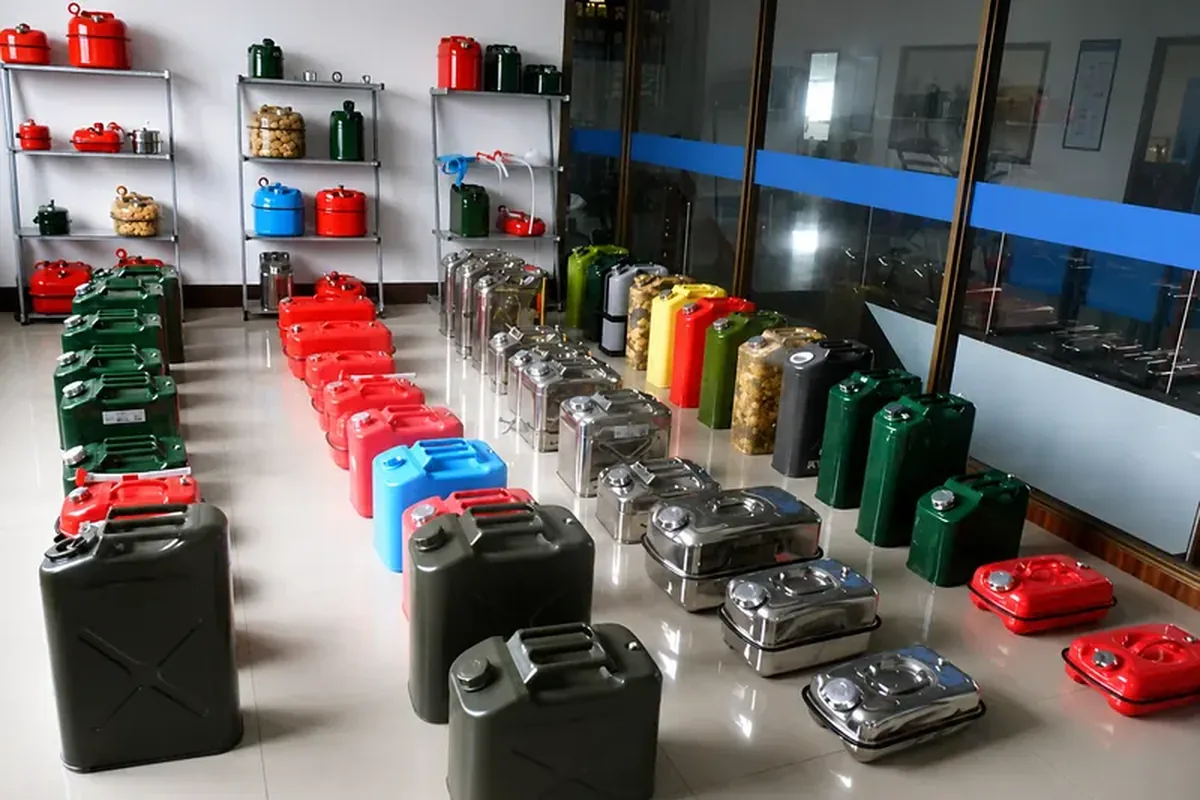
Container specification runs on a vocabulary of codes and standards. This defines the terms a buyer meets across our guides and product pages, in one reference.
Packaging codes and transport
UN packaging code. A stamped code proving a container passed the UN performance tests for its type and contents, for example UN 3A1 (steel jerry can) or UN 3H1 (plastic jerry can). See UN packaging codes.
3A1, 3B1, 3H1, 3H2. Jerry can codes: 3 is a jerry can; A steel, B aluminium, H plastic; 1 non-removable head, 2 removable head. So 3H2 is a wide-mouth plastic can.
UN number. A four-digit identifier for the substance itself, printed on transport papers and labels, for example UN 1203 for petrol or UN 1263 for paint. It names the contents, while the packaging code rates the container.
Packing group. The danger level a packaging is approved for: I high, II medium, III low, marked X, Y or Z on the code.
Class 3, Class 8. Dangerous-goods hazard classes: Class 3 flammable liquids (fuels), Class 8 corrosives (acids and alkalis). See dangerous goods transport.
ADR, IMDG, IATA. The dangerous-goods transport rules for road, sea and air.
Limited Quantity (LQ) and Excepted Quantity (EQ). Relaxed dangerous-goods provisions for small inner packages, which cut labelling and paperwork when volumes stay under set limits.
PVoC. Pre-export verification of conformity, an inspection some countries require before goods ship, confirming they meet the destination market's standards.
Materials and treatments
HDPE. High-density polyethylene, the plastic used for blow-moulded jerry cans.
Food-grade HDPE. A polyethylene resin approved for food contact, used for water and food-product cans.
Antistatic HDPE. Carbon-loaded plastic that dissipates static charge, used where a spark near fuel or solvent vapour is a risk. See HDPE grades.
AISI 304 and 316. Austenitic stainless steels; 316 adds molybdenum for better chloride and acid resistance. See 304 vs 316.
PREN. Pitting resistance equivalent number, a figure from a steel's chromium, molybdenum and nitrogen content that predicts how it holds up against chloride pitting. Higher is better.
Galvanizing. A zinc coating that protects steel from corrosion. See corrosion protection.
Sacrificial or cathodic protection. Corrosion protection where the zinc corrodes in preference to the steel it covers, so the base metal stays intact while the coating gives way first.
Fluorination. A surface treatment that reduces permeation through HDPE, needed for fuels and aggressive solvents. See HDPE grades.
Permeation. The slow migration of a liquid or vapour through a container wall.
Wetted path. Every surface the liquid touches, including the gasket, liner, spout and tap. Compatibility and certification must cover the whole path, not just the body.
Compliance and marking
EPA and CARB. The US and California rules for portable fuel container emissions and spill resistance. See EPA and CARB.
OSHA safety can. A UL 30 or FM listed metal can with a spring-closing cap and flame arrestor, an accepted US route for storing and pouring fuel. See EPA and CARB.
Flame mitigation device. A flame arrestor fitted in the pour spout of a portable fuel container to stop an external flame travelling back inside.
Child-resistant closure. A cap designed to resist opening by young children, required for some contents under 16 CFR 1460. See EPA and CARB.
Food-contact declaration. A statement that a material meets a food-contact regulation, such as FDA 21 CFR or EU 10/2011. See food-contact certification.
Declaration of Compliance (DoC). A supplier's signed statement that a material or product meets a named regulation or standard.
EN 10204 3.1. A mill certificate stating a steel's grade and chemical composition, issued by the producer's own inspection. See food-contact certification.
RAL. A colour-matching standard used to specify powder-coat colours.
AUS 32 and ISO 22241. The specification for DEF and AdBlue, a 32.5% urea solution. See DEF containers.
Sphere Handbook. The humanitarian standard for water, sanitation and shelter in relief work, used to plan drinking-water storage and volumes per person. See emergency water storage.
Form and ordering
NATO / STANAG pattern. The standardised jerry can shape and mounting interface that makes carriers interchangeable. See the NATO pattern.
Cam-lever cap. The hinged, lever-locking closure on a NATO pattern can, opened and sealed by hand without tools. See closures and caps.
Vented cap. A cap that lets a can breathe as pressure and temperature change, easing pouring and preventing panelling. See venting and pressure.
Tamper-evident ring. A frangible band on a closure that breaks on first opening, showing whether a can has been opened.
DIN 45, 51, 61. Standard neck and cap thread sizes.
IBC. Intermediate bulk container, a stackable tank of roughly 1000 litres for bulk liquids, a step up from cans and drums. See can, drum or IBC.
Secondary containment or bund. A tray or wall that holds spilled liquid if a container leaks, sized to catch the contents. See spill containment.
MOQ. Minimum order quantity, the smallest run a supplier will make, set on quotation.
The cans behind the terms
The vocabulary above describes real products. Here are the cans it points at.
| Your use case | Recommended can | Why this one |
|---|---|---|
| A UN 3A1 steel fuel can | 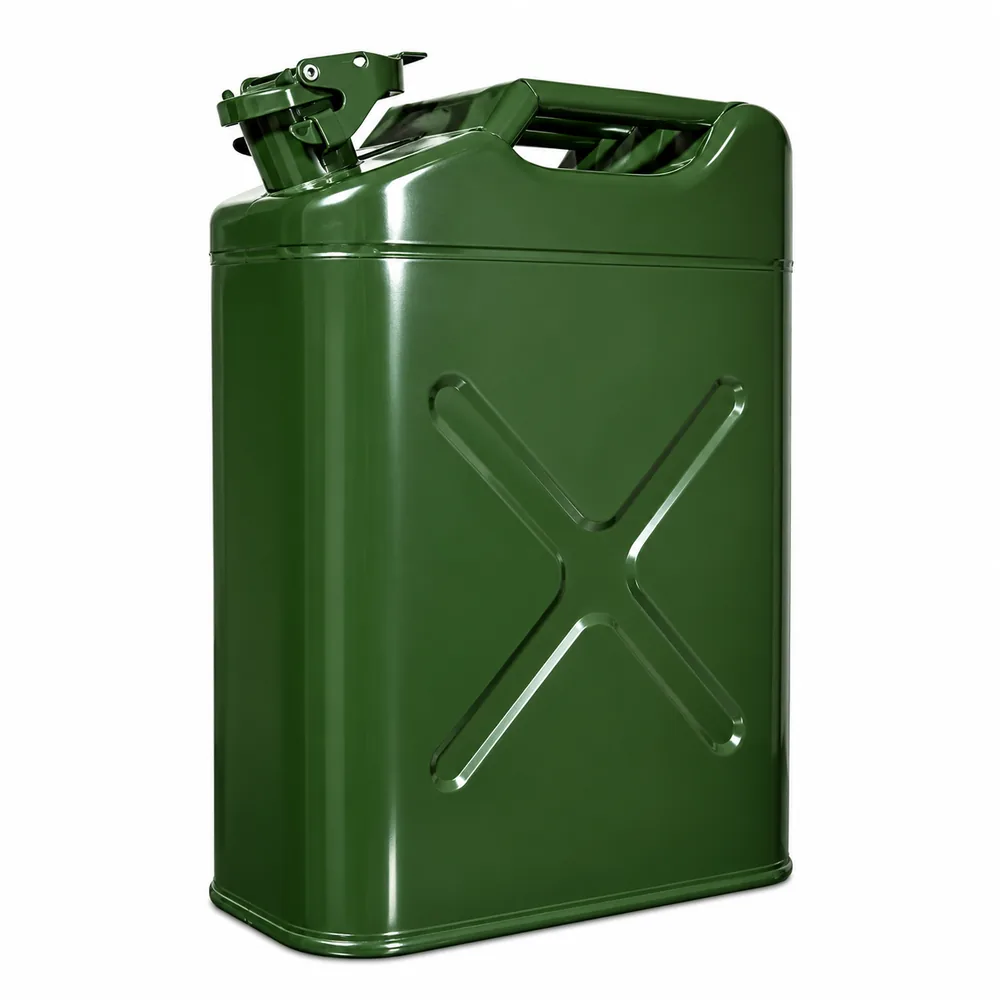 20L NATO Steel Fuel Can 20L NATO Steel Fuel Can |
The codes above, in a real product. |
| An AISI 304 stainless water can | 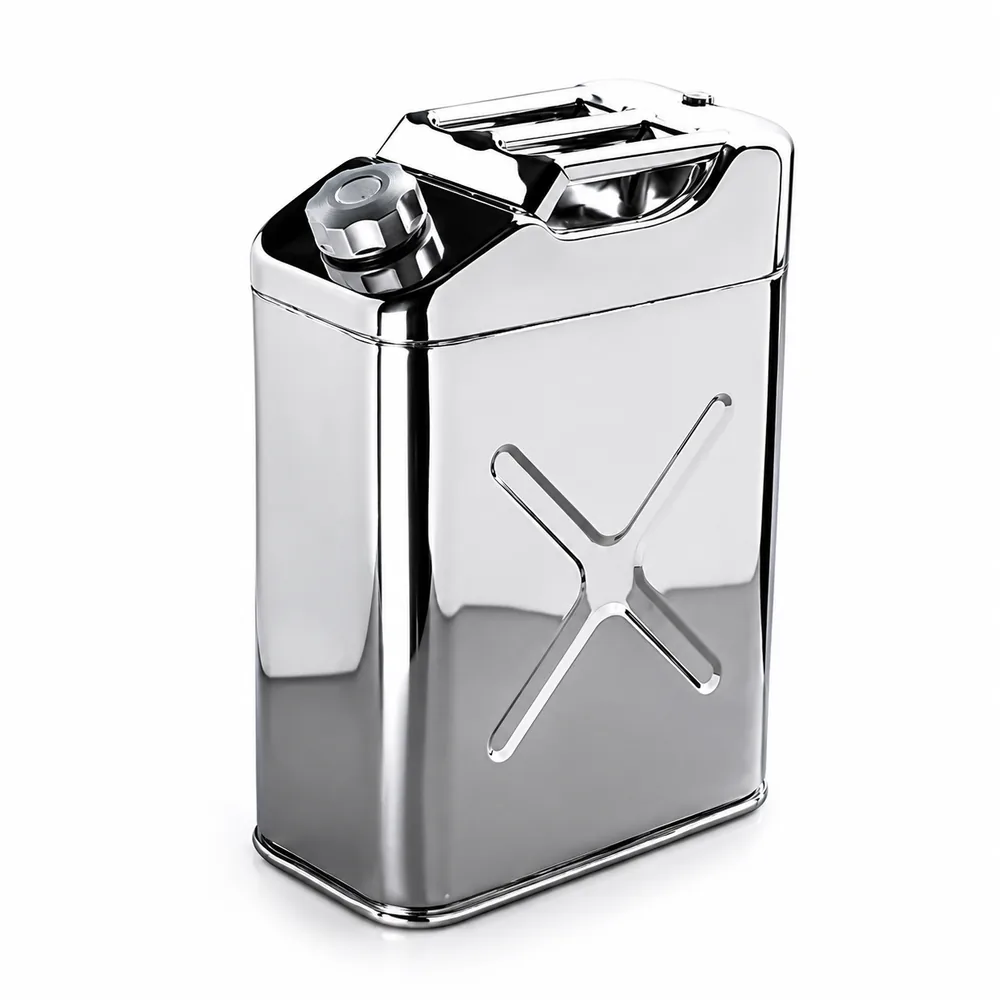 20L Stainless Steel Water Can 20L Stainless Steel Water Can |
Food-grade across the wetted path. |
| A UN-rated HDPE jerrycan | 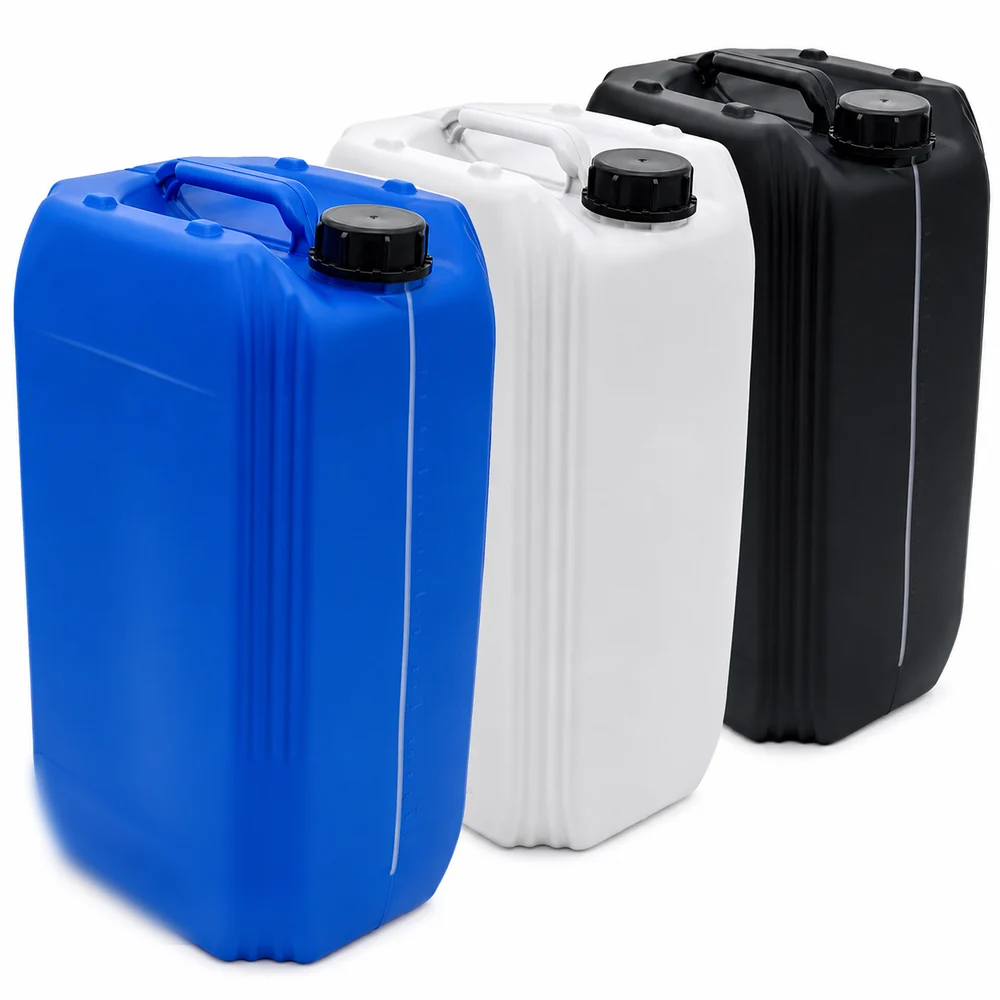 25L Stackable Plastic Jerrycan 25L Stackable Plastic Jerrycan |
Stackable 3H1 for industry. |
| NATO-pattern holders | 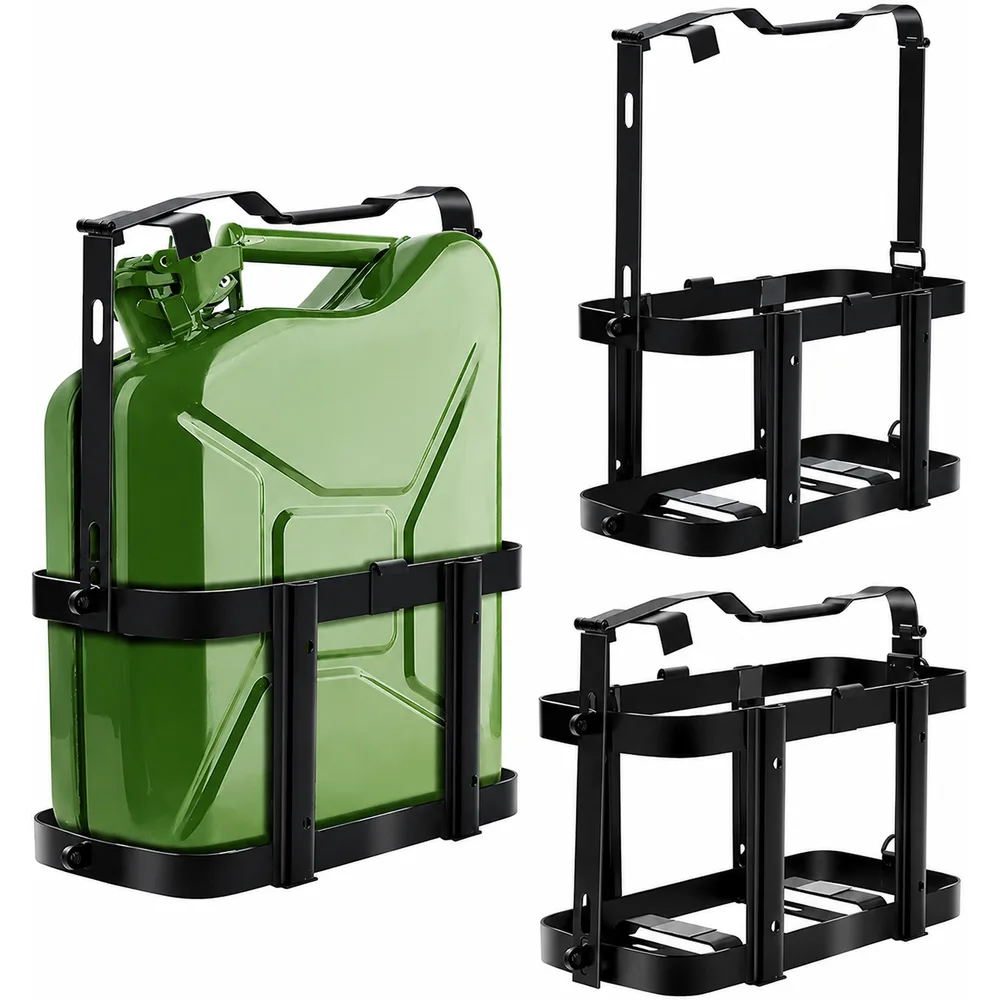 Jerry Can Holders & Mounts Jerry Can Holders & Mounts |
The interchangeable mounting. |