
How big a drip tray must be under oil drums, which material suits the liquid, and when a spill pallet is the better buy.
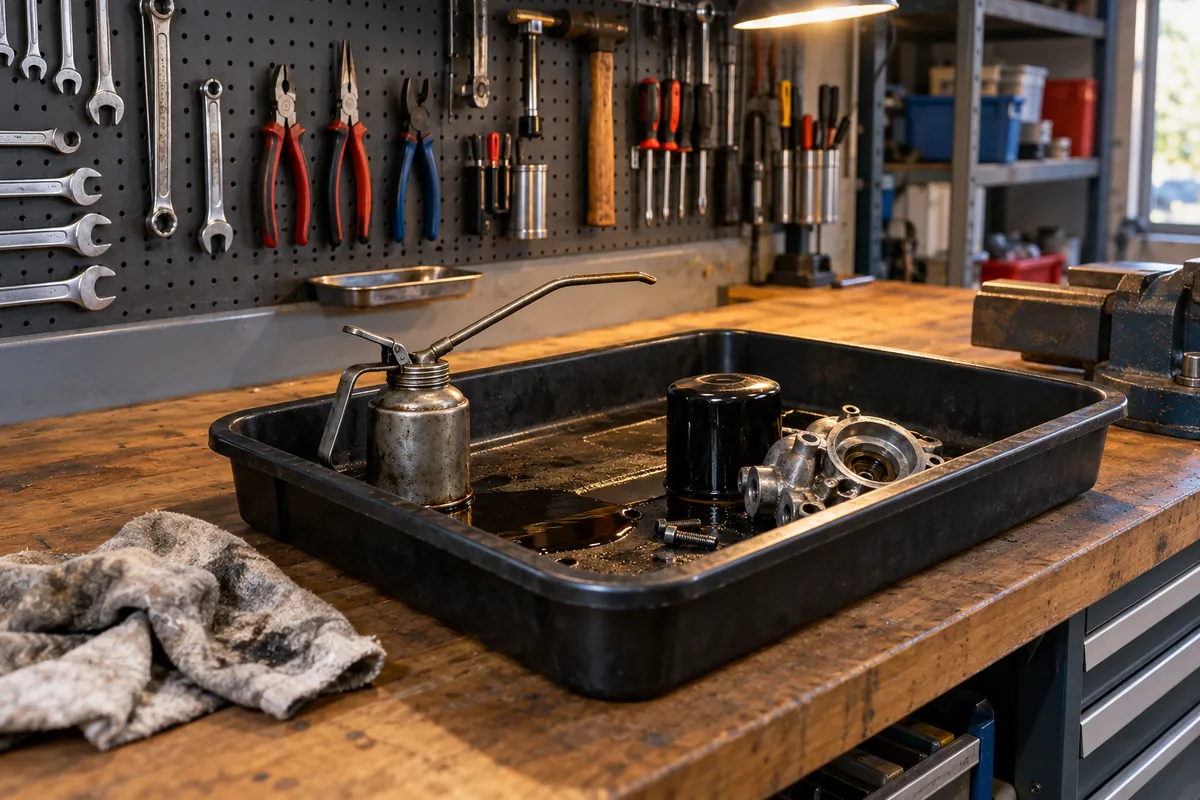
A drip tray, also called a spill tray, is a shallow tray that catches what leaks from a container above it. Under the UK oil storage rules a tray beneath drums must hold 25% of the drums’ combined capacity. GOV.UK counts every drum the tray can hold: a tray built for four 205 litre drums must hold 205 litres, even with one drum on it.
Quick answer: How big must a drip tray under oil drums be?
Under the UK oil storage rules it must hold 25% of the combined capacity of every drum it can take: 52 litres for one 205 litre drum and 205 for four. GOV.UK counts what the tray can hold, so a four-drum tray needs 205 litres even with one drum on it. Only drums may use the 25% figure.
A drip tray is a shallow tray that stands under a container, a machine or a fill point to catch drips and small leaks. A spill tray is the same thing under another name; the word depends on the trade and the country. The UK oil storage regulations list a drip tray as one form of ‘secondary containment system’, beside a bund (England regulation 1(2); the Welsh and Northern Ireland regulations carry the same definition).
The words also name household parts: the tray under a water dispenser, an air fryer, a washing machine or a barbecue. Those trays keep a surface clean, and the oil storage rules do not apply to them. This guide covers the industrial tray under drums, pails and plant, where for oil the capacity is a legal figure.
A drip tray is low and open and sized for drips. A spill deck or spill pallet adds a grate, a deeper sump and a rated load, so drums can stand on it.
You need a drip tray or a bund if you store oil in a container over 200 litres outside a building in England, and in more places in Wales, Scotland and Northern Ireland. England leaves out oil inside a building and any container of 200 litres or less (regulation 2(2)). The other three nations have no building exclusion, and Scotland takes in a 200 litre drum. Only drums may use the 25% figure.
| Nation | Drums on a drip tray | Drip tray at a remote fill point | Oil indoors |
|---|---|---|---|
| England | 25% (regulation 3(5)) | Required (3(4)) | Outside the rule (2(2)(b)) |
| Wales | 25% (regulation 5(4)) | Required (5(9)) | In scope |
| Scotland | 25% (rule 28(e)) | Required (28(d)) | In scope |
| Northern Ireland | 25% (regulation 4(5)) | Required (4(3)) | In scope |
The 25% figure changes the capacity and nothing else. The tray still needs an impermeable base and walls, no valve or opening used to drain it, and a position that limits the risk of impact (England regulation 3(2)(b) to (d)). GOV.UK says fixed tanks must be bunded, so a drip tray does not count for them, and an IBC of oil needs 110% of its capacity.
Fuel oil kept on a farm for agriculture falls under SSAFO once the farm holds more than 1,500 litres in total, and drums with no tank then need 25% of the total stored (Schedule 3, paragraph 2). For liquids other than oil there is no regulation figure, but the Environment Agency recommends at least 25% for containers up to 205 litres and at least 110% above that. Scope and penalties are in oil storage regulations in the UK, and other countries in secondary containment requirements.
Take 25% of the combined capacity of every drum the tray can hold: 52 litres for one 205 litre drum, 103 for two and 205 for four, rounded up. GOV.UK reads the rule by what the tray can hold, not by what stands on it that day. A tray built for four 205 litre drums needs 205 litres even with one drum on it.
The footprint sets the count. A 205 litre drum is 585 mm across the hoops (see 205 litre drum sizes), so four drums need a 1,170 mm square and a 1,200 mm tray takes all four. A 1,000 mm square tray takes one drum and needs 52 litres.
| Drums on the tray | Combined capacity | Tray at 25% (England) | GPP 26 tray, several drums | Bund |
|---|---|---|---|---|
| 1 | 205 L | 52 L | 52 L | 226 L |
| 2 | 410 L | 103 L | 226 L | 226 L |
| 4 | 820 L | 205 L | 226 L | 226 L |
| 8 | 1,640 L | 410 L | 410 L | 410 L |
Wales regulation 5(4), Scotland rule 28(e) and Northern Ireland regulation 4(5) repeat the 25% figure. GPP 26, the guidance the regulators in those three nations publish, is stricter for several drums: the greater of 25% of the total and 110% of the largest. Two or four drums then need 226 litres, the bund figure. GPP 26 is guidance and the regulations carry 25%, but a design sold into all four nations is safest at the stricter figure. The spill pallet sizing calculator and the UK bund capacity calculator work the figure for your own mix, and spill pallet size for drums lists the pallets that pass.
Our bench and drip trays hold from 4 to 150 litres, and our pail pallets hold 50 or 145. All are polyethylene (LLDPE or polyethylene, by model), in yellow, white, blue or black. Check the sump capacity against the rule, not the footprint.
| Model | Size, cm (L × W × H) | Sump | Static load |
|---|---|---|---|
| F21-BT-102 compact bench tray | 34 × 34 × 6.5 | 4 L | 20 kg |
| F21-BT-101 tabletop tray | 49 × 36 × 9.5 | 10 L | 20 kg |
| F21-BT-101 tabletop tray with pour spout | 53 × 43 × 11 | 11 L | 100 kg UDL |
| F21-BT-103 small-container tray | 67.5 × 37.5 × 12 | 20 L | 80 kg |
| F21-DT-100 open drip tray | 57 × 38.5 × 5 | 10 L | 80 kg |
| F21-DT-100 open drip tray | 64.5 × 49 × 12 | 32 L | 200 kg |
| F21-DT-100 open drip tray | 100 × 55 × 15 | 75 L | 600 kg |
| F21-DT-100 open drip tray | 100 × 100 × 12 | 110 L | 1,500 kg |
| F21-DT-100 open drip tray | 120 × 120 × 12 | 150 L | 3,000 kg |
| F21-BT-201 pail pallet | 115 × 115 × 17 | 50 L | 3,000 kg |
| F21-BT-201 pail pallet | 120 × 120 × 15 | 145 L | 3,000 kg |
Load figures are the manufacturer’s published values, and UDL means a load spread across the tray. Ask for the test basis before you specify against them. The 20 kg trays suit bottles and small pots, so do not stand a drum on them.
Drum decks and pallets give larger sumps for drums. Against the 25% figure for 205 litre drums, every deck model falls short, because a deck is built for a drum in use and keeps its sump small.
| Drums | Tray needs | Deck sumps | Pallet sumps |
|---|---|---|---|
| One | 52 L | 30–47 L: short | 202 L plastic, 203 L steel |
| Two | 103 L | 45–82 L: short | 130–160 L plastic, 260 L high-sump, 215 L steel |
| Four | 205 L | 80–170 L: short | 250–280 L plastic, 488 L high-sump, 216 L steel |
The plastic and steel pallets clear the 25% figure, apart from the 42 litre round single-drum model. As a 110% bund, only the plastic pallets of 250 litres and over reach 226 litres. The steel drum pallets, at 203 to 216 litres, pass as drip trays and fall just short as bunds.
Use a drip tray where the container is small, moves between jobs or sits at a decant point, and a spill pallet where drums or IBCs stand in storage. The two differ in height, in sump and in what they carry.
| Drip tray | Spill deck | Spill pallet | |
|---|---|---|---|
| Height | 5–15 cm | 10–15.5 cm | 20–60 cm |
| Sump | 4–150 L | 30–170 L | 42–488 L |
| Grate | None on open trays, black grate on bench trays | Open grate shows a leak | Plastic or steel grate |
| Best for | Decant points, benches, equipment, pails | Drums in use | Drums in storage |
A grate holds the container out of what it has leaked and lets a walk-past inspection see standing liquid. An open tray has no grate, so the container stands in the sump, which suits equipment and small containers that move to the next job. Loading a full drum onto a pallet by hand needs a ramp matched to the pallet height; ours cover 10 to 30 cm.
For a drum that has to move, a drum dolly with its own sump keeps the containment under the load. Ours have 20 and 300 litre sumps, so test the 20 litre one against the 52 litres a single drum tray needs. Choosing a spill pallet covers load ratings and racking.
Polyethylene suits most drip-tray work, and steel suits stores where a fire assessment rules out a plastic tray. GPP 26 (section 5.2.4) accepts steel, plastic, fibre glass and lined concrete, and asks that the base and walls resist attack from what they hold and suit long-term storage, not temporary use.
Polyethylene does not rust and weighs little: our 150 litre open tray weighs 8.5 kg and the 145 litre pail pallet 24 kg. It copes with engine and hydraulic oils, bleach, and most acids and alkalis at working strength, subject to a check of concentration and temperature. It swells or softens in some solvents, and our chemical compatibility guide rates plain HDPE ‘No’ for acetone, MEK and toluene. A tray meets a spill neat and often warm, so test the tray material against the liquid, not the drum.
Steel is non-combustible. HSG51 warns that plastic containers can fail within about 10 minutes in a fire (paragraph 55) and asks that spillage control allow for it, and a flammable store that cannot accept that risk moves to steel. Our steel pallets are double-layer 3 mm sheet, powder coated or hot-dip galvanised, and weigh 65 kg for one drum. Acids and some salts attack both finishes, so choose the finish against the liquid. The DSEAR and ATEX guide covers the fire assessment.
Each follows its own figure: 110% for a generator tank and an IBC, and 25% or 110% for chemicals, by container size.
In England the oil rules cover a generator with a connected oil tank of 201 litres or more, whether it is a standby set or runs daily with a tank not used up in a day (GOV.UK). GOV.UK says fixed tanks must be bunded and a drip tray does not count, so size the bund at 110% of the tank. A portable generator with a tank of 200 litres or less sits outside the England rule, and a tray under it catches drips and refuelling spills. In Scotland, plant working in or near water must, if static and within 10 metres of a river, burn, loch, wetland or the shore, stand on an impervious drip tray holding 110% of its fuel tank (Schedule 9, rule 9(c)). See generator fuel storage.
For chemicals other than oil, the Environment Agency’s 25% and 110% figures above are advice, not regulation text. Inside a flammable-liquid cabinet, HSG51 paragraph 207 sets the sump at 110% of the largest vessel kept there. Check the tray material against the chemical first, then the health controls in COSHH storage requirements.
An IBC of oil cannot use a 25% tray. It needs secondary containment of 110% of its capacity, 1,100 litres for a 1,000 litre tote, and GPP 26 says the same. IBC bund size works the figure for one to four totes.
Not for oil. England regulation 3(2)(d) bars any valve, pipe or opening used to drain the containment, and Wales regulation 5(6)(b), Scotland rule 28(b)(iv) and Northern Ireland regulation 4(2)(d) say the same. GPP 26 asks for no drainage outlet from any secondary containment. Pump or ladle rainwater out instead. Our drain-plug decks and pallets suit sites where a sealed plug is allowed; for UK oil, buy the plain version.
Rain is what defeats an outdoor tray, because a tray full of water has no room for the spill it exists to hold. GPP 26 asks for a check at least weekly (section 7): no damage, rainwater removed, the tray clear of product and debris. GOV.UK adds that nothing else should be stored in a bund. A cover keeps the sump empty: our covered spill pallets have a roller shutter or hard cover, and PVC tarps fit the two-drum, four-drum and IBC pallets. Keep absorbent from a spill kit beside the tray, not in it, and read spill containment for fuel and chemicals before you dispose of the water you remove.
We make the trays, decks and pallets that sit under drums and pails. Bench and drip trays run from a 4 litre bench tray to a 150 litre open tray and a 145 litre pail pallet. Drum decks (30 to 170 litre sumps) suit drums in use, plastic and steel pallets (42 to 488 litres) suit drums in storage, and covered pallets keep rain out of an outdoor sump.
Send us the containers, the liquid and the country, and tell us the rule you work to. We size the tray against the 25% or 110% figure that applies and name the models that clear it. Polyethylene is not right for every solvent, so give us the liquid before you choose between plastic and steel.
| Your use case | Recommended can | Why this one |
|---|---|---|
| Decant points, benches and small containers | 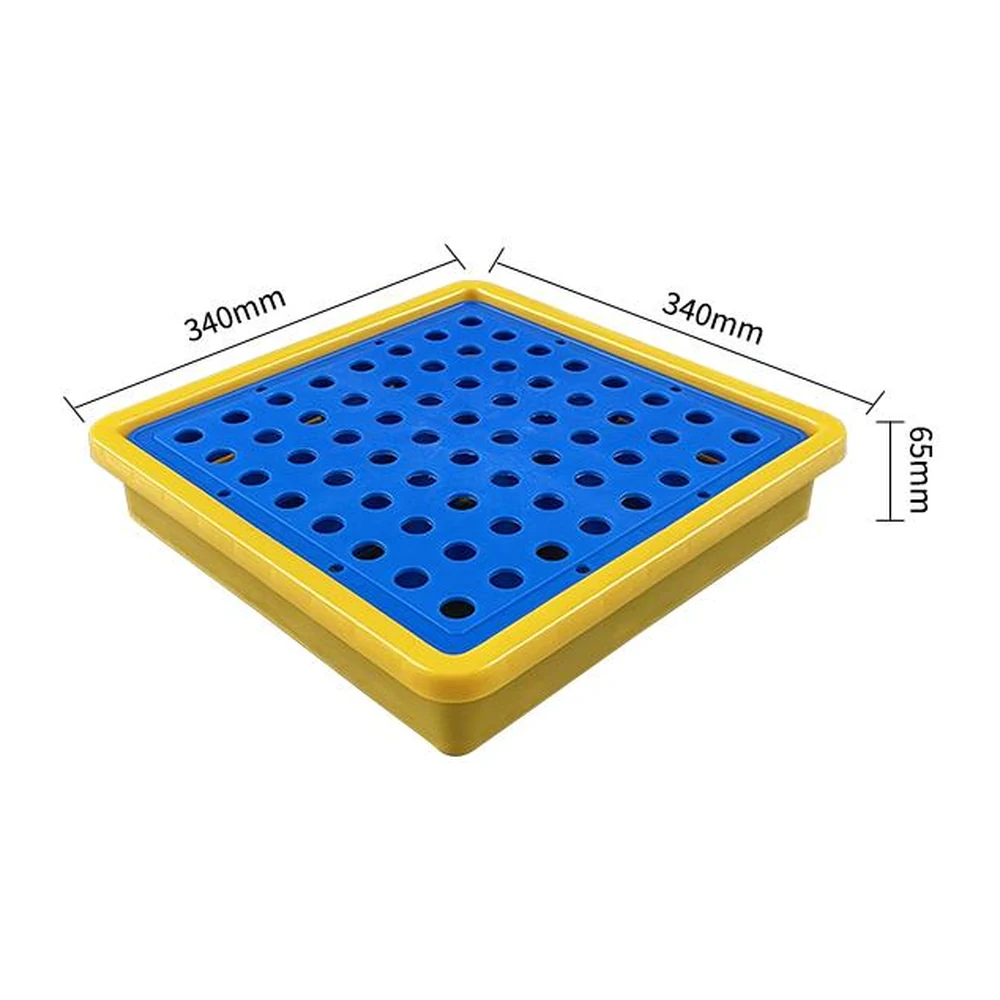 Bench Trays & Drip Trays |
Sumps from 4 to 150 litres, plus 50 and 145 litre pail pallets. |
| Drums in use | 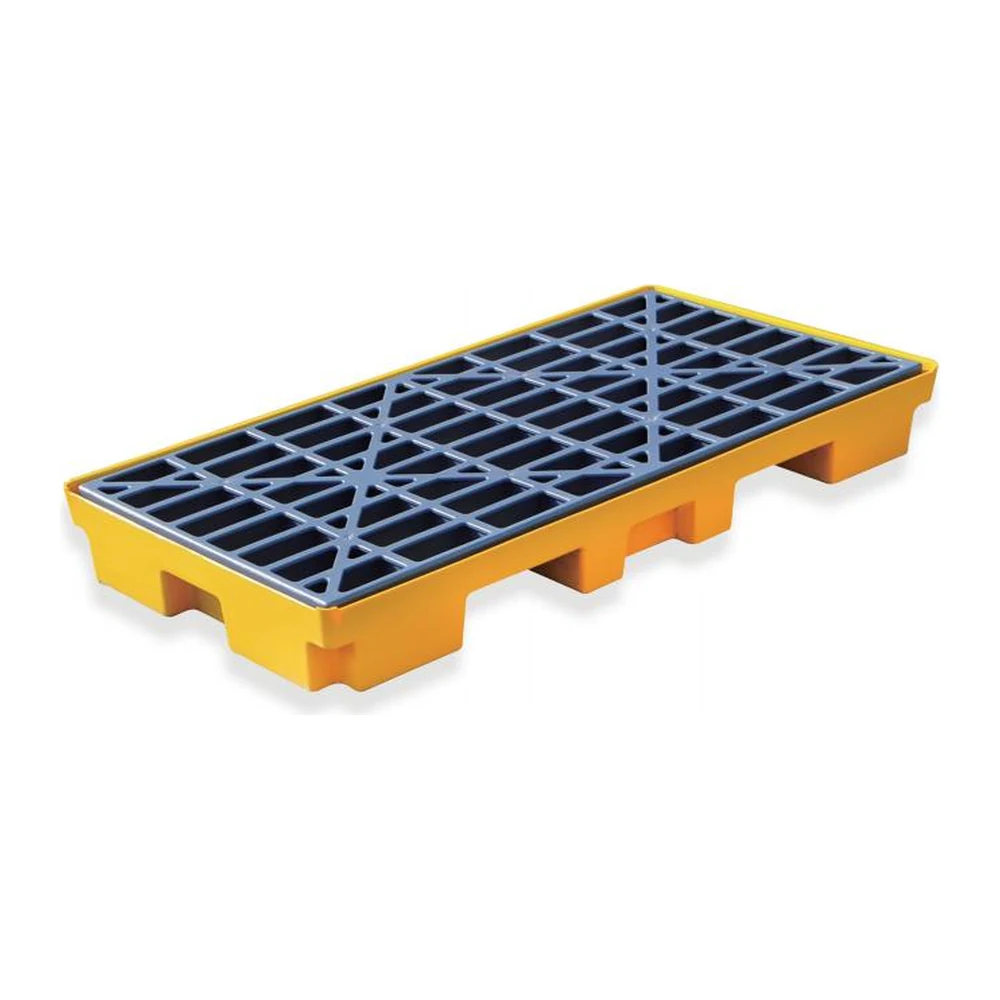 Drum Spill Decks |
Low decks with an open grate; sumps of 30 to 170 litres, so check each against the 25% figure first. |
| Drums in storage | 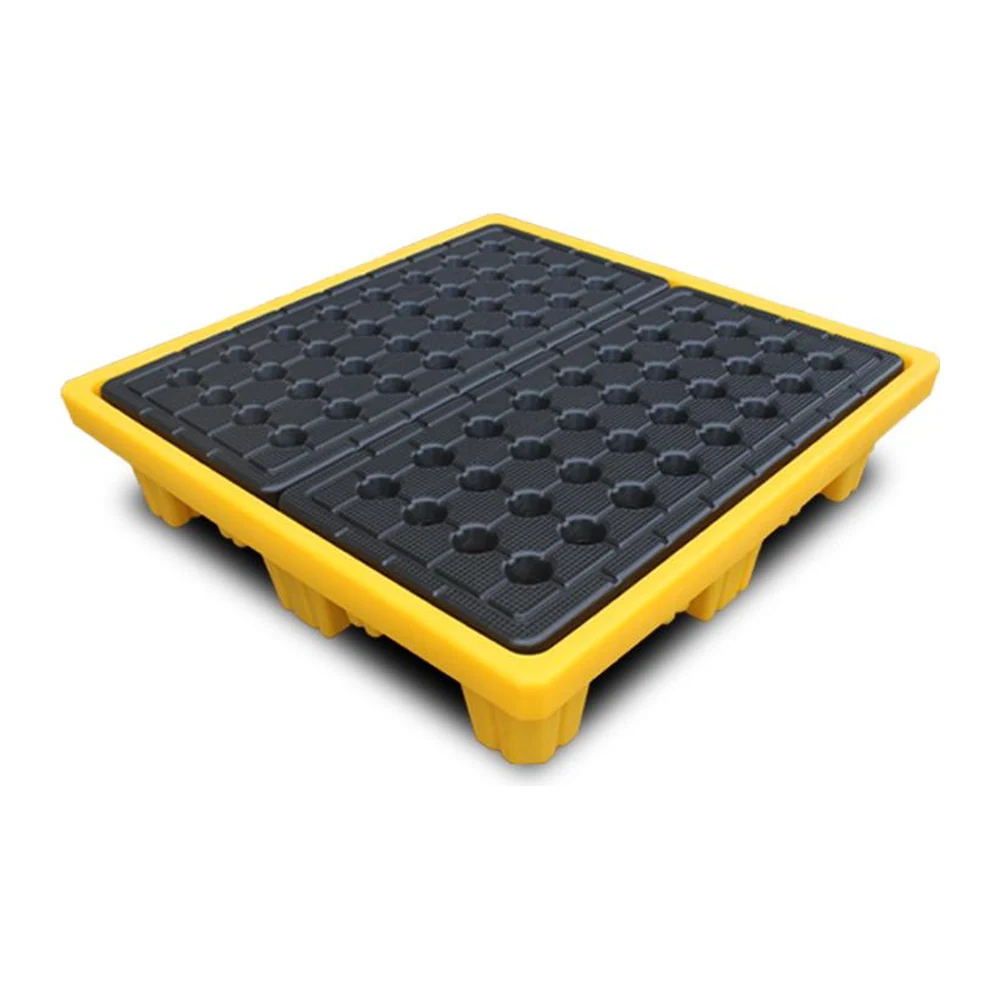 Drum Spill Pallets |
Sumps of 42 to 488 litres; every model of 130 litres or more clears the 25% figure for the drums it takes. |
| Outdoor oil stores | 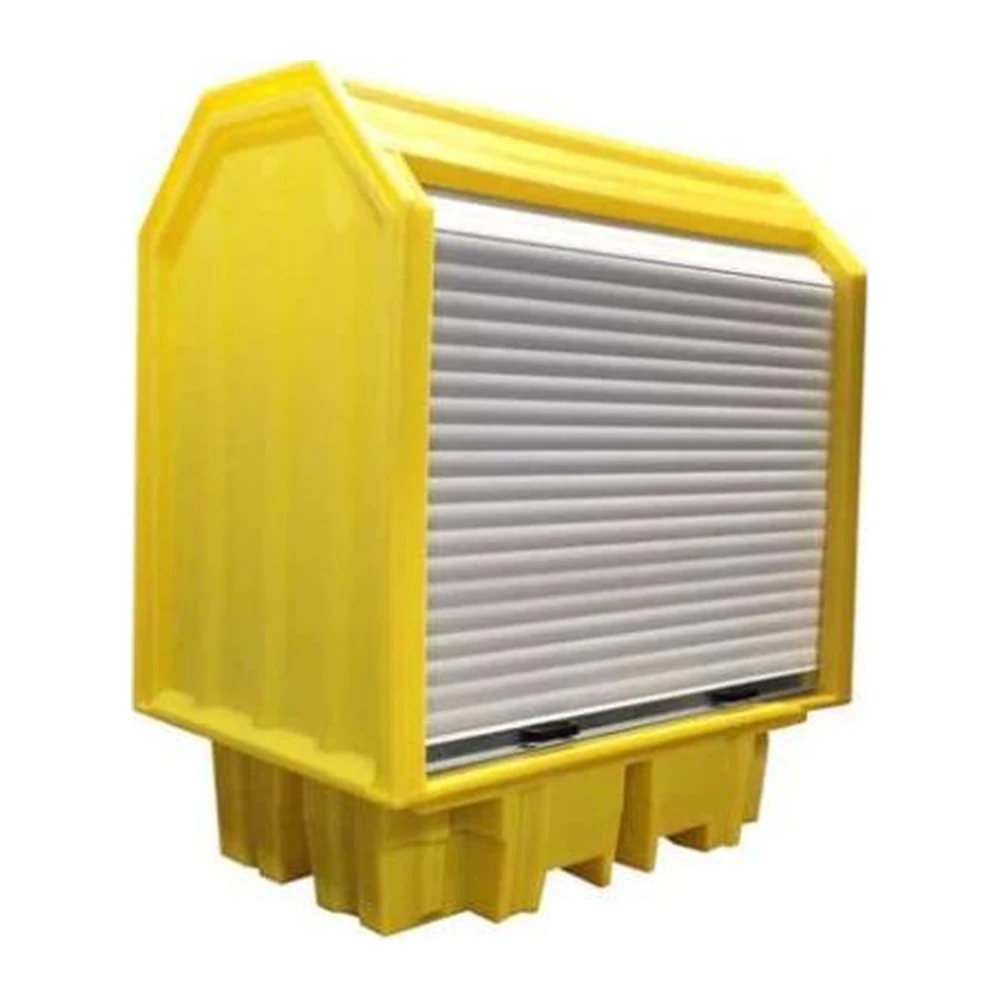 Covered Spill Pallets & Covers |
A shutter or cover keeps rain out of the sump. |
| Fire-assessed stores | 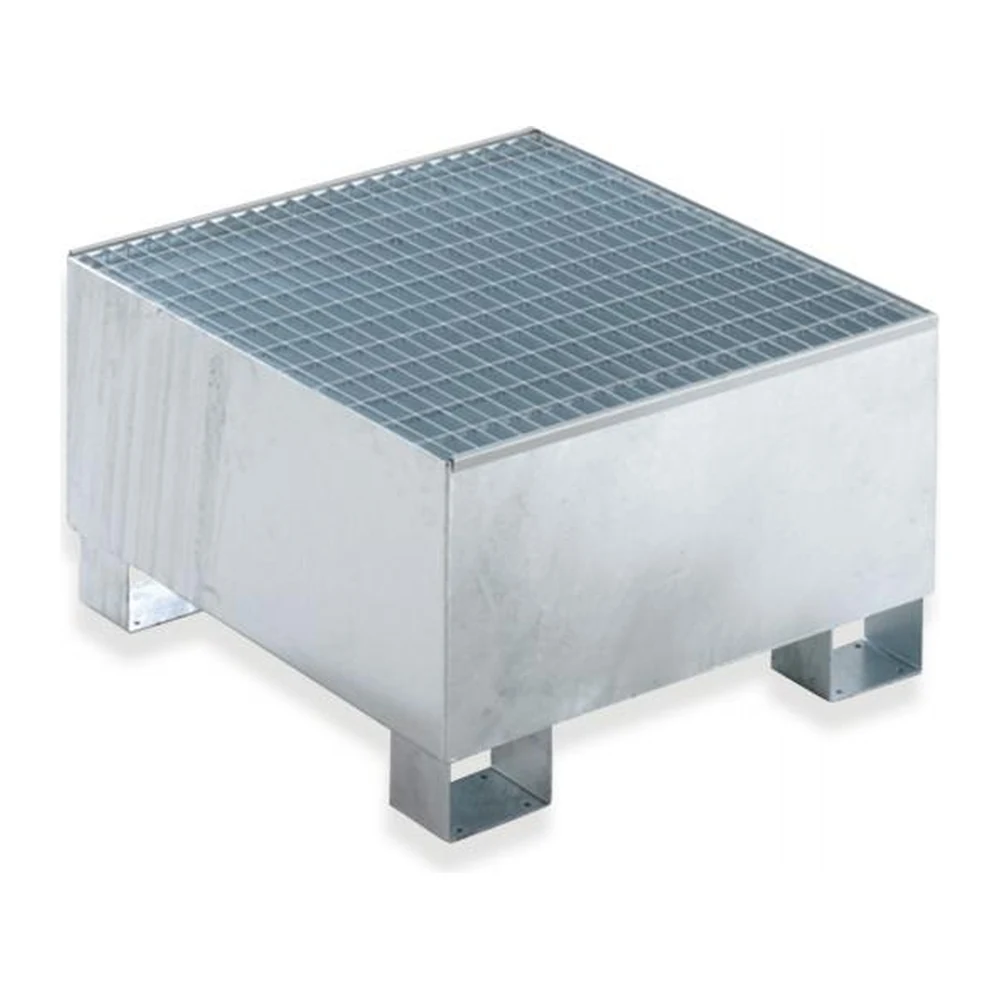 Steel Spill Pallets |
Double-layer 3 mm steel, 203 to 216 litres for drums, enough for the 25% figure. |
Yes. The regulations set performance and name no product. In England the tray needs a capacity of at least 25% of the drums it serves, an impermeable base and walls, no drain opening, and protection from impact (regulation 3(2) and 3(5)). Build it from a material that resists the liquid, as GPP 26 section 5.2.4 asks, and keep other items out of it. A bought tray comes with a stated sump and load rating; a home-made one needs both worked out.
Not under the England oil rules, which leave out any container of 200 litres or less (regulation 2(2)(c)). Scotland rule 26 asks only that a portable container under 200 litres will not burst or leak. A tray is still sound practice at a decant point. HSG140 paragraph 200 says spill trays should be provided where decanting or dispensing is carried out, and HSG51 paragraph 240 recommends lipped shelving or trays for flammable stock on display in a small shop.
The regulations give no volume. England regulation 3(4) requires a drip tray to catch oil spilled when a container is filled through a fill pipe outside the secondary containment. Wales regulation 5(9), Northern Ireland regulation 4(3) and Scotland rule 28(d) say the same. GOV.UK notes that the tank may not be visible from the fill point during a remote fill. Size the tray to the coupling and hose you use, and keep it clear of water and debris.
No, it is a UK allowance for drums of oil. The US SPCC rule, 40 CFR 112.8(c)(11), asks for containment for mobile or portable oil containers sufficient for the largest single container, with freeboard for precipitation. Across the regions in our spill pallet size by country table, four 205 litre drums of oil need between 205 and 820 litres, depending on the rule.
Earthing sits with the containers and the transfer equipment. HSG140 paragraph 73 asks for all metal or other conducting components to be earthed before liquid flows, and paragraph 200 asks for containers to be bonded together and earthed where liquid is decanted or dispensed, with spill trays provided. HSG51 paragraph 60 adds that plastic containers holding low-conductivity flammable liquids need an assessment for electrostatic discharge. Your DSEAR risk assessment sets the measures.
A 205 litre drum weighs about 220 kg full of water and is 585 mm across the hoops. Of our open drip trays, the 110 litre (1,000 mm square, 1,500 kg static) and the 150 litre (1,200 mm square, 3,000 kg static) are rated above that weight and wide enough. The 75 litre tray is rated 600 kg but is 550 mm wide, narrower than the drum. The bench trays are rated 20 to 100 kg and carry no drum.
A drip tray is a low open tray, and for drums of oil it may hold 25% of their combined capacity. A bund is the raised wall around a container or group of containers, sized at 110% of the largest or 25% of the total. A spill pallet is a raised grated platform with a sump beneath, and it works as either, depending on the sump. The oil regulations count a drip tray, a bund or any other system that stops escaped oil leaving the store.
Size it to the largest container it holds. In a flammable-liquid cabinet HSG51 paragraph 207 asks for a sump of 110% of the largest vessel normally stored. Under a sink or on a shelf, no oil rule applies to small containers, and a tray that holds the largest container in full covers the worst spill. HSG71 paragraph 206 describes trays as a way to keep incompatible liquids apart, so give bleach, acids and solvents separate trays.
Check it before you move it. Remove clean rainwater regularly, as GOV.UK asks, and do not let the contents reach surface water or groundwater. GOV.UK treats any material contaminated with oil as hazardous waste, including a mixture of oil and water collected in a bund or other secondary containment. Pump the mixture into a sealed container and follow the GOV.UK hazardous waste rules for disposal.
The standards and regulations this page relies on, at their issuing body. Where a market rule is named here, check the current revision before you specify against it.
Last reviewed by David Guru, Co-Founder & Business Development Director.
Tell us the containers, the liquid and where the store is. We come back with the pallet or bund, its load rating and a quotation.