
What a mobile bowser needs under the oil storage rules in each UK nation, when it can be towed full of diesel, and how to refuel from one on site.
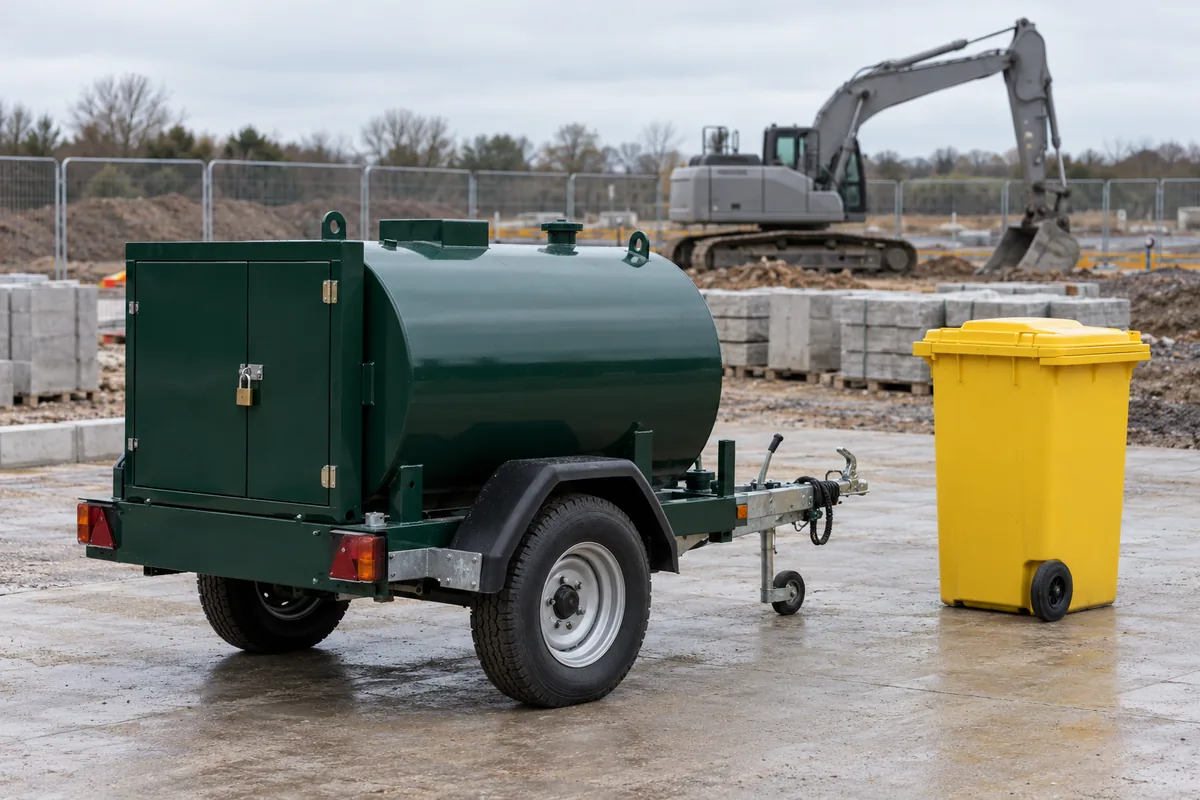
A UK fuel bowser over 200 litres is an oil store: it needs secondary containment of 110% of its capacity and locks on its taps, pump, hose valve and nozzle (England, regulation 5). On the road, a business taking diesel to its own job may carry up to 450 litres per bowser outside ADR; above that the bowser must be a certified IBC, and above 1,000 litres full ADR applies.
Quick answer: What are the UK rules for a fuel bowser?
Above 200 litres a bowser counts as an oil store, so it needs a bund holding 110% of its capacity and lockable taps and nozzle. Outside ADR, a business can take up to 450 litres of diesel per bowser to its own job. Bigger bowsers must be certified IBCs, and diesel loads over 1,000 litres come under full ADR.
Work it out
A fuel bowser is a mobile tank that stores fuel and dispenses it. GOV.UK defines a mobile bowser as a container designed to store and dispense oil that can be moved between locations but not under its own power. Collins gives the British sense as a tanker of fuel for aircraft or military vehicles; in Australia and New Zealand the word once meant a petrol pump. It is spelt bowser, said with the ‘bow’ of ‘how’, and began as a US trade name from S. F. Bowser, who made the first one in 1885.
A bunded bowser has an inner tank inside an outer bund that catches a leak. A hand or electric pump draws fuel through a hose to a nozzle, often past a meter, and a sight gauge shows the level. A towable bowser sits on a trailer chassis; a static one has forklift pockets and rides on a flatbed, pickup or van. With an electric pump, GOV.UK wants a valve at the delivery end that closes itself when not in use, like the nozzle on a forecourt pump.
The Control of Pollution (Oil Storage) (England) Regulations 2001 list a mobile bowser as a container (regulation 1(2)) and define oil as any kind of oil, petrol included. A bowser of more than 200 litres at a business, kept outside a building, is in scope, and the 200 litre test applies to each container on its own (regulation 2(2)(c)). Regulation 3 sets the general duties and regulation 5 adds the ones for bowsers:
| Requirement | What it means for a bowser | England |
|---|---|---|
| Strength | Unlikely to burst or leak in ordinary use | reg 3(1) |
| Secondary containment | 110% of the bowser; with several in one bund, 110% of the largest or 25% of the total, whichever is greater | reg 3(2)(a) |
| Impact and drainage | Sited or guarded away from traffic; no valve or opening that drains the bund | reg 3(2)(b) and (d) |
| Kit inside the bund | Valves, filters, sight gauges and vents within the containment | reg 3(3) |
| Fixed taps and valves | Fitted with a lock and locked shut when not in use | reg 5(2) |
| Delivery end of the hose | A hand pump, or a valve that closes itself when not in use, with a lock, locked shut | reg 5(3)(a) and (b) |
| Where the hose leaves the tank | A lockable valve, locked shut when not in use | reg 5(3)(c) |
A bunded bowser carries its 110% in its own outer skin. A single-skin bowser must stand in a separate bund of 110%, because the 25% drip-tray route in regulation 3(5) is written for drums. GOV.UK accepts a UN mark on a drum or IBC as proof of the container’s strength. Where several bowsers or tanks share one bund, the bund capacity calculator works out the figure.
The other three nations repeat the English locks and add one: any sight gauge must be secured to the bowser and fitted with a valve or tap locked shut when not in use. Their containment figures match England’s.
| Nation | Rule | Bowser clause | Differs from England |
|---|---|---|---|
| England | Oil Storage (England) Regulations 2001 | Regulation 5 | Excludes buildings and farm fuel; the sight gauge sits inside the bund (reg 3(3)) |
| Wales | Oil Storage (Wales) Regulations 2016 | Regulation 8 | Sight gauge locked; no building exclusion; farm fuel included |
| Scotland | Environmental Authorisations (Scotland) Regulations 2018, Schedule 9, rule 28 | Rule 28(g) | Sight gauge locked; no building or farm exclusion |
| Northern Ireland | Oil Storage Regulations (NI) 2010 | Regulation 6 | Sight gauge locked; no building exclusion; farm fuel under separate farm rules |
Scotland moved its oil rule from CAR into the Environmental Authorisations Regulations on 1 November 2025, so guidance that still cites CAR, GPP 6 of 2023 included, predates the switch. The full scope by nation is on UK oil storage regulations.
In England, oil a farm keeps for agriculture sits outside the 2001 regulations (regulation 2(2)(e)). It falls under the Silage, Slurry and Agricultural Fuel Oil Regulations 2010, known as SSAFO, once the farm stores more than 1,500 litres of fuel oil in total (regulation 5(2)(b)). Regulation 5(2)(a) leaves out temporary storage in a tanker used for transporting fuel oil on roads or about a farm, so the question is whether the bowser is storing fuel or moving it.
Above that total, a bowser used as a store needs a SSAFO store (Schedule 3): a bund of 110% of the tank and an impermeable base built to last 20 years with maintenance. Taps must discharge downwards and lock shut, any permanent hose needs a self-closing valve kept locked within the bund, and no part within 10 metres of inland or coastal water. GOV.UK puts fuel for a farm’s other business, such as its lorries, under the business rules. Wales and Scotland fold farm fuel into the general rule; Northern Ireland’s farm rule starts above 1,250 litres. See agricultural fuel storage.
Yes, when the bowser and the load fit one of three routes in ADR, which regulation 5 of the Carriage of Dangerous Goods Regulations 2009 makes law in Great Britain. Diesel is UN 1202, Class 3, packing group III and transport category 3. HSE notes that ADR does not recognise the word bowser, so the test is what the tank is and how much is on the vehicle.
| Route | When it applies | What it asks |
|---|---|---|
| Own-use relief, ADR 1.1.3.1(c) | Diesel for your own work on arrival, such as a contractor’s plant; up to 450 L per bowser and 1,000 L per vehicle | ADR does not apply; prevent leaks. Supply and delivery rounds excluded |
| Small-load relief, ADR 1.1.3.6 | A bowser certified as a UN IBC; up to 1,000 L of diesel per vehicle and trailer | The UN IBC, ADR 1.3 training, a 2 kg dry powder extinguisher, secure stowage |
| Full ADR | Over 1,000 L of diesel, or a bowser that is a tank and not an IBC | ADR driver card, orange plates, transport document and instructions in writing, the full equipment list |
Above 450 litres a bowser must be a certified IBC to travel as a package, and an IBC may hold at most 3,000 litres of a packing group III liquid (ADR 1.2.1). Where the bowser is not an IBC, HSE says the towing vehicle should meet the AT or FL vehicle standard (ADR 9.1.2.3), and its manual says the small-load relief does not cover tankers. HSE also described an old authorisation, No. 1, that let diesel bowsers built before 10 May 2004 count as IBCs. It no longer appears among DfT’s current authorisation notices, so do not rely on it.
HSE draws the own-use line by the purpose of the trip: a driver taking diesel for a machine they will run on arrival is exempt, and a trip to re-supply that machine is not. A fuel round to other people’s plant needs the small-load relief or full ADR, and the ADR 1,000-point calculator adds up a mixed load. Agricultural and forestry tractors sit outside the main CDG requirements while they travel at 40 km/h or less, with any trailer they tow; HSE does not count a pickup, van or 4x4 as a tractor.
A bowser certified as a metal, rigid plastic or composite IBC is inspected and leak-tested before first use. After that it needs an outside and service equipment check, with a leakproofness test, at least every 2.5 years, and given a full inspection every 5 years (ADR 6.5.4.4). A rigid plastic tank, or the plastic inner tank of a composite IBC, may carry dangerous goods for 5 years from manufacture (ADR 4.1.1.15), so a plastic bowser has a fixed road life where a steel one does not. An IBC of more than 450 litres shows the UN number and the Class 3 label on two opposite sides (ADR 5.2.1.4 and 5.2.2.1.7). The IBC inspection date checker works out the dates, and IBC totes covers the codes.
Trailer law applies on top. GOV.UK requires working brakes on a trailer that weighs over 750 kg loaded, a breakaway cable or secondary coupling, and the towing car’s number plate on the trailer. A full 1,000 litre bowser holds up to 845 kg of diesel before the tank and chassis are weighed (Directive 98/70/EC, Annex II). A driver who passed the car test from 1 January 1997 may tow a trailer of up to 3,500 kg maximum authorised mass, within the car’s gross train weight. Full-ADR loads also need a driver with an ADR card, valid for 5 years (ADR 2025 explained).
Petrol bowsers are rare. HSE says bowsers are not commonly used for petrol, though they may be seen supporting aircraft or motor sport away from base. On the road, petrol is UN 1203, packing group II and transport category 2, so the small-load relief stops at 333 litres, and a petrol IBC must meet special provision BB2 on vapour pressure.
The Petroleum (Consolidation) Regulations 2014 cover workplaces that pump petrol from a fixed tank into vehicles, which need a petroleum storage certificate, and homes and clubs, where more than 275 litres needs a licence. HSE defines dispensing by that fixed tank, so a workplace petrol bowser answers to DSEAR, and petrol counts as oil under the pollution rules too. The container limits are on UK petrol container rules.
Red diesel may go in a bowser for an allowed use, such as farming, forestry or a golf course, and the bowser follows the same storage and road rules as for white diesel. DfT Guidance Note 23 treats red diesel as coloured for tax, with no separate status for carriage. HMRC Excise Notice 75 bars mixing rebated and full-duty fuel in any tank (paragraph 10.1).
Construction lost the rebate on 1 April 2022, so a building-site bowser holds white diesel. Where a business runs both fuels, keep separate, labelled bowsers and flush one switched from red to white until no marker remains. Keep the delivery notes with the fuel, because an HMRC officer can sample fuel in any storage tank and ask for the documents behind it (Notice 75, 9.4). Red diesel rules lists the allowed uses.
GPP 6, the construction guidance for Northern Ireland, Scotland and Wales, sets the distances. Do not store oil within 10 metres of a watercourse, ditch or drainage channel, or within 50 metres of a spring, well or borehole, and keep it clear of open drains and of site traffic. GPP 2 gives the same 10 and 50 metre figures for oil stores. The Environment Agency endorses neither as regulatory guidance for England, where the business rules set no distance but want the store protected from impact (regulation 3(2)(b)).
For refuelling, GPP 6 asks for a designated area with an impermeable surface away from drains, a person present throughout, and a pump with an automatic cut-off trigger nozzle that cannot be propped open. Away from that area, refuel over a drip tray or plant nappy and take the bowser back to its store afterwards. Keep an oil-only spill kit beside it (GPP 2, section 15) and a notice telling users to keep valves, nozzles and trigger guns locked (section 14). DSEAR applies to diesel at work, which HSE classes as a flammable liquid, so the risk assessment covers refuelling, ignition sources and static: see DSEAR and ATEX for fuel stores.
AdBlue bowsers fall outside the oil storage rules. AdBlue is a 32.5% solution of urea in water made to ISO 22241, and a urea solution is not oil. Bund it anyway, and keep every wetted part HDPE, polypropylene or stainless steel; a bowser that has held diesel should never switch to AdBlue. See DEF and AdBlue container requirements.
Aviation refuelling at aerodromes runs to industry standards: the Civil Aviation Authority withdrew its CAP 748 guidance on the basis that the established JIG standards cover fuel quality, and this page does not cover them. On the road, DfT Guidance Note 23 gives kerosene the same requirements as diesel, and HSE says a bowser certified as an IBC may carry kerosene, jet fuel included, as a package.
We do not make bowsers. We make the cans and containment that work beside them on the same sites. Our 20 litre NATO-pattern steel fuel can is UN-marked for dangerous goods transport and takes fuel from the bowser to plant it cannot reach; for petrol it sits within the UK’s 20 litre limit for a metal container. Our IBC spill pallets, with sumps from 120 to 1,600 litres, hold the totes that refill bowsers.
Drip trays up to 150 litres sit under the refuelling point, and salvage drums from 75 to 360 litres, with spill kit cabinets and carts, keep the response kit beside the bowser. Tell us the fuels, the plant and the nation, and we will specify the cans and the containment.
| Your use case | Recommended can | Why this one |
|---|---|---|
| Fuel from the bowser to small plant | 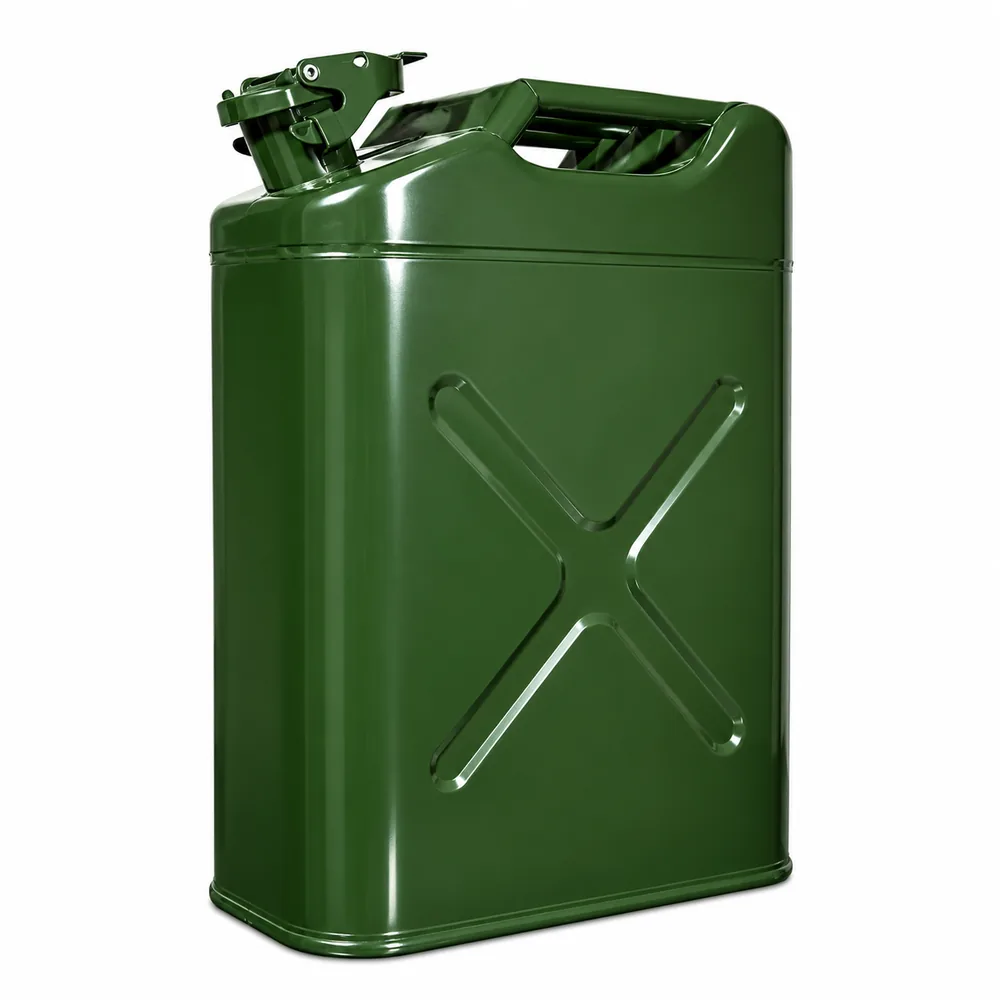 20L NATO Steel Fuel Can |
UN-marked pressed steel, and within the UK 20 litre limit for a metal petrol container. |
| Fleet cans kept apart by colour | 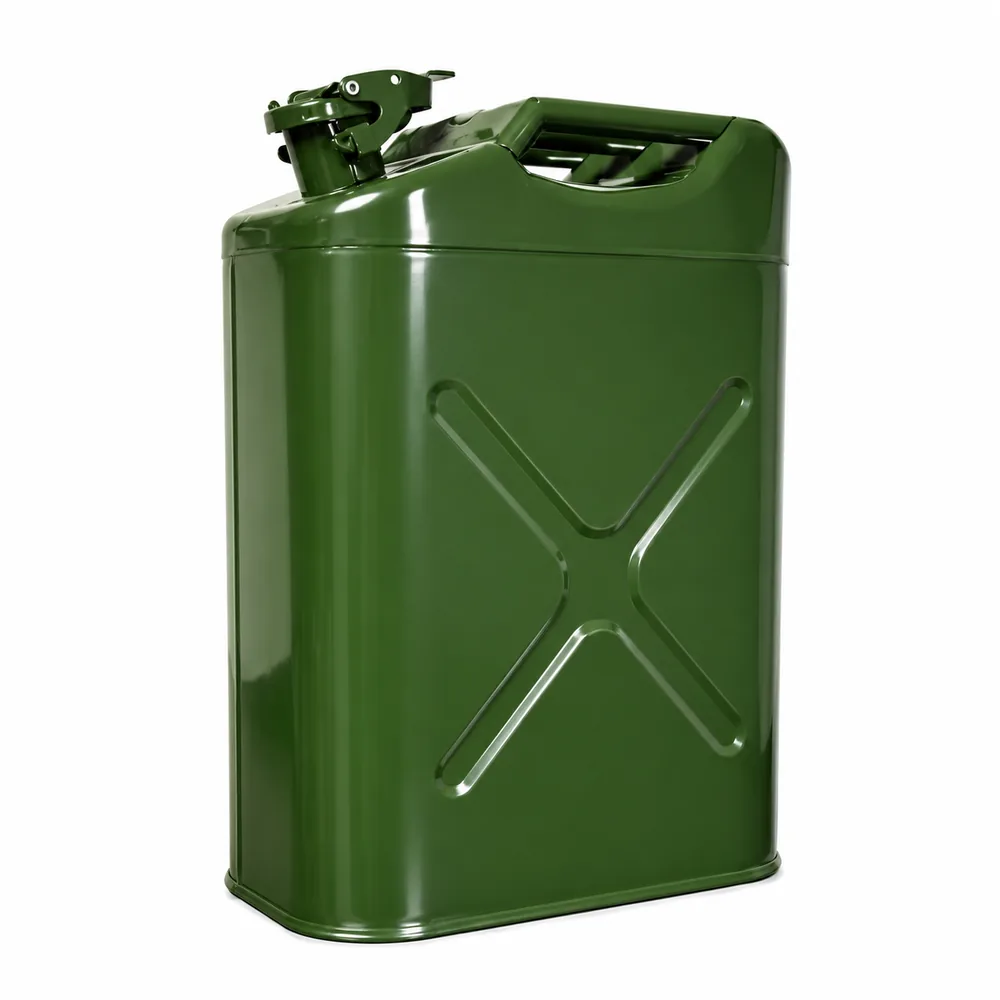 20L Upright Steel Fuel Tank |
Pressed steel in RAL colours, so red diesel, white diesel and petrol never share a can. |
| IBCs that refill bowsers | 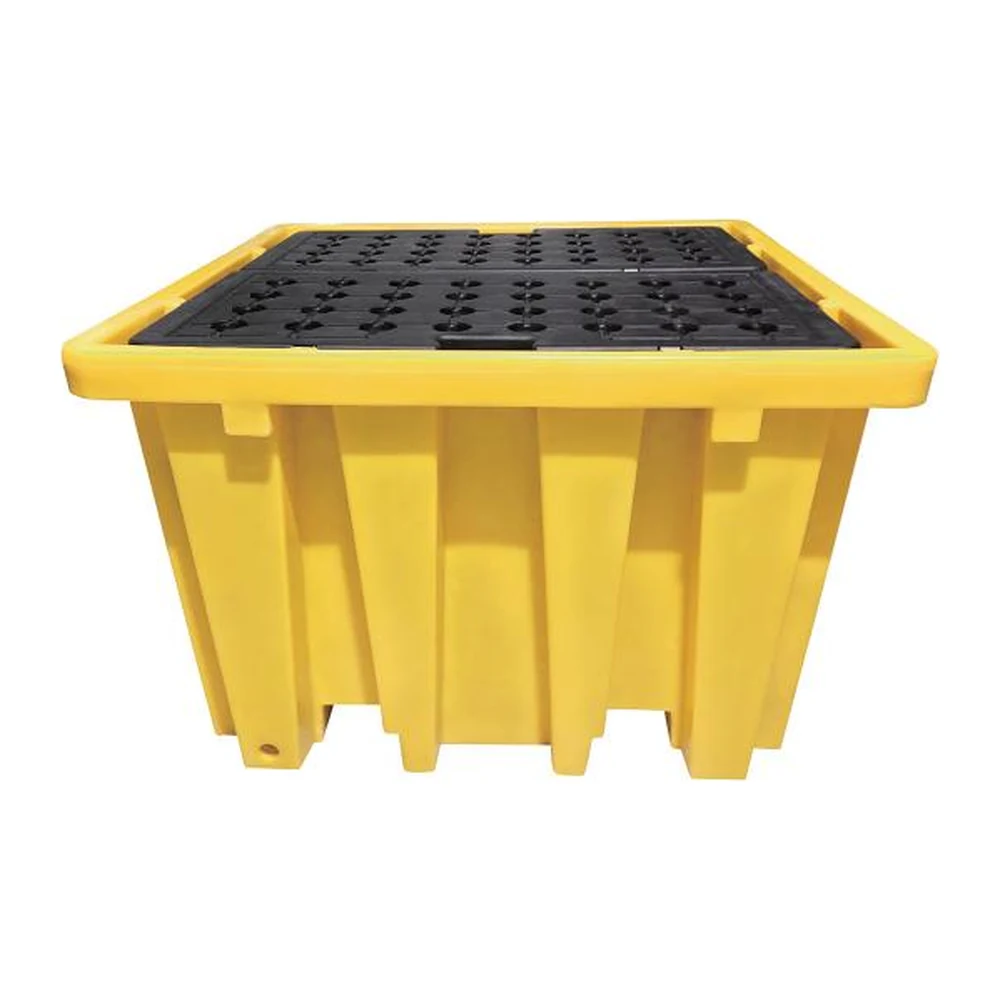 IBC & Multi-Container Spill Pallets |
Sumps from 120 to 1,600 litres; one 1,000 litre IBC of oil needs 1,100. |
| The refuelling point |  Bench Trays & Drip Trays |
Open drip trays up to 150 litres for refuelling away from the store, as GPP 6 asks. |
| Spill response at the bowser | 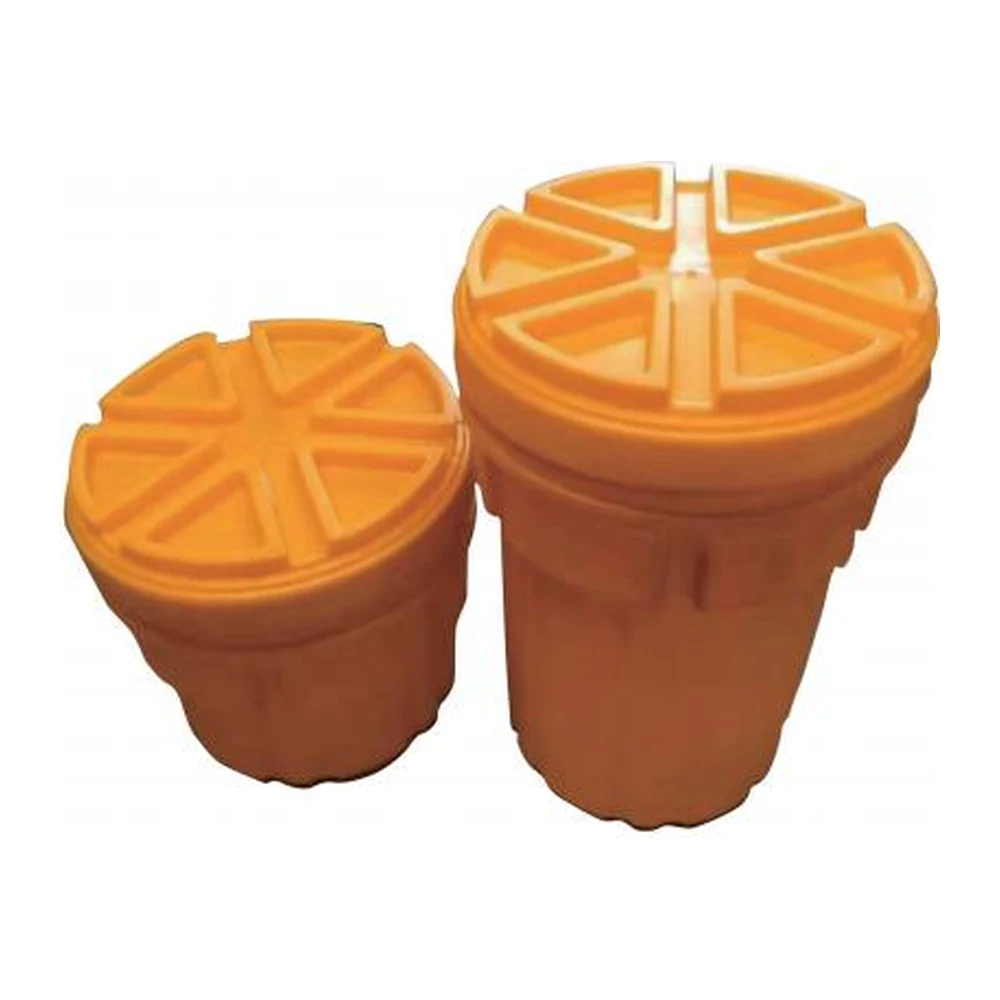 Salvage Drums & Spill Response Storage |
Salvage drums from 75 to 360 litres, with cabinets and carts that keep the kit beside the bowser. |
Not in England, Wales or Northern Ireland. Each excludes a container of 200 litres or less, and the test applies to each container on its own, so two 200 litre bowsers both stay outside. Scotland differs: general binding rule 26 covers only portable containers under 200 litres, so a 200 litre bowser falls under rule 28. DSEAR still applies to diesel at work whatever the size.
In England, yes, without the oil storage rules: the 2001 regulations do not apply to a container inside a building (regulation 2(2)(b)), though DSEAR and fire safety law still do. GOV.UK counts any structure with walls and a roof that would capture leaking oil as a building. Wales, Scotland and Northern Ireland have no building exclusion, so a bowser kept in a shed there still needs 110% containment and its locks.
A tanker carries fuel in a tank built and approved to the ADR tank rules, on a vehicle approved for it. A bowser is a smaller mobile container that stores fuel and dispenses it where it is used. On the road the container draws the line: HSE treats a bowser certified as an IBC as a package, while a bowser that is a tank brings the tanker rules, including an AT or FL towing vehicle (ADR 9.1.2.3).
Choose the size against the legal limit your work falls under. A firm taking diesel to its own job can tow up to 450 litres a bowser outside ADR. A certified IBC bowser carries up to 1,000 litres of diesel per vehicle under the small-load relief, and an IBC holds at most 3,000 litres, so anything larger is a tank under full ADR. On site in England, any business bowser over 200 litres kept outdoors needs 110% containment.
Yes, if it is secured and the load fits an ADR route. A static bowser certified as an IBC travels on a pickup or flatbed as a package. Under the small-load relief it must be stowed so it cannot shift (ADR 7.5.7, as HSE lists it), carry its UN mark and labels, and the vehicle needs a 2 kg dry powder extinguisher. Under the own-use relief, up to 450 litres, ADR asks only that leaks are prevented.
Yes, where both parts are occupied by the same person and sit close together. DfT road derogation 11 lifts the carriage requirements for Class 3 goods moving between two parts of private premises in the immediate vicinity, even where a road separates them. HSE reads a highway trip of more than about 400 metres as outside the immediate vicinity. The oil storage rules still apply where the bowser stands at each end.
Not while every load stays within the small-load limit of 1,000 litres of diesel per vehicle. ADR 1.8.3 requires a dangerous goods safety adviser for a business that consigns, carries, fills or unloads dangerous goods by road, and Great Britain exempts loads within ADR 1.1.3.6. Carriage under the own-use relief sits outside ADR altogether. A fuel round above 1,000 litres brings the adviser duty back.
On the road, a bowser certified as an IBC of more than 450 litres shows the UN number, UN 1202 for diesel, and the Class 3 flammable liquid label on two opposite sides (ADR 5.2.1.4 and 5.2.2.1.7). Orange plates on the vehicle come with full ADR above 1,000 litres. On site, GPP 2 asks for a notice telling users to keep valves, nozzles and trigger guns locked, and DSEAR asks for the EX sign at the entry to a hazardous zone where necessary.
Only when the outer skin works as a bund. GOV.UK counts an integrally bunded tank, where the maker builds the bund around the tank, as secondary containment, and rules out a double-skinned or twin-walled tank whose outer skin adds strength alone. Ask the maker whether the outer skin holds 110% of the inner tank and has no drain opening. If it does not, the bowser needs a separate bund of 110%.
Two sets of regulators share it. The Environment Agency, Natural Resources Wales, SEPA and the Northern Ireland Environment Agency enforce the oil storage rules, and breaking them is a criminal offence in all four nations. On the road, GOV.UK sends reports about a vehicle, driver or company to the Driver and Vehicle Standards Agency, and HSE takes up what a business does wrong, such as missing driver training or wrong labels.
On the road, yes, once ADR applies. The small-load relief keeps the duty to carry at least one portable extinguisher of 2 kg dry powder (ADR 8.1.4.2, as DfT Guidance Note 23 states), and full ADR asks for a larger set (ADR 8.1.4). Under the own-use relief ADR does not apply. On site, the DSEAR and fire risk assessments decide the fire-fighting kit kept at the refuelling point.
A fuel bowser is a mobile fuel tank: a towable one sits on a trailer chassis, and a static one has forklift pockets and rides on a flatbed, pickup or van. A bunded bowser holds its inner tank inside an outer bund that catches a leak. A hand or electric pump draws fuel through a hose to a nozzle, often past a meter, and a sight gauge shows the level. In England a business bowser over 200 litres kept outdoors needs locks on its taps, pump, hose valve and nozzle.
The standards and regulations this page relies on, at their issuing body. Where a market rule is named here, check the current revision before you specify against it.
Last reviewed by David Guru, Co-Founder & Business Development Director.
Tell us the containers, the liquid and where the store is. We come back with the pallet or bund, its load rating and a quotation.