
Who counts as the producer, what an importer of steel and plastic containers has to file, and which dangerous goods packaging rule applies, in seven markets.
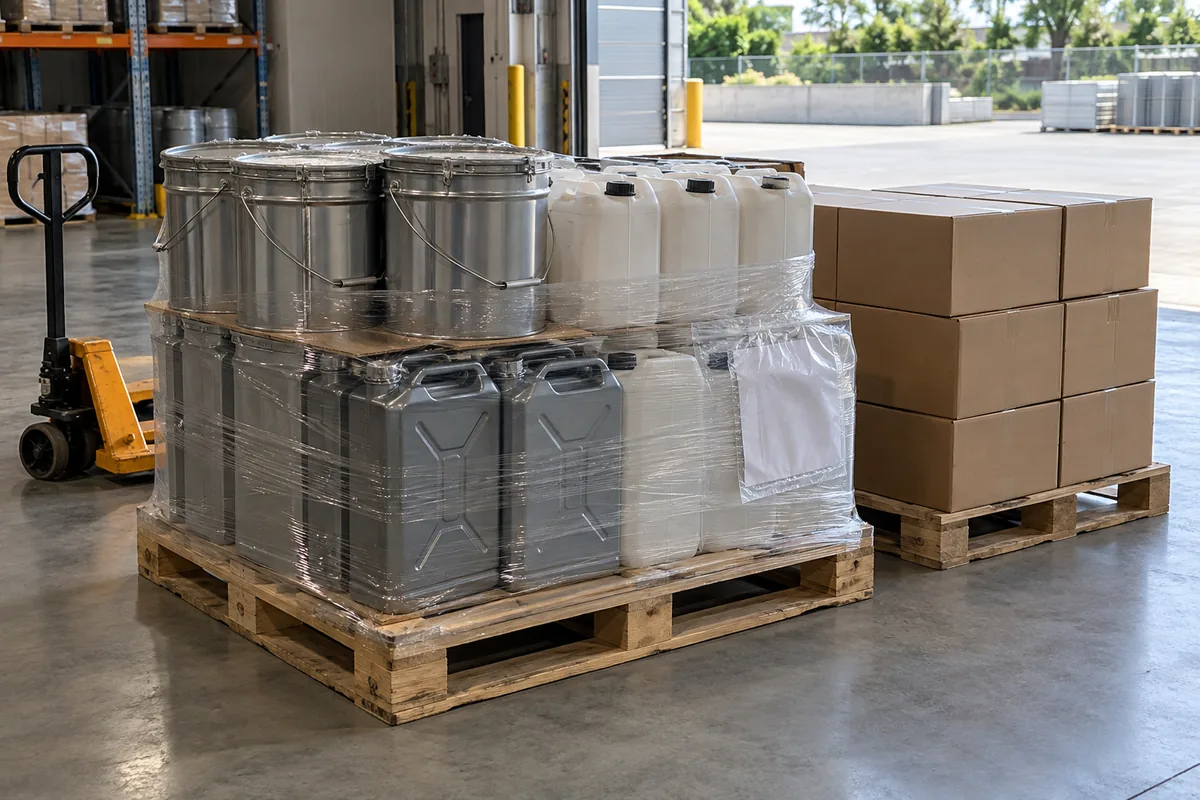
Each market below puts packaging duties on the business that first supplies packaging there, usually the importer or brand owner. The EU PPWR has applied since 12 August 2026. UK packaging EPR applies above £1 million turnover and 25 tonnes. US packaging EPR is state law, and 19 states cap four heavy metals at 100 ppm in total. Dangerous goods packaging rests on the UN Model Regulations in all seven.
Quick answer: What packaging regulations apply when you import containers?
The importer or brand owner carries the duty in most markets. The EU's PPWR has applied since 12 August 2026, and UK EPR catches firms with over £1 million turnover supplying over 25 tonnes. US rules are state laws, Australia uses the 2011 NEPM and APCO, and all seven markets ship dangerous goods packaging under UN-based rules.
Work it out
EPR packaging means packaging covered by extended producer responsibility: the business that puts packaging on a market reports what it supplied and pays for collecting and recycling it as waste. Each law calls that business the producer and defines it in its own terms.
Most laws here rank a brand owner in the market first, then the importer or first seller. The EU PPWR names the manufacturer, importer or distributor that first makes packaging available in a member state (Article 3(1)(15)). Australia’s NEPM names the first person to sell an imported product in Australia (clause 3). In practice the importer registers, and the overseas factory supplies the weights.
The markets differ most on who pays for packaging waste. The EU (PPWR Article 5(4)), the UK (SI 2015/1640, regulation 5) and 19 US states also limit lead, cadmium, mercury and hexavalent chromium in packaging to 100 ppm in total.
| Market | Main packaging law | Producer or obligated party | What a container importer does | Dangerous goods packaging |
|---|---|---|---|---|
| EU | Regulation (EU) 2025/40 (PPWR), from 12 August 2026 | First to make packaging available in a member state | Registers in each member state; pays EPR fees | ADR (Directive 2008/68/EC) |
| UK | SI 2024/1332 (EPR); SI 2015/1640; Plastic Packaging Tax | UK-established business with turnover over £1 million and over 25 tonnes supplied | Registers and reports; large producers pay PackUK fees | ADR (CDG 2009) |
| US | State EPR laws; toxics in packaging laws in 19 states | Brand owner, then licensee, then importer of record | Joins each state’s PRO; certifies the metals limit on request | 49 CFR parts 171 to 180 |
| Australia | NEPM (Used Packaging Materials) 2011; Packaging Covenant | Brand owner or first seller of an import, at A$5 million turnover or more | Joins APCO or reports to the state agency | ADG Code 7.9 |
| Canada | Provincial EPR, such as Ontario O. Reg. 391/21 | Brand holder, then importer | Joins the provincial programme; reports plastic packaging to the federal registry | TDG Regulations, CAN/CGSB-43.150 |
| Japan | Containers and Packaging Recycling Act (1995) | Businesses that use, make or import containers | Pays recycling on plastic, glass, PET and paper packaging reaching households | Ship Safety Act at sea; Fire Service Act on land |
| Singapore | Resource Sustainability Act 2019, Part 4 | Producers over S$10 million turnover | Reports packaging data and a 3R plan to NEA | IMDG Code at sea; SCDF and NEA on land |
Regulation (EU) 2025/40, the Packaging and Packaging Waste Regulation (PPWR), has applied in every member state since 12 August 2026 (Article 71), replacing Directive 94/62/EC. The harmonised material label follows from 12 August 2028 (Article 12(1)) and minimum recycled content in plastic parts from 1 January 2030 (Article 7(1)), later if the Commission’s implementing acts are late.
A producer registers in each member state where it first makes packaging available and may not supply packaging there unregistered (Article 44(2) and (4)). Packaging carrying dangerous goods under Directive 2008/68/EC, which applies ADR on the road, is spared the recyclability, recycled-content and re-use targets, and still meets the metals limit and counts for EPR. Our EU packaging guide covers the technical file.
Consumer containers also need an EU-established GPSR responsible person, steel containers of HS 7310 fall under CBAM, and from 14 December 2027 the forced labour regulation applies too.
The Producer Responsibility Obligations (Packaging and Packaging Waste) Regulations 2024 (SI 2024/1332) have run packaging EPR across the UK since 1 January 2025. A UK-established business with turnover over £1 million that supplied more than 25 tonnes of packaging must comply; above £2 million and 50 tonnes it is a large producer and pays PackUK disposal fees (regulation 24). Producers register with the Environment Agency, Natural Resources Wales, SEPA or the Northern Ireland Environment Agency. SI 2024/1332 revoked the 2007 packaging waste regulations (SI 2007/871) on 1 January 2026 (Schedule 17); the fees are in our UK packaging EPR guide.
The Packaging (Essential Requirements) Regulations 2015 (SI 2015/1640), in force since 1 October 2015, govern design. Packaging must be kept to the minimum volume and weight that keeps the product safe, hygienic and acceptable (Schedule 1), and the four regulated metals may not exceed 100 ppm in total (regulation 5). The responsible person supplies technical documentation within 28 days of a request and keeps it for four years (regulation 6).
Plastic Packaging Tax charges £228.82 a tonne from 1 April 2026 on plastic packaging components with less than 30% recycled plastic, once a business makes or imports 10 tonnes in 12 months; see Plastic Packaging Tax on containers. DAERA says the EU PPWR does not apply to packaging placed on the market in England, Scotland or Wales, while much of it applies in Northern Ireland.
US packaging EPR is state law. Congress has passed none, and the Congressional Research Service lists a national EPR initiative among policy proposals (R48293, December 2024). These seven states have enacted packaging EPR laws.
| State | Law | Dates | Hazardous product packaging excluded? |
|---|---|---|---|
| Maine | 38 MRSA §2146 | Signed 12 July 2021 | No |
| Oregon | SB 582 | In effect 1 January 2022; PRO fees from 1 July 2025 | Only where federal rules require a do-not-recycle label |
| Colorado | HB22-1355 | Producer dues from January 2026 | No |
| California | SB 54 | Signed 30 June 2022; regulations approved 1 May 2026 | Yes: plastic containers for 49 CFR part 178 goods, and OSHA hazard communication products |
| Minnesota | Minn. Stat. 115A.1441 | PRO membership after 1 July 2025 | Yes, for OSHA hazard communication products if the packaging cannot be made recyclable |
| Maryland | SB 901 (2025) | Registration by 1 July 2026 | The same test, with the Department’s approval |
| Washington | SB 5284 (2025) | PRO appointed by 1 January 2026 | The same test, as the department decides |
Most rank the brand owner or manufacturer first, then the licensee, then the importer of record where nobody earlier in the chain is in the US (Maine §2146(1)(O)). Washington covers only packaging sold for personal, noncommercial use, Colorado excludes packaging used only between businesses, and Oregon has no business-to-business exclusion.
Nineteen states have toxics in packaging laws, all based on the model legislation of the Toxics in Packaging Clearinghouse (TPCH). The model bars intentionally added lead, cadmium, mercury and hexavalent chromium in any package or packaging component, caps their incidental total at 100 ppm by weight (section 4(a)), and counts shipping containers as packages (section 3). The manufacturer or supplier gives the purchaser a certificate of compliance on request (section 7).
TPCH names the states as California, Connecticut, Florida, Georgia, Illinois, Iowa, Maine, Maryland, Minnesota, Missouri, New Hampshire, New Jersey, New York, Pennsylvania, Rhode Island, Vermont, Virginia, Washington and Wisconsin. Its 2021 model update adds PFAS and ortho-phthalates, and TPCH lists no states that have adopted that update. Hazmat packaging is federal law under 49 CFR, which our US hazmat shipping guide covers.
Australia pairs the National Environment Protection (Used Packaging Materials) Measure 2011 with the Australian Packaging Covenant, run by APCO. DCCEEW says a business that makes or sells packaging and earns A$5 million or more must join APCO, report to its state or territory environment agency under the NEPM, or join another approved programme. The NEPM covers consumer packaging, including retail products used in industrial and commercial premises (clause 7), and every state and territory except the Northern Territory gives it force in local law.
APCO members report by 31 March and file an action plan by 31 May. APCO says its 2025 National Packaging Targets, such as 100% reusable, recyclable or compostable packaging, will not be fully met in that timeframe and that a revised date will be set.
DCCEEW’s reform page, updated 23 October 2026 and read on 28 October 2026, says environment ministers agreed in 2022 to reform packaging regulation and consulted on options in October 2024. It adds that no decision has been made on a kerbside recyclability grading framework. Meanwhile the existing co-regulatory arrangement stays in place. ADG Code edition 7.9 has been mandatory since 1 October 2025, with packaging designs approved by state authorities such as WorkSafe Victoria.
Part 5 of the Transportation of Dangerous Goods Regulations (SOR/2001-286) allows dangerous goods to be imported, offered or carried only in a means of containment that Part 5 requires or permits (section 5.1.1). Class 3, 4, 5, 6.1, 8 and 9 goods in containers of 450 L or less use packaging selected under CAN/CGSB-43.150 (section 5.12), which replaced TP 14850 under SOR/2026-112 of 17 June 2026. A UN-marked jerrican made abroad qualifies if it meets Chapter 6.1 of the UN Recommendations and the rules of its country of manufacture (section 5.6(b)).
Packaging EPR is provincial and aimed at consumer packaging. Ontario’s Blue Box regulation (O. Reg. 391/21) names the brand holder resident in Canada, then the importer resident in Ontario, then the retailer (section 9(1)), and the programme became fully producer-run on 1 January 2026. British Columbia’s Recycling Regulation, Schedule 5, names the manufacturer selling under its own brand, then the brand owner or licensee, then the importer, and collects from homes. The Federal Plastics Registry takes reports from producers that place 1,000 kg or more of plastic products or packaging on the market a year.
Japan’s Containers and Packaging Recycling Act (容器包装リサイクル法), passed in June 1995 and fully in force from April 2000, obliges businesses that use containers or packaging for goods they sell, businesses that make containers, and importers of either. Small firms are exempt: in manufacturing, ¥240 million of sales or less and 20 or fewer employees; in commerce and services, ¥70 million and 5.
The paid recycling obligation covers glass containers, PET bottles, paper packaging and plastic packaging. METI says steel cans, aluminium cans, cardboard and drink cartons are packaging waste but carry no recycling obligation, because they have value once collected. The Act concerns packaging that becomes household waste (Article 2(4)), and JCPRA treats packaging that never reaches a household bin as outside the paid obligation, with records still kept. At sea, MLIT bases its dangerous goods ship rules on the IMDG Code; on land, Article 16 of the Fire Service Act sets container standards for hazardous materials.
Part 4 of the Resource Sustainability Act 2019 covers a producer that supplies regulated goods in Singapore, imports or uses packaging for them, and has annual turnover over S$10 million. That producer reports packaging data and a 3R plan to NEA by 31 March each year. Brand owners, manufacturers, importers and supermarkets all count. Bulk transport packaging never presented to the consumer is left out (regulation 4).
The Beverage Container Return Scheme, Singapore’s second EPR scheme after e-waste, began on 1 April 2026 for drinks in plastic bottles and metal cans from 150 ml to 3 litres. For dangerous goods, MPA applies the IMDG Code at sea, SCDF licenses vehicles carrying petroleum and flammable materials above exempt quantities, and NEA expects hazardous substances in packaging designed to standards such as the UN Recommendations.
Dangerous goods packaging is the rule the seven markets share, because each builds on the UN Model Regulations: ADR on European roads, 49 CFR in the US, the TDG Regulations, the ADG Code, and the IMDG Code at sea. A UN-marked container is certified per design type, made under quality assurance the competent authority accepts; see UN specification packaging and ADR 2025 explained.
The letter in the mark sets the packing group: X for groups I, II and III, Y for II and III, Z for III only (49 CFR 178.503(a)(3)). Petrol, UN1203, is packing group II and needs an X or Y can; diesel, UN1202, is III (172.101). Packing groups explained covers the groups, the UN number packaging finder lists the allowed containers, and the UN packaging code decoder reads a mark.
Limited quantities lift the UN packaging requirement for small inner packagings. Under 49 CFR 173.150(b), Class 3 inner packagings may hold 0.5 L in packing group I, 1.0 L in II and 5.0 L in III, in a strong outer packaging of 30 kg gross or less. ADR sets its own limits in Chapter 3.4, covered in ADR limited quantities. A 20 litre jerry can exceeds every Class 3 limit.
We make steel and HDPE jerry cans, tinplate pails and tins, and polypropylene buckets in Vietnam and China. Our dangerous-goods jerrican designs hold UN certification, and our factories hold ISO 9001, 14001 and 45001. We are not the producer in any of these markets: registration, reporting and fees stay with the business that brands, fills or imports the packaging.
At quotation we give the empty weight of each container by material, closure and handle included, the figure the returns above are built on. Ask us for the material and coating specification behind a metals declaration, and for the commodity code and origin.
| Your use case | Recommended can | Why this one |
|---|---|---|
| Fuel carried under ADR, 49 CFR, TDG or the ADG Code | 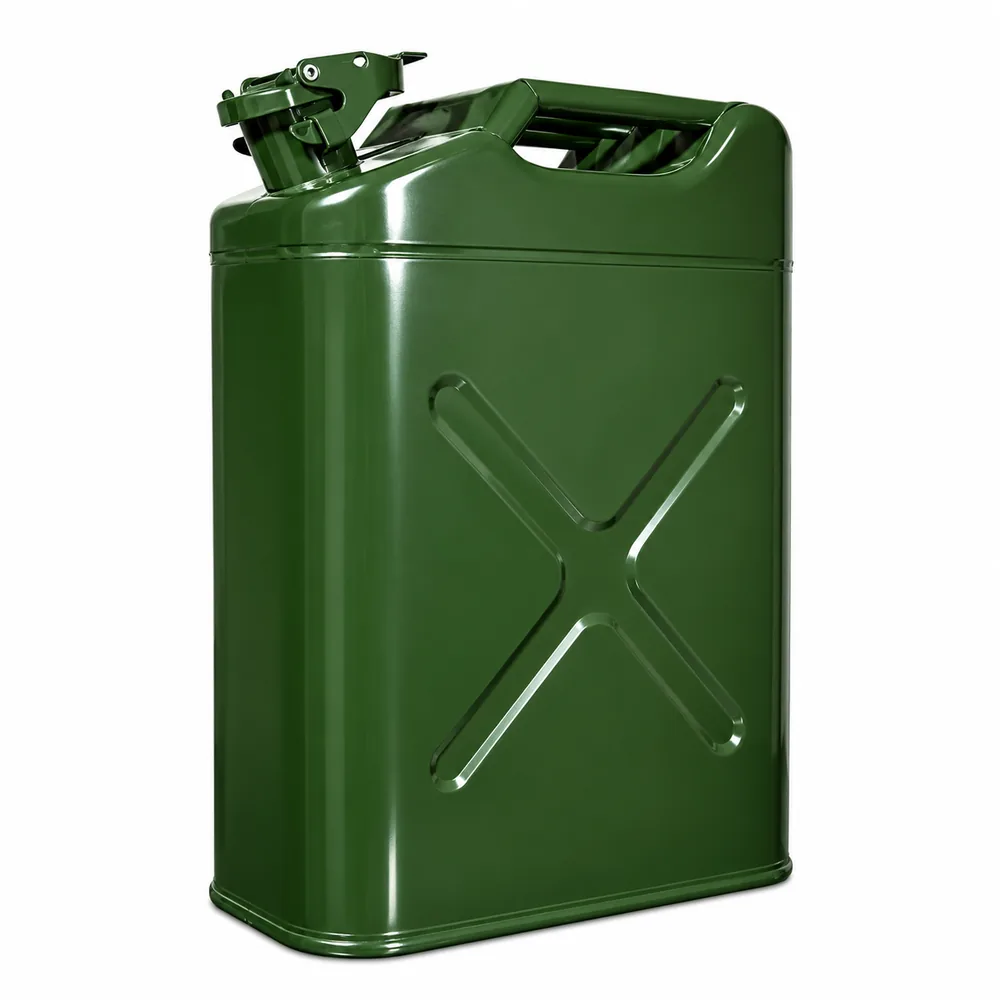 20L NATO Steel Fuel Can |
UN-marked steel design for dangerous goods; steel sits outside Plastic Packaging Tax. |
| Solvents and agrochemicals in plastic | 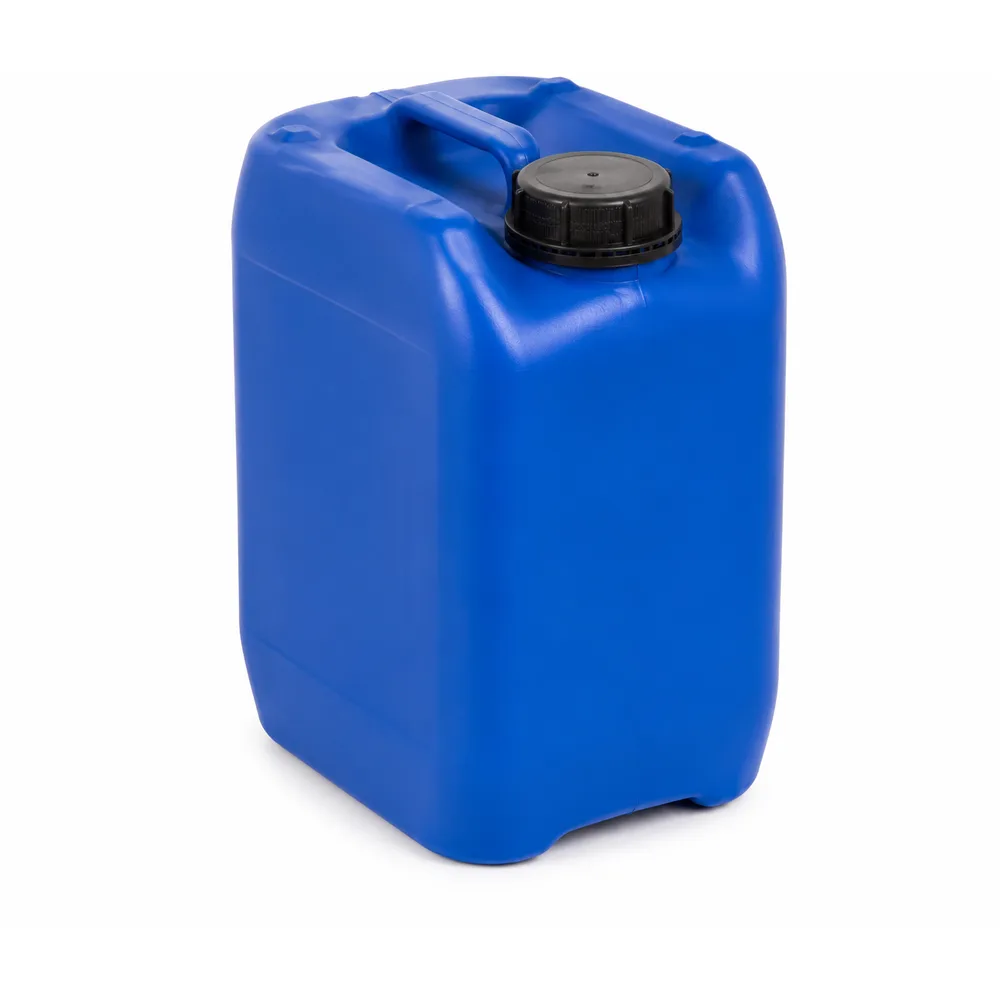 Fluorinated HDPE Jerrycan |
HDPE reports as plastic in every scheme; ask for the empty weight by component for your return. |
| Paint, adhesive and resin pails | 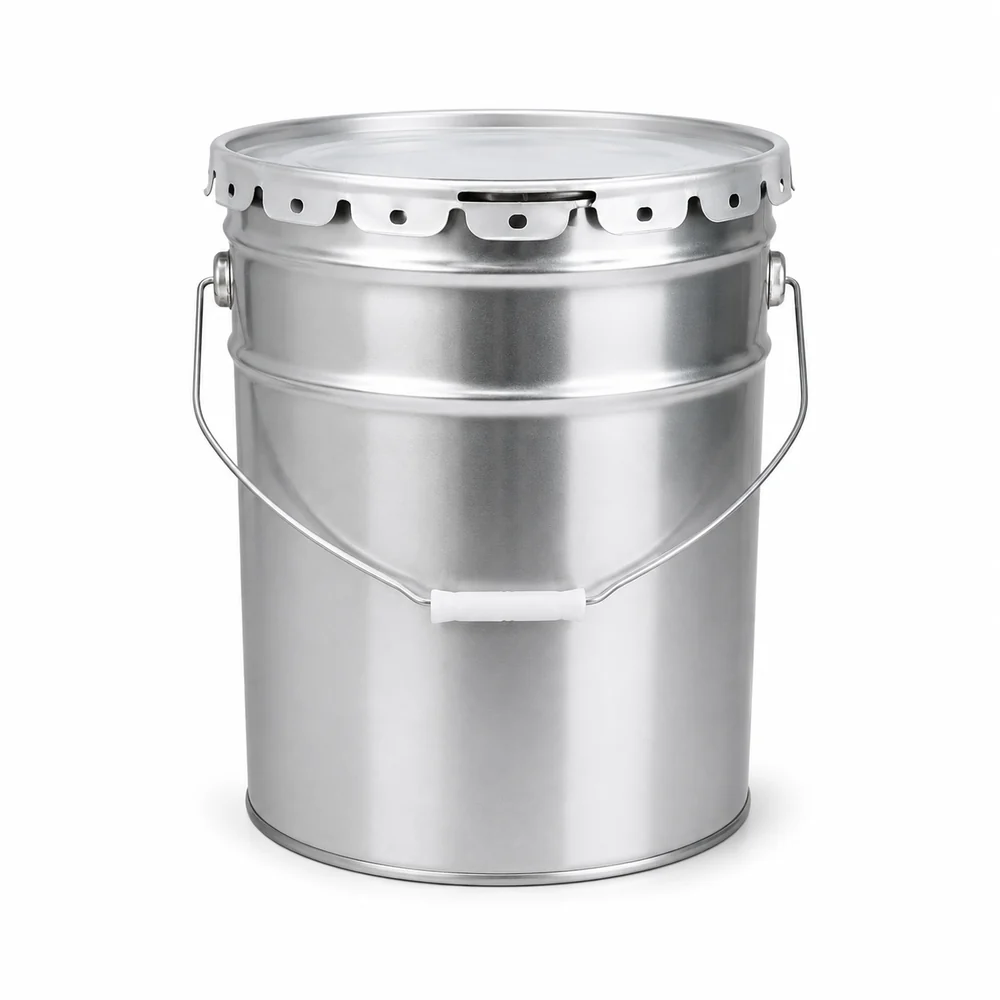 Metal Pail with Flower Lid or Lever Ring, 4L to 35L |
Tinplate reports as steel, and the steel grip option keeps the handle steel too. |
| Retail tins of paint or chemicals | 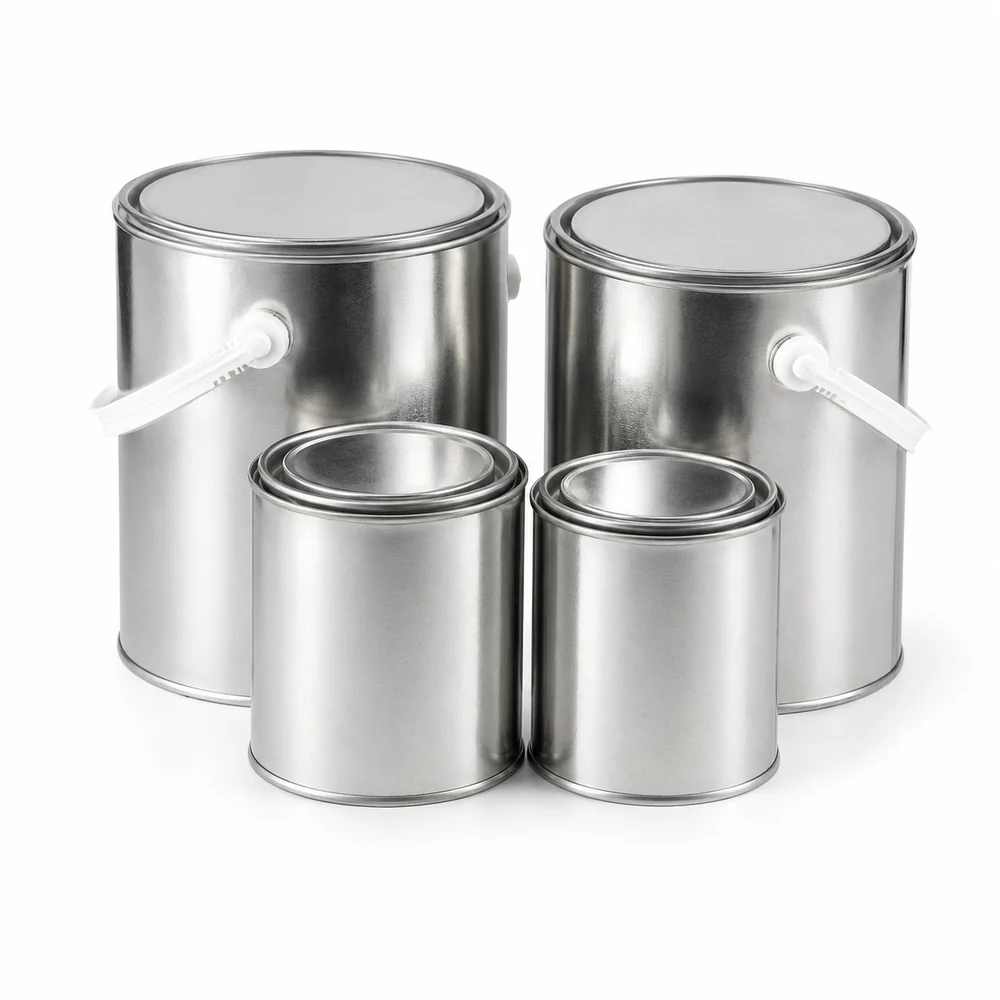 Round Metal Tin Can, 50ml to 6L |
Tins that reach households fall inside the consumer packaging schemes; steel reports by weight. |
| Trade pails of construction chemicals | 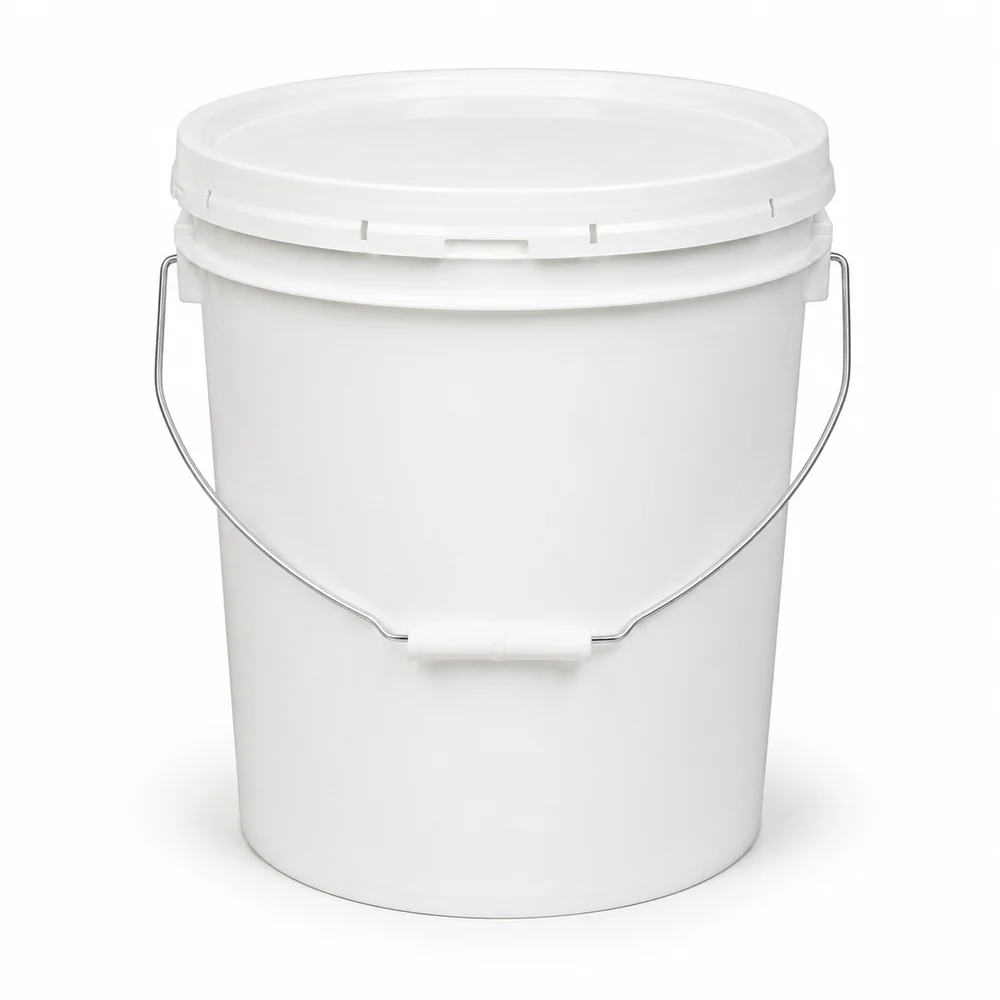 Round PP Bucket, 2.5L to 20L |
Polypropylene body and lid, each reported as plastic under its own component. |
Ireland follows the EU PPWR, which has applied directly since 12 August 2026. S.I. No. 541 of 2025 names the Environmental Protection Agency, the Minister and local authorities as competent authorities for different articles of it. Ireland’s national producer rules sit in the European Union (Packaging) Regulations 2014 (S.I. No. 282 of 2014), where a major producer supplies more than 10 tonnes of packaging a year and has turnover over €1 million.
Packaging EPR is the same across the UK: SI 2024/1332 extends to Scotland, and Scottish producers register with SEPA. Plastic Packaging Tax is a UK tax, and the Packaging (Essential Requirements) Regulations 2015 apply throughout Great Britain. The EU PPWR does not apply to packaging placed on the market in Scotland, England or Wales, according to DAERA.
For packaging EPR in England, yes: producers register with the Environment Agency, as they do with Natural Resources Wales, SEPA or the Northern Ireland Environment Agency in the other nations. The Packaging (Essential Requirements) Regulations 2015 are enforced in Great Britain by weights and measures authorities, meaning local trading standards (regulation 7). HMRC runs Plastic Packaging Tax.
The Packaging (Essential Requirements) Regulations 2003 (SI 2003/1941) set the UK design rules until the 2015 regulations revoked them from 1 October 2015 (Schedule 6). The Producer Responsibility Obligations (Packaging Waste) Regulations 2007 (SI 2007/871) set recycling obligations met with PRNs until SI 2024/1332 revoked them on 1 January 2026. The 2023 data reporting regulations of each nation went when SI 2024/1332 took effect on 1 January 2025.
EPR makes producers pay for collecting and recycling the packaging they supply, usually per tonne and per material, and can add recycling targets and design rules. A packaging tax is a levy collected by government: the UK Plastic Packaging Tax charges £228.82 a tonne on plastic packaging components with less than 30% recycled plastic. A single HDPE jerry can may owe both in the UK.
A registration number is what a national EPR register issues to a producer. Under the PPWR, the competent authority grants registration and a number within 12 weeks of a complete application (Article 44(11)), and online platforms must collect a seller’s registration number before letting it sell to consumers (Article 45(4)). Each member state issues its own, so a seller into five countries holds five.
In part. Packaging used to carry dangerous goods under Directive 2008/68/EC is exempt from the recyclability, recycled-content and re-use target articles (Articles 6(11)(f), 7(4)(f) and 29(4)(a)), and that directive prevails in any conflict (Article 2(2)). The 100 mg/kg metals limit and the EPR duties still apply. The exemption follows the contents, so a UN can filled with water gets none of it.
Oregon’s Plastic Pollution and Recycling Modernization Act, SB 582, took effect on 1 January 2022. Circular Action Alliance, the approved producer responsibility organisation, could charge fees to member producers from 1 July 2025. Its packaging definition has no consumer-only limit, and it excludes packaging for products whose federal hazardous-materials label rules say the packaging should not be recycled (ORS 459A.863(6)(b)(Q)).
In the US, column 8A of the Hazardous Materials Table names the exceptions section for each entry: 173.150 for Class 3 liquids such as petrol (UN1203) and diesel (UN1202). Section 173.150(b) sets the inner packaging and 30 kg package limits. In Europe the limited quantity rules sit in ADR Chapter 3.4, covered in our ADR limited quantities guide.
Yes, through separate food law. In the EU, Regulation (EC) No 1935/2004 sets the general rules for any material meant to touch food, and Regulation (EU) No 10/2011 covers plastics. The Food Standards Agency says all food contact materials must comply with assimilated Regulation 1935/2004. Packaging EPR applies on top, so a food-grade pail is reported like any other.
It depends on the market. The EU PPWR covers transport and industrial packaging. UK EPR counts all packaging towards the tonnage, but only household packaging pays the PackUK disposal fee. Ontario covers packaging supplied to consumers, Colorado excludes packaging used only between businesses, and Japan’s Act reaches packaging that becomes household waste.
The standards and regulations this page relies on, at their issuing body. Where a market rule is named here, check the current revision before you specify against it.
Last reviewed by Clarence Cheang, Co-Founder.
Tell us your market, the contents and your annual volumes. We come back with the material, the empty weight per unit and a quotation.