
How cans are packed, palletised and container-loaded, and how to store them in the warehouse.
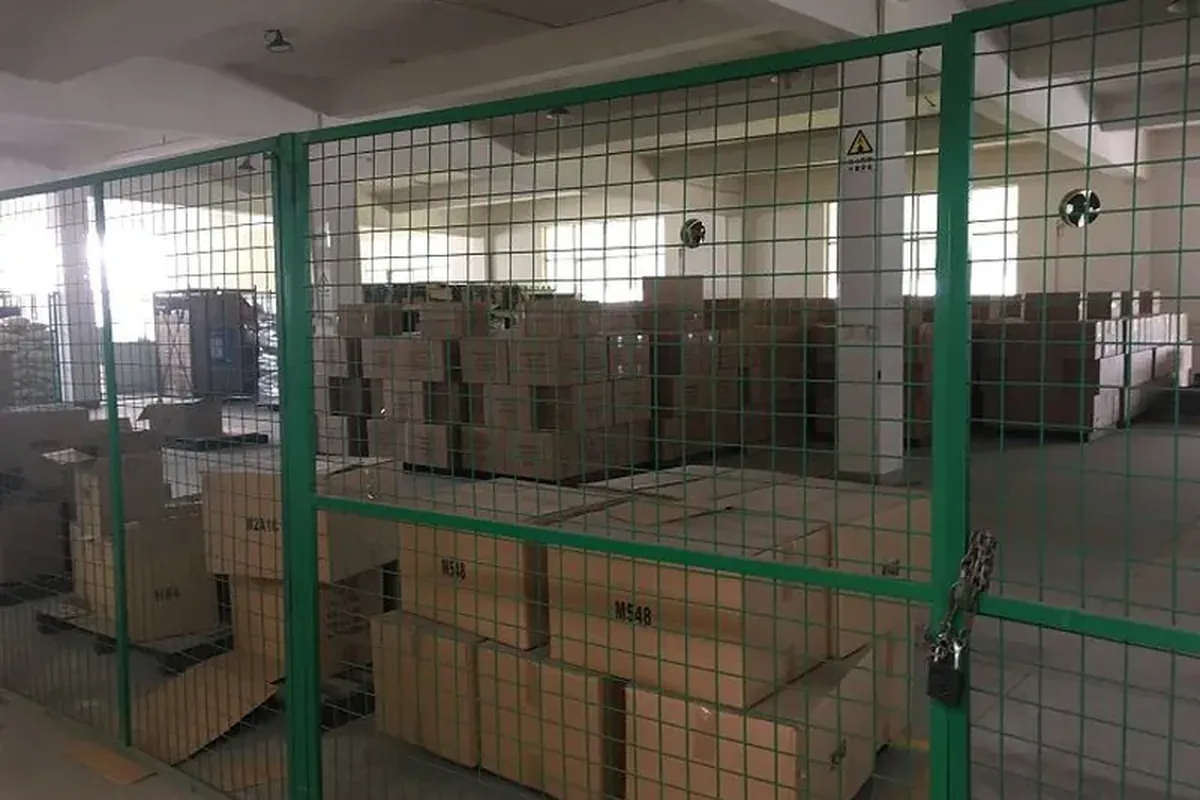
A jerry can that survives the field can still be damaged in the warehouse or the container if it is stored and packed wrongly.
Cans ship in cartons or shrink-wrapped on pallets, depending on the product and the freight mode. Nesting handles and stacking profiles let cans pack with little wasted space, which is what makes the NATO form efficient to ship. We pack for distributor shelf or for pallet according to your destination and channel.
The two are different builds rather than the same goods in different boxes. Retail packing carries artwork, barcodes and a shelf-facing orientation, and accepts lower density because the carton has to survive being handled individually. Bulk packing optimises for the pallet and the container, uses less material per unit, and assumes the next hands on it are in a warehouse. Ordering the wrong one costs in both directions: re-boxing retail stock for a trade customer wastes the artwork, and putting bulk-packed cans on a shelf loses the sale.
Load numbers change with the shape of the can. A 20-litre upright cubes out one way; a low horizontal can or a nested plastic one fills the same footprint differently, so cans-per-container is never a single figure across the range. That number drives your freight cost per unit, which is why format matters as much as unit price. See our jerry can sizes to compare how each one loads.
Which makes a quotation without a loading figure incomplete rather than merely brief. Two cans at the same unit price and the same capacity can differ by a third in units per container, and on a full load that difference is larger than most of the price negotiations that precede it. Ask for units per 20ft and per 40ft high cube alongside the unit price, and compare the two delivered rather than the two ex-works.
Empty cans ship on volume rather than weight, so a container cubes out long before it reaches its weight limit. That makes units-per-container the number that decides your freight cost per unit, and it changes with format far more than most buyers expect: a low horizontal can and a 20-litre upright of the same capacity can differ by a third.
Put the two limits side by side and the imbalance is stark. A 20ft container offers roughly 33 cubic metres and a payload near 28 tonnes. Eight hundred and fifty-two empty 20-litre steel cans at around 4 kg each come to about 3.4 tonnes, which is around an eighth of the weight the box could legally carry. The container is full and the weight limit has barely been touched, which is what cubing out means in practice.
The same logic governs less-than-container freight, where it is billed rather than merely implied. LCL rates are quoted on a weight-or-measurement basis, one cubic metre against one tonne, and whichever is greater is what you pay. Empty cans lose that comparison every time, so a part load of jerricans is charged on volume as surely as a full container is limited by it. There is no format of empty container that ships on weight.
Rather than say “it depends”, here are the actual figures from our factories’ loading tables, per product.
Units per container, floor loaded, from our factories’ own loading tables. Palletised loads run roughly 25 to 30 per cent lower because the pallet itself takes floor space and height. Figures are for planning; the packing list on your order is the number that ships.
Two things to take from the table. Small formats are dramatically cheaper to ship per unit, so a 3-litre can at 3,000 per 20ft carries a fraction of the freight cost of a 20-litre at 852. And a 40ft high cube adds roughly 10 to 15 per cent over a standard 40ft for the same footprint, which is usually the cheapest capacity you can buy.
Cans that shift in transit chafe, dent and split cartons. We palletise to a stable pattern and strap or shrink-wrap the stack so it holds together from our floor to yours. This is retention on the freight side; for retention once the can is on the vehicle, see tie-downs and retention straps.
Stack height is the constraint that decides the pattern, and it is a property of the carton and the pallet rather than of the can. A UN-approved design has been stack tested, but that test proves the can survives a defined load for a defined period; it does not license an arbitrary warehouse stack, because the carton, the pallet deck and the racking each have their own rating. The practical rule is that the lowest rating in the assembly governs, and it is usually not the container.
Damage from over-stacking also shows up in the wrong place. What crushes is the carton corner rather than the can, and a crushed corner lets the stack lean, which loads the next layer unevenly, which is how a pallet that looked square on dispatch arrives with a collapsed lower tier. Inspect the bottom layer on receipt rather than the top, because the top is the layer that looks fine either way.
A sealed container is a closed atmosphere with whatever humidity was loaded into it. Move it from a warm, humid loading port into cooler latitudes and the air inside cools against the steel roof and walls, the moisture it was holding condenses there, and it drips back down onto the cargo. Shippers call it container rain, and it happens without any leak, any breach and any rain outside.
Coated steel is the cargo it finds. Condensate sitting on a powder-coated or galvanized surface for a five-week voyage is exactly the standing moisture the coating is meant to shed in minutes, and it collects in the pressed recesses where cans nest against each other. The result arrives as white rust on a galvanized body or as blistering under a paint film: cosmetic damage on a functionally sound can, and an argument with a customer either way.
The controls are unglamorous and they work. Ship dry, since packaging that absorbed moisture at origin releases it into the container; use desiccant sized to the container volume and the voyage rather than a token sachet; line the load where the route crosses a large temperature gradient; and vent where the mode allows it. Ask a supplier what they do about it, because the answer separates a factory that has shipped into cold markets from one that has not.
Empty cans are ordinary steel or plastic goods and store like any other packed stock. Cans that arrive filled with fuel or chemical are dangerous goods, and the rules change: segregation from ignition sources, ventilation, and the transport controls that apply to dangerous goods in transport. Know which one you are handling before the pallet lands, because the storage and paperwork differ.
The transition between the two states is where sites get caught. A can that has held a dangerous good and has not been cleaned and purged is still regulated, so a returned or part-used pallet is not empty stock however the delivery note describes it. Give returns their own receiving area and their own inspection step, because the alternative is that they join the new stock and take the whole location's classification with them.
Three catch buyers out. Over-stacking pallets past the rated height, which crushes the lower cartons. Standing coated steel on a damp floor, which lets the coating corrode before the can ever ships. And choosing a size or format on unit price alone without costing freight per unit, so a cheaper can arrives more expensive by the container. Cost the freight first.
A fourth is quieter and surfaces a season later: storing coated steel and plastic in the same conditions. Plastic tolerates a damp floor and a warm store and coated steel does not, so a stock policy written for one material slowly degrades the other. Separate them by material rather than by product line, because the storage requirement follows what the can is made of and not what it is called.
We manufacture in Vietnam and China and export through a Singapore contract desk, packed and documented for your market. Tell us the destination and channel and we pack to suit. See our capabilities.
Shape drives the freight bill. Here is how the formats pack.
| Your use case | Recommended can | Why this one |
|---|---|---|
| Upright NATO cans | 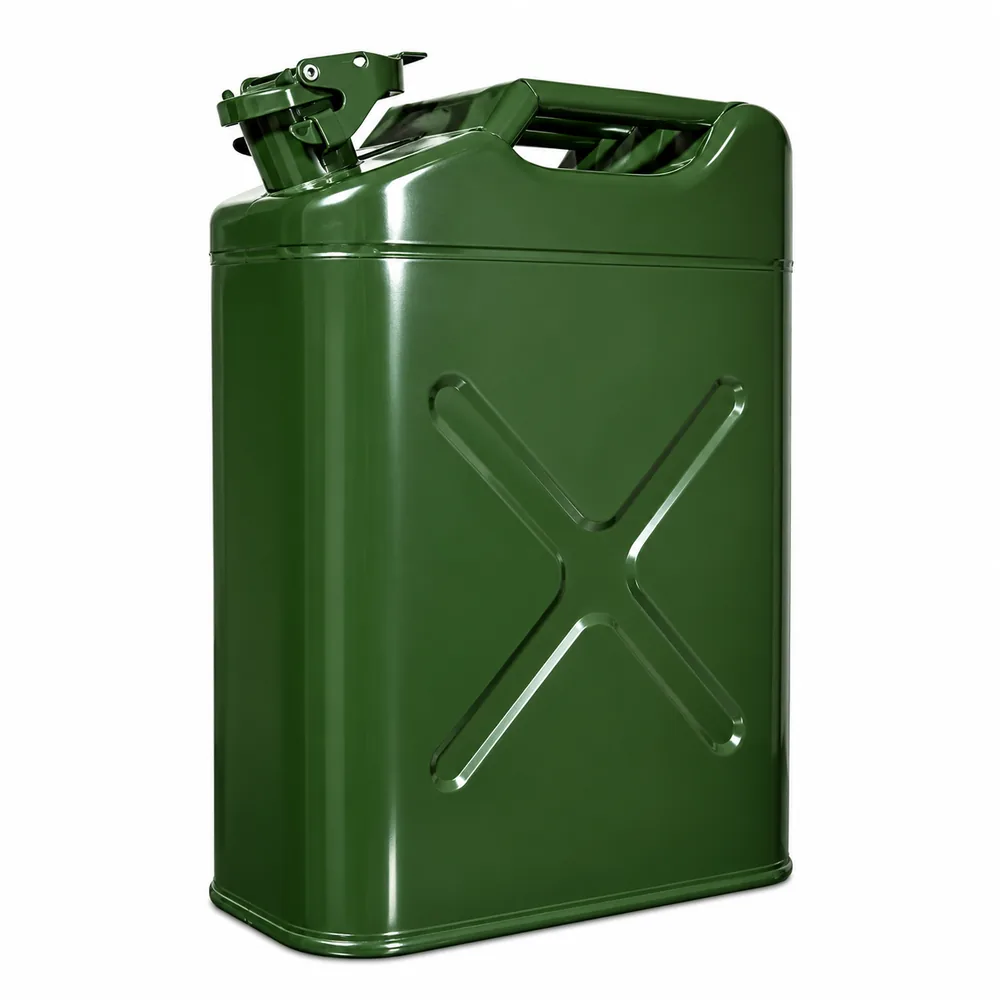 20L NATO Steel Fuel Can 20L NATO Steel Fuel Can |
Nesting handles pack with little wasted space. |
| Low-profile horizontal cans | 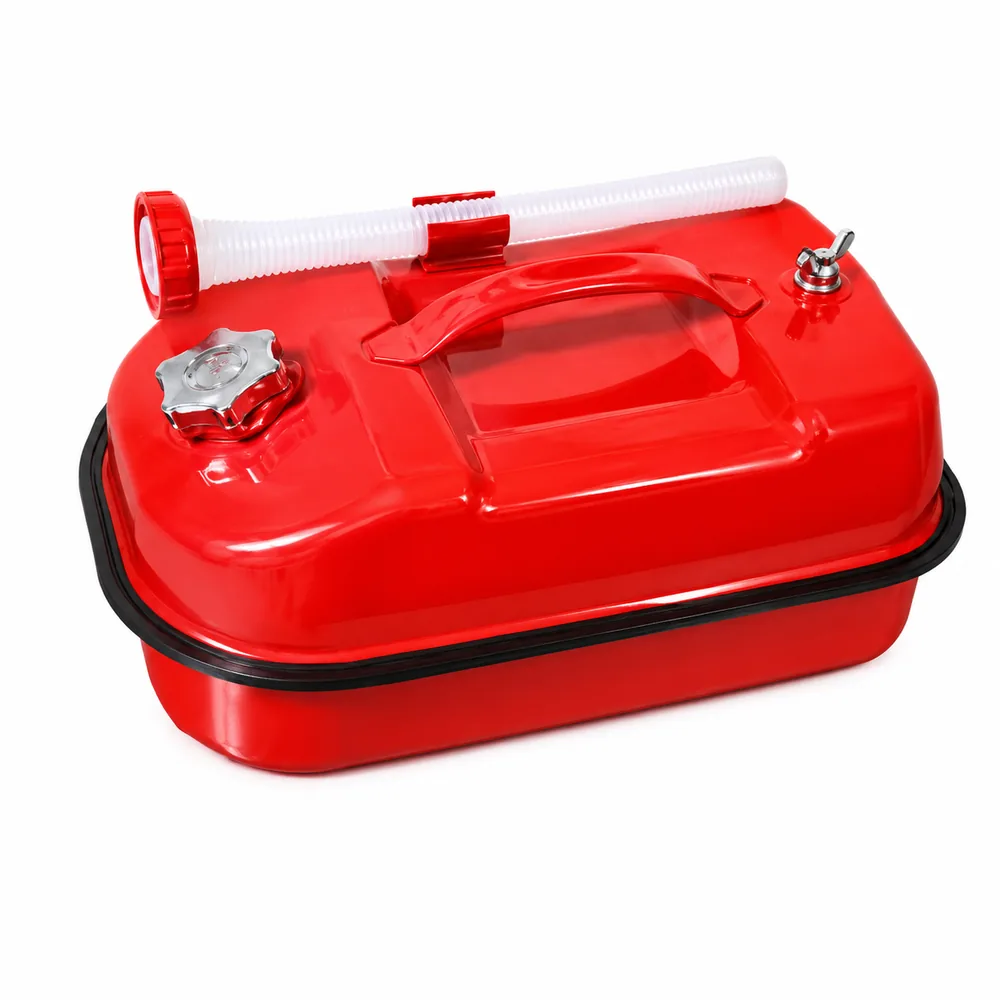 Horizontal Galvanised Can — 5L / 10L / 20L Horizontal Galvanised Can — 5L / 10L / 20L |
A flat body cubes differently on the pallet. |
| Stackable HDPE at pallet volume | 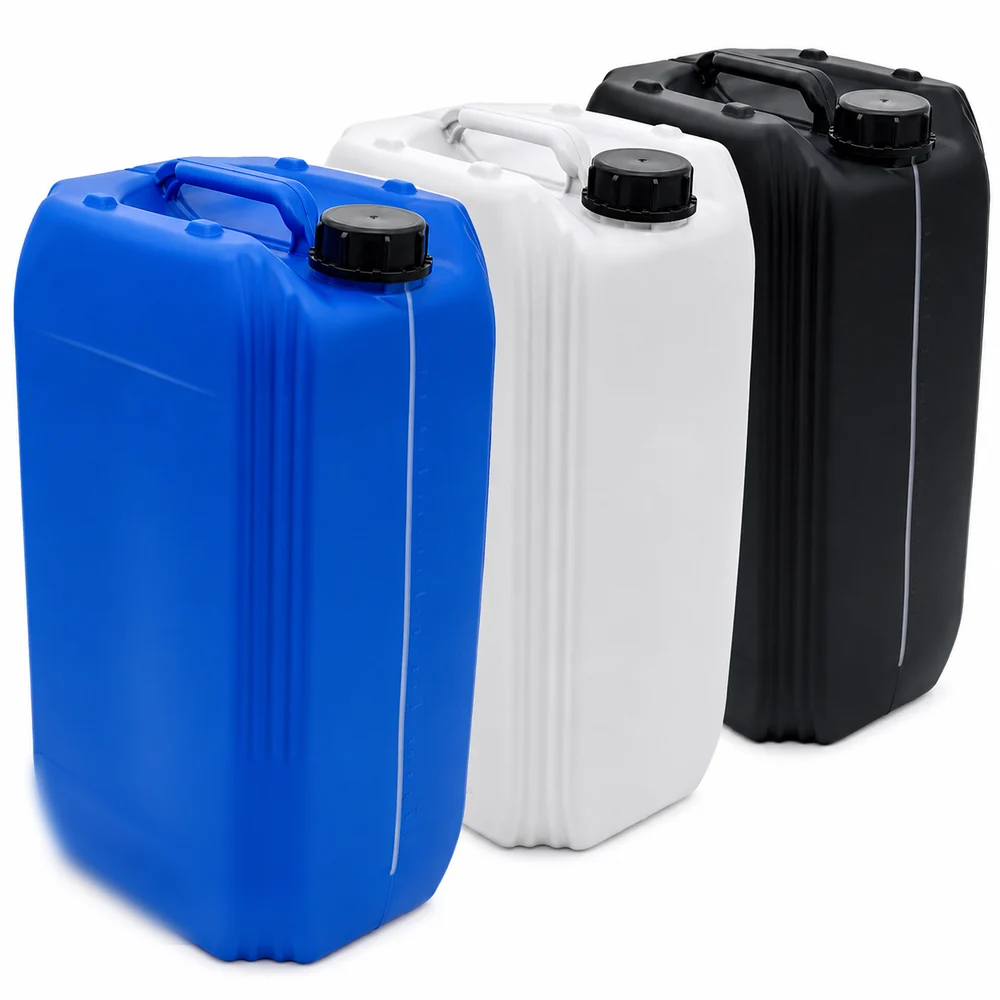 25L Stackable Plastic Jerrycan 25L Stackable Plastic Jerrycan |
Square footprint fills a pallet cleanly. |
| Securing cans in transit | 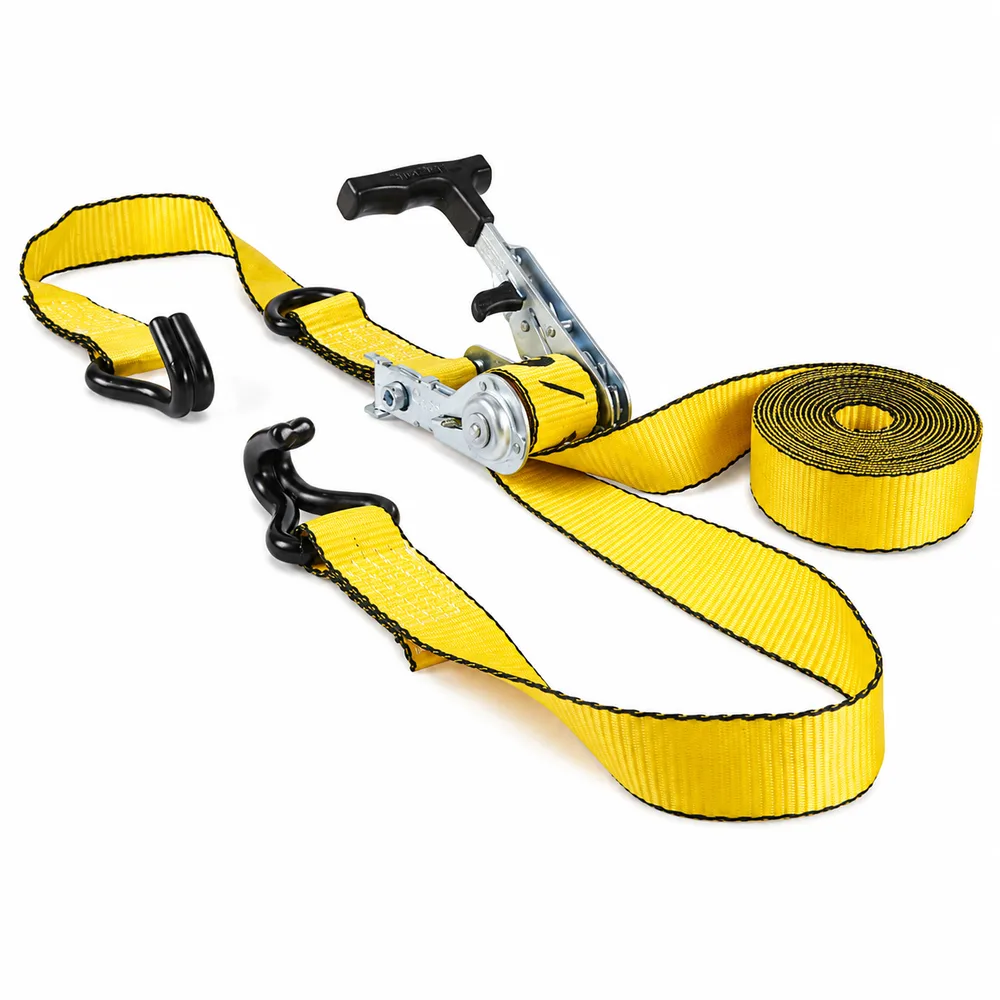 Tie-Downs & Retention Straps Tie-Downs & Retention Straps |
Straps and tie-downs stop shift and chafe. |
Around 852 upright 20-litre steel cans floor loaded in a 20ft, 1,800 in a 40ft and 2,000 in a 40ft high cube. Low-profile horizontal cans of the same capacity run lower at about 652 per 20ft, because the shape cubes differently. Palletised loads run 25 to 30 per cent below floor loaded.
About 1,368 NATO-pattern 10-litre steel cans in a 20ft, 2,736 in a 40ft and 3,192 in a 40ft high cube. Halving the capacity does not halve the freight cost per litre carried, but it moves it substantially, which is why format is worth costing before unit price.
Volume. An empty container fills on cube long before it approaches its weight limit, so units-per-container is what sets your freight cost per unit. This is also why a nesting or low-profile format can beat a cheaper can on delivered cost.
Upright, on pallets, with the closure uppermost so seals are not under load. Stack height is limited by the crush strength of the carton rather than the can. Empty cans nest or stack much higher than filled ones, and filled dangerous-goods stock is subject to separate segregation rules.
New, clean, empty cans ship as general cargo. Cans that have held a dangerous good remain regulated until cleaned and purged. Ship new stock and used stock under different paperwork, and never mix them in one consignment.
The standards and regulations this page relies on, at their issuing body. Where a market rule is named here, check the current revision before you specify against it.
Last reviewed .
Tell us your market, your fuel and your volumes. We come back with a specification sheet and a quotation.