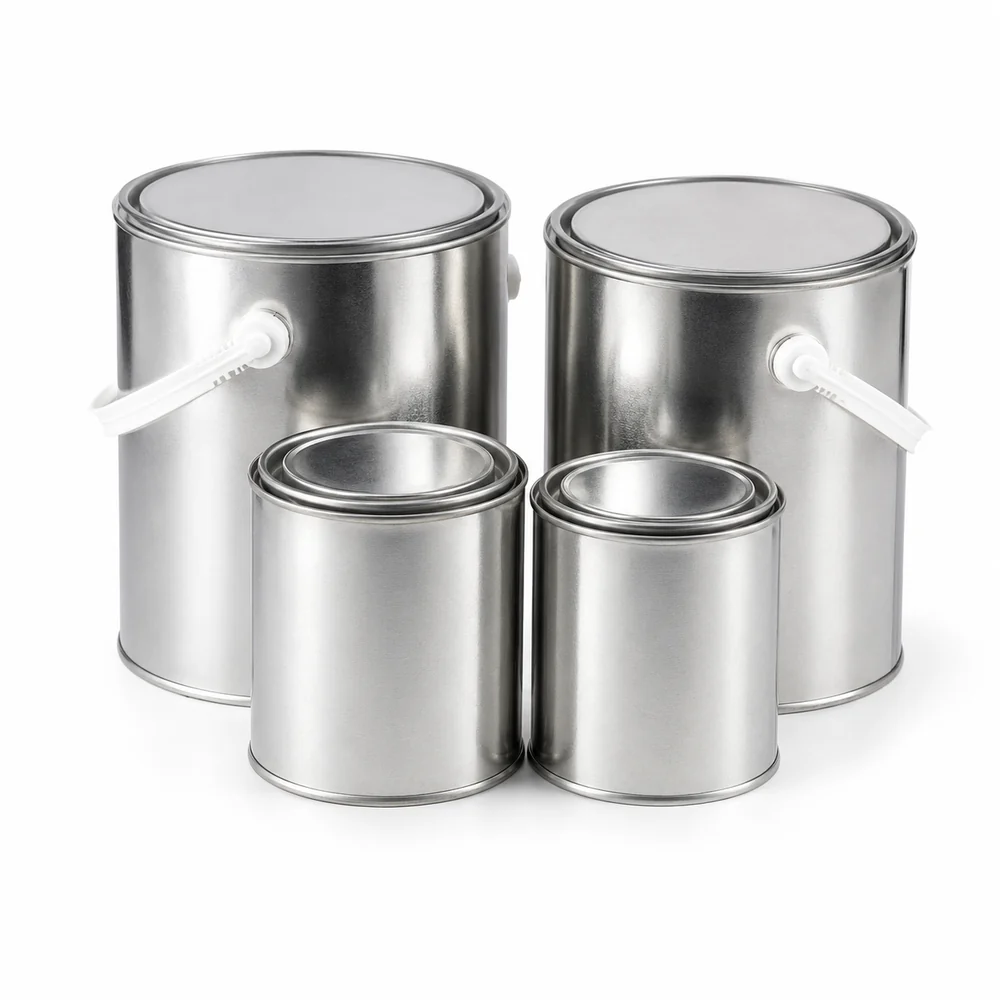
Tinplate can
Round Metal Tin Can, 50ml to 6L
Straight-sided tinplate cans in fifteen sizes from 50 ml to 6 litres, UN-capable, with gold or clear internal lacquer and full-surface lithographic print.

For contents that are applied, not poured. The applicator is in the cap, sealed inside the can, and it does not dry out between uses.
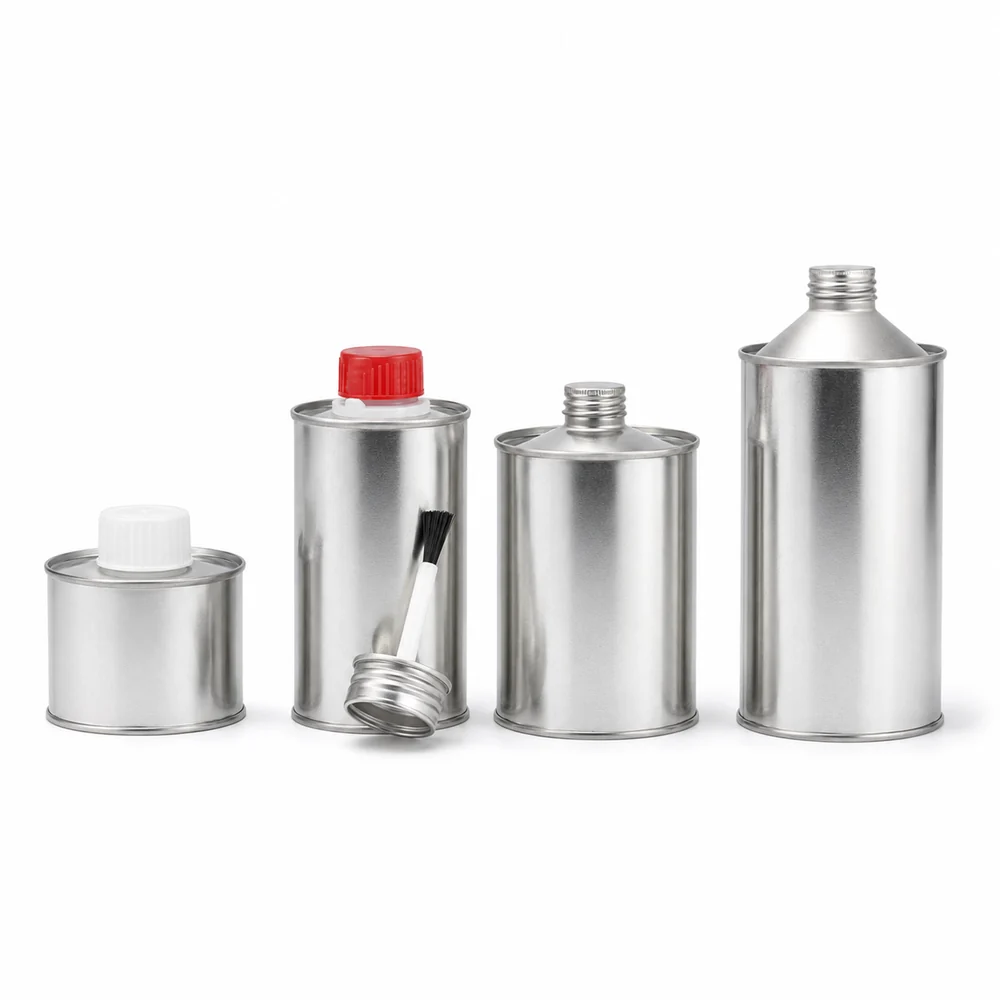
| Capacity range | 60 ml to 1 litre, sixteen configurations |
|---|---|
| Material | Tin-plated steel |
| Wall thickness | 0.21 mm |
| Applicator options | Dauber, brush-in-cap, or cone top with no applicator |
| Closure | Air-tight screw top |
| Internal lacquer | Specified against solvent-based and reactive contents |
| Leak testing | Dauber and brush cans leak-tested |
| Decoration | Four-colour offset lithographic printing |
| Lead time | Approximately one month for a standard production run; samples in 7–15 days. Confirmed against your specification at quotation. |
These depend on your order, your market or the certificate that covers your run, so we quote them rather than publish one figure that would be wrong for most buyers. Ask and you get the number for your specification.
Before you order: Dauber and brush cans hold reactive, solvent-based contents. The applicator material has to be compatible with what you are filling, not only the can lining. Tell us the formulation and we will specify both.
16 sizes, with the container quantities a distributor needs to cost a shipment. Loading figures are unpalletised.
| Item photo | Applicator | Size | Ø × Height | Wall | Cans per carton |
|---|---|---|---|---|---|
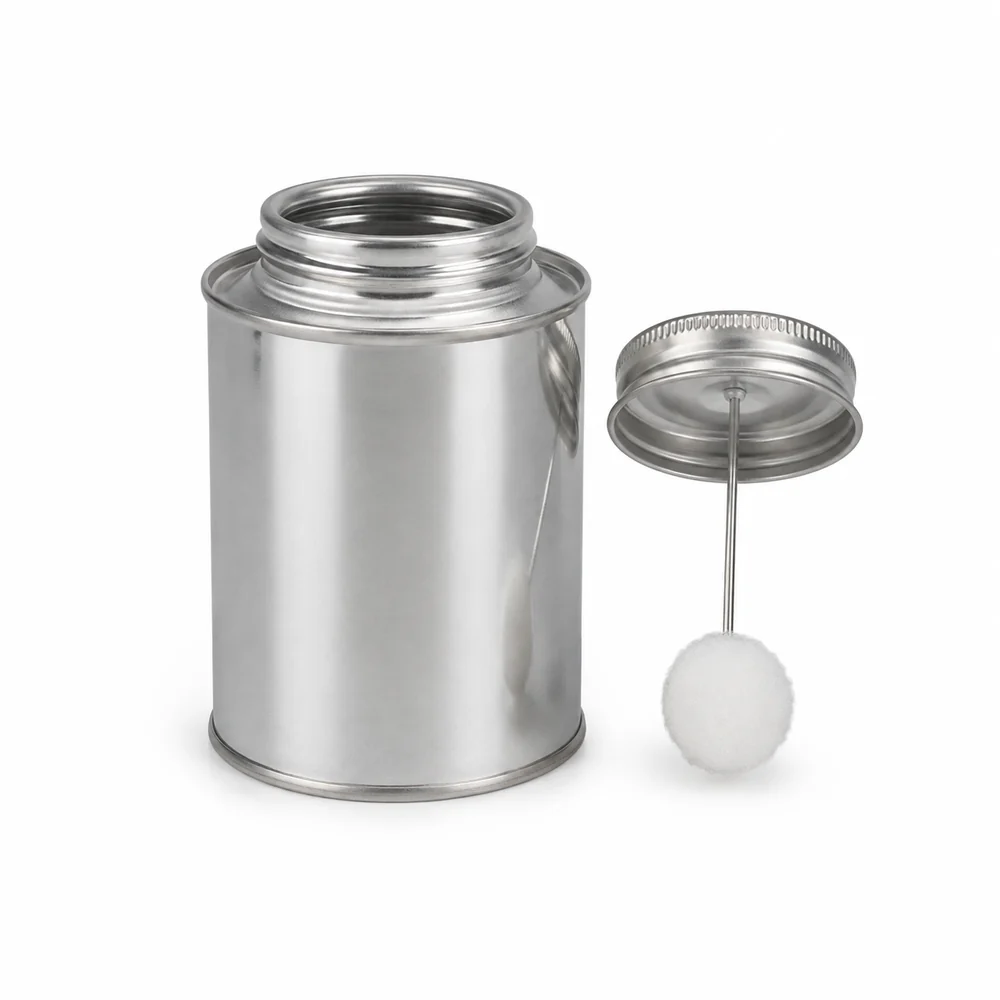 | Dauber | 60 ml | 54 × 50 mm | 0.21 mm | 336 |
| Dauber | 118 ml | 54 × 71 mm | 0.21 mm | 240 |
| Dauber | 237 ml | 66 × 82 mm | 0.21 mm | 160 |
| Dauber | 473 ml | 84 × 97 mm | 0.21 mm | 80 |
| Dauber | 947 ml | 107 × 122 mm | 0.21 mm | 336 |
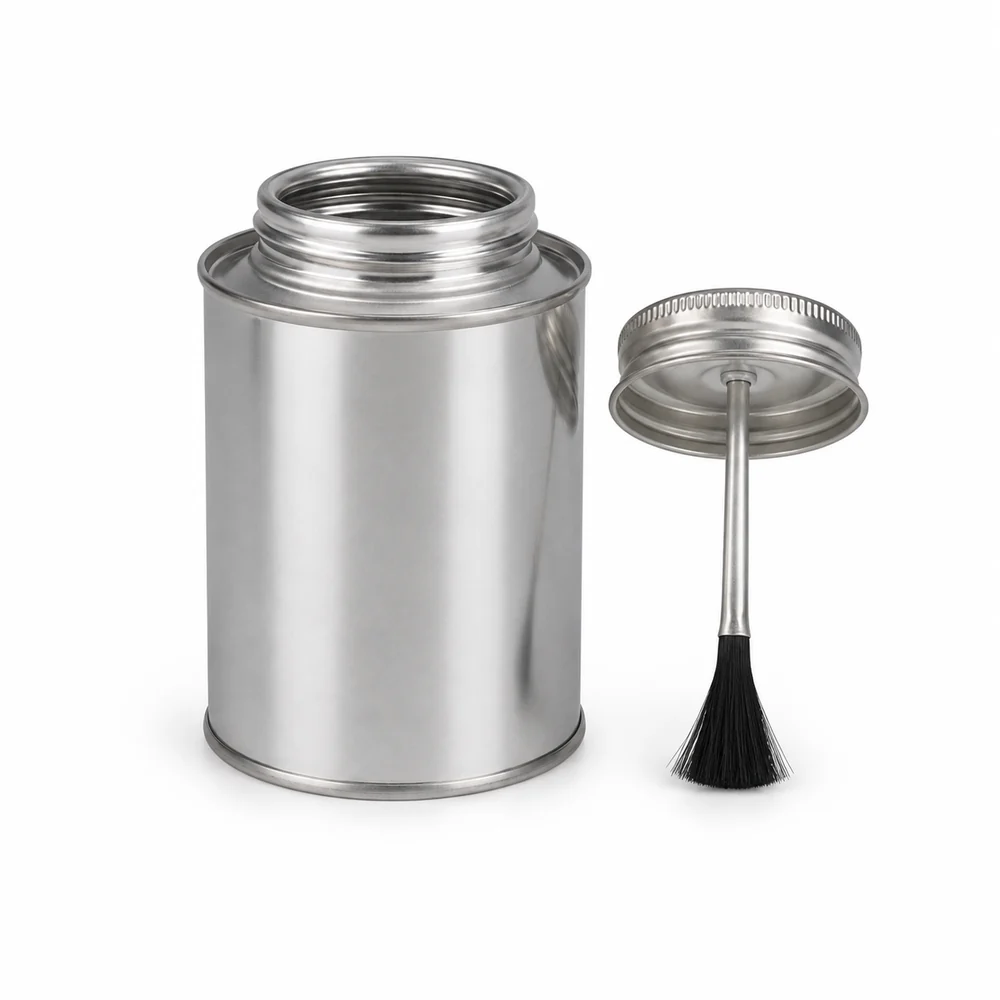 | Brush | 60 ml | 54 × 50 mm | 0.21 mm | 240 |
| Brush | 118 ml | 54 × 71 mm | 0.21 mm | 240 |
| Brush | 237 ml | 66 × 82 mm | 0.21 mm | 160 |
| Brush | 473 ml | 84 × 97 mm | 0.21 mm | 80 |
| Brush | 500 ml | 84 × 97 mm | 0.21 mm | 80 |
| Brush | 947 ml | 107 × 122 mm | 0.21 mm | 60 |
| Brush | 1,000 ml | 107 × 122 mm | 0.21 mm | 60 |
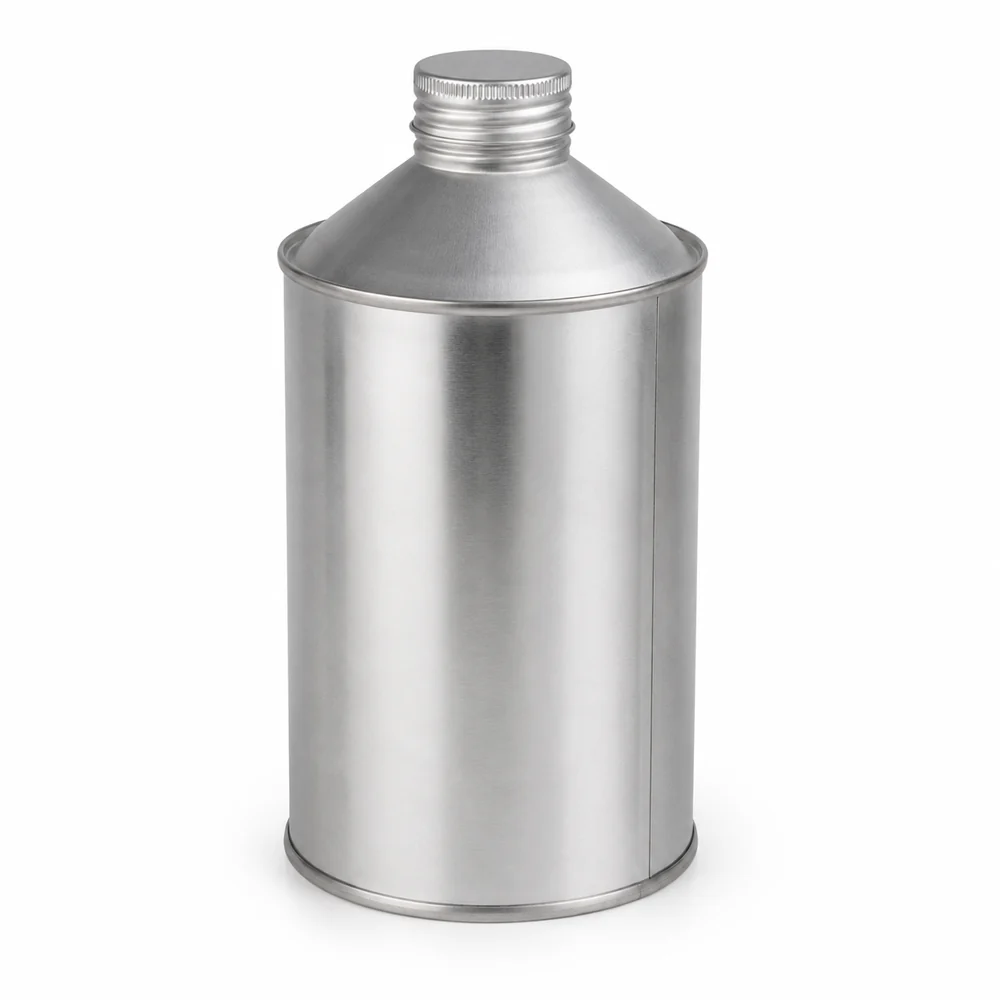 | Cone top | 100 ml | 54 × 60 mm | 0.21 mm | 240 |
| Cone top | 250 ml | 66 × 81 mm | 0.21 mm | 240 |
| Cone top | 500 ml | 66 × 157 mm | 0.21 mm | 120 |
| Cone top | 1,000 ml | 84 × 185 mm | 0.21 mm | 90 |
Figures are the factory’s published catalogue values, transcribed as printed. Confirm against the drawing issued with your order — wall thickness and closure are specified against the contents, so the build for your product may differ from the standard shown.
No separate brush, no second SKU, nothing for an installer to lose on site. Pick up the can and the tool is in your hand.
PVC-U cement and contact adhesive skin over as soon as they meet air. The screw top seals to the neck rather than to a liner, which is what keeps the contents usable to the bottom of the can.
Where the contents are decanted rather than applied, the cone narrows the stream so a thin fluid goes where it is aimed. Brake fluid and solvent cements both need that.
The 54, 66, 84 and 107 mm bodies take a common closure family, so a range from 60 ml to a litre runs one capping change rather than four.
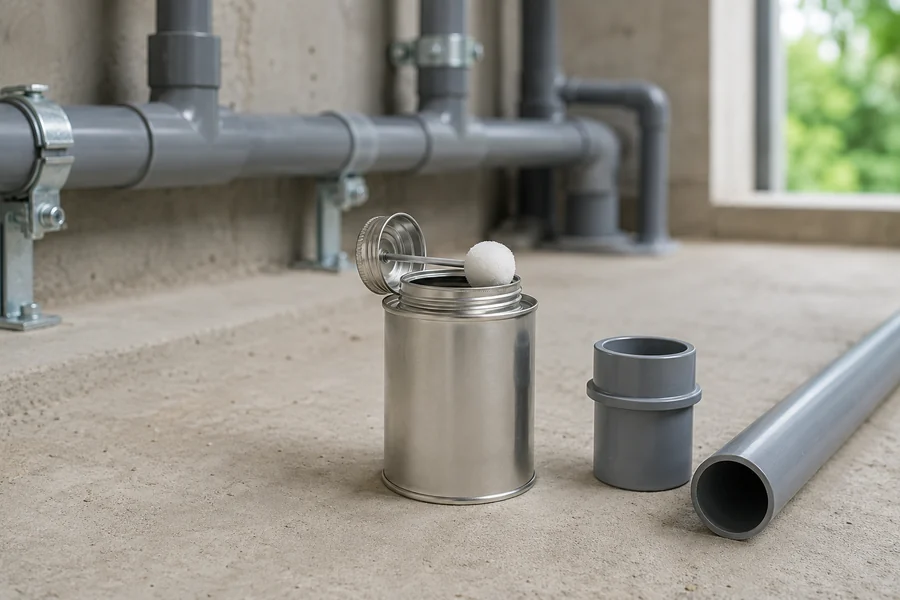
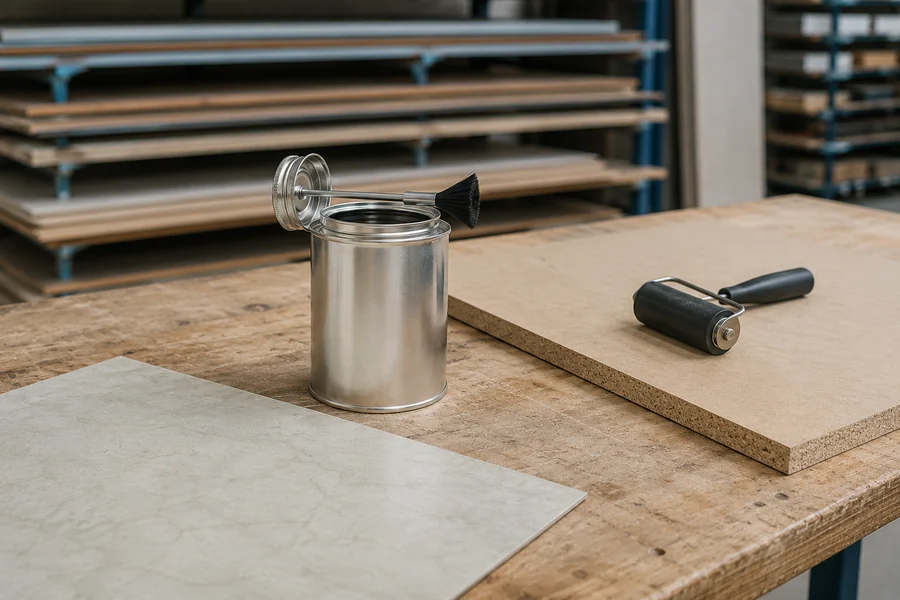
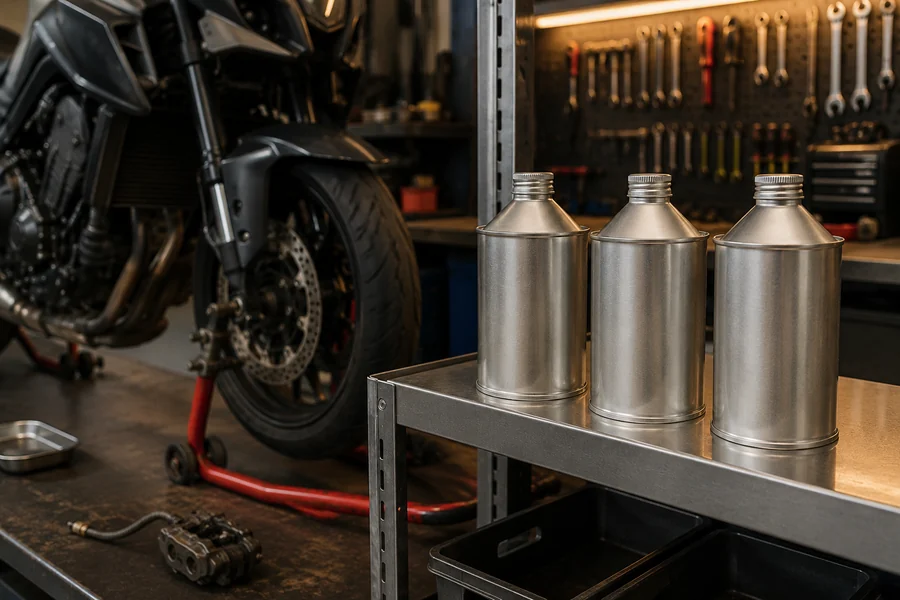
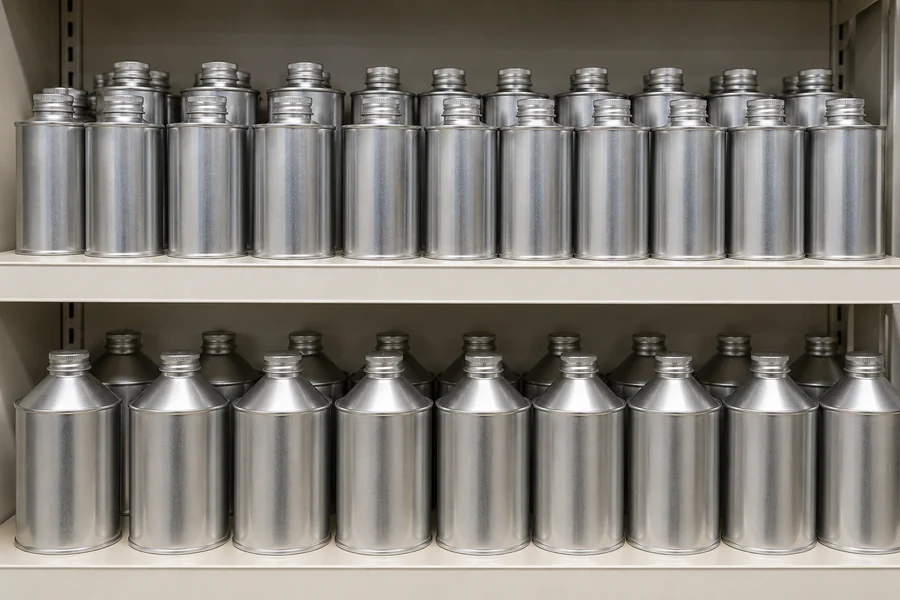
The body is pressed from cold-rolled steel to the pattern, seam-welded, then finished as set out in the specification above: internal coating, galvanising or powder coat according to what the can carries. Pressing runs across our Vietnam and China plants under one specification managed from Singapore, so the drawing and closure stay identical whichever plant fills the order.
Every can is checked before it leaves the plant:
The regimes that apply to this type of container in each market we ship to, with the detail behind each one a click away. This is what the market asks for; what this particular design already holds is in the specification above.
Orientation for specification, not legal advice, and not a statement that this design holds a given approval. Requirements turn on the exact design, contents and destination, and they change. Tell us the market at enquiry and we confirm what applies to your specification, what we hold and what we would need to obtain.
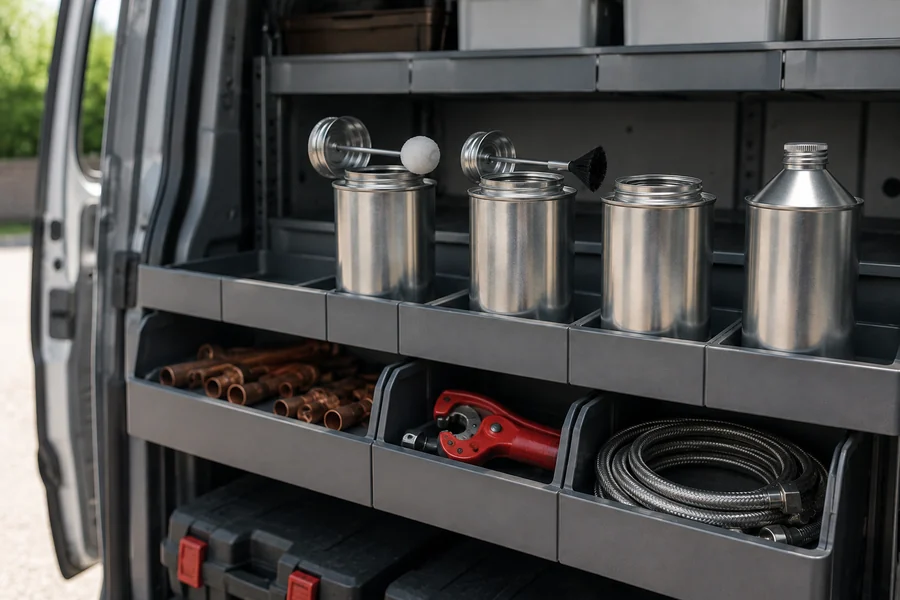
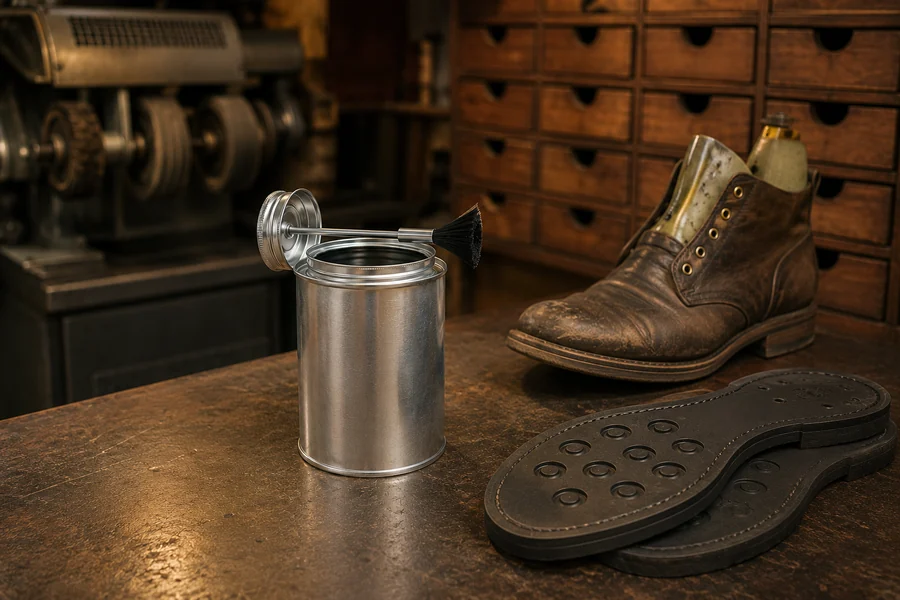
A can whose cap carries an applicator on a stem, so the product is applied straight from the pack. It removes the separate brush from the job, which is why it dominates PVC-U cement and shoe cement.
A dauber is an absorbent swab for flowing a solvent cement onto a joint. A brush-in-cap spreads a heavier adhesive. A cone top has no applicator at all and pours through a narrow neck. Same body family, three delivery methods.
Dauber and brush cans are leak tested, because the failure mode that matters is a solvent-based product weeping past the cap in a van or on a shelf. Ask us for the test record with your order.
Solvent-based and reactive products: PVC-U cement and pipe adhesive, contact adhesives, brake and clutch fluid, shoe and leather cement. The internal lacquer is specified against those rather than applied generically.
That is a specification question rather than a given. The swab or bristle material has to suit the solvent, and the wrong pairing sheds into the joint. Tell us the exact formulation and we specify the applicator with the can.
Sixteen configurations from 60 ml to 1 litre, which is the range this format lives in. Above a litre the applicator stops being useful and the product moves to a tin with a separate brush.
It depends on the contents and the fill. Many solvent cements at this size fall inside the limited quantity relief, where no UN approved packaging is required. Above the relief they need an approved design type.
Yes. Four-colour offset lithographic printing, which is what makes this format work as a DIY shelf pack rather than only as a trade item.
0.21 mm across the range. At that gauge the closure and the coating carry the performance, not the steel section, which is why the air-tight screw top and the lacquer are specified first.
Quoted against your specification, since the applicator, the lacquer and the print all move it. Production is approximately one month, with samples in 7 to 15 days.
Straight-sided tinplate cans in fifteen sizes from 50 ml to 6 litres, UN-capable, with gold or clear internal lacquer and full-surface lithographic print.
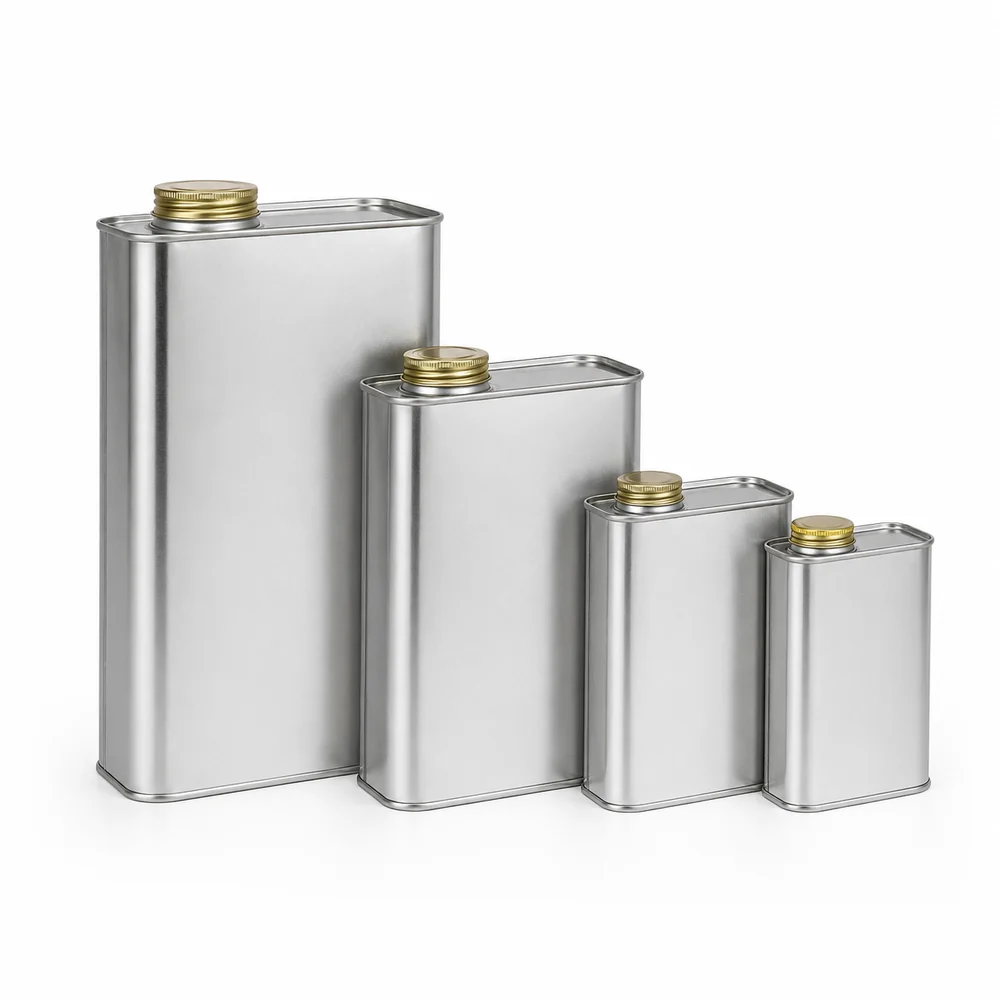
Rectangular tinplate cans and square buckets from 250 ml to 25 litres, with a wide-opening head for clean pouring and flat faces for full-height artwork.
Tell us your destination market, target volumes and whether you need private labelling.