
Class 5.1, oxidizing substances, packing group II and III: the UN containers that may carry it under ADR 2025, the largest of each, and its limited quantity.
UN 3210 covers chlorates, inorganic, aqueous solution, n.o.s. in 2 entries of the Dangerous Goods List: Class 5.1, oxidizing substances, packing groups II and III. The packing group on your safety data sheet sets the container: UN jerricans of up to 60 L in every packing group, drums of up to 250 L in every packing group and IBCs of up to 3,000 L in packing groups II and III.
| Proper shipping name | Class | Packing group | Limited quantity | Packing instruction |
|---|---|---|---|---|
| CHLORATES, INORGANIC, AQUEOUS SOLUTION, N.O.S. | 5.1 | II | 1 L | P504, IBC02 |
| CHLORATES, INORGANIC, AQUEOUS SOLUTION, N.O.S. | 5.1 | III | 5 L | P504, IBC02, R001 |
Class 5.1 covers oxidizing substances: they need not burn themselves, but they give off oxygen that makes other material burn (ADR 2.2.51). Hydrogen peroxide solutions are classed by their strength.
Packing group I means high danger, II medium danger and III low danger (ADR 2.1.1.3). The group sets how strong the container must be: the UN mark shows X for packing group I, Y for II and Z for III, and a higher level covers the lower groups.
N.o.s. stands for not otherwise specified: a generic entry for a substance that has no entry of its own by name. For most n.o.s. entries the transport document adds the technical name of the hazardous component in brackets after the proper shipping name (ADR 3.1.2.8).
Each entry below shows the UN container types its packing instruction allows and the largest of each. Read the entry whose name matches section 14 of your safety data sheet.
| Container type | UN codes | Largest allowed | Status |
|---|---|---|---|
| Jerrican, closed head | 3A1, 3H1, 3B1 | 60 L | Permitted |
| Jerrican, removable head | 3A2, 3H2, 3B2 | 60 L | Permitted |
| Drum, closed head | 1A1, 1H1, 1B1 | 250 L | Permitted |
| Drum, removable head | 1A2, 1H2, 1B2 | 250 L | Permitted |
| Plastic receptacle in a steel drum | 6HA1 | 250 L | Permitted |
| IBC | 31A, 31B, 31N, 31H1, 31H2, 31HZ1 | 3,000 L | Permitted |
These are the sizes the packing instruction allows. The container must also resist the liquid (4.1.1.2): chemical compatibility by liquid
| Container type | UN codes | Largest allowed | Status |
|---|---|---|---|
| Jerrican, closed head | 3A1, 3H1, 3B1 | 60 L | Permitted |
| Jerrican, removable head | 3A2, 3H2, 3B2 | 60 L | Permitted |
| Drum, closed head | 1A1, 1H1, 1B1 | 250 L | Permitted |
| Drum, removable head | 1A2, 1H2, 1B2 | 250 L | Permitted |
| Plastic receptacle in a steel drum | 6HA1 | 250 L | Permitted |
| IBC | 31A, 31B, 31N, 31H1, 31H2, 31HZ1 | 3,000 L | Permitted |
Our containers for this entry
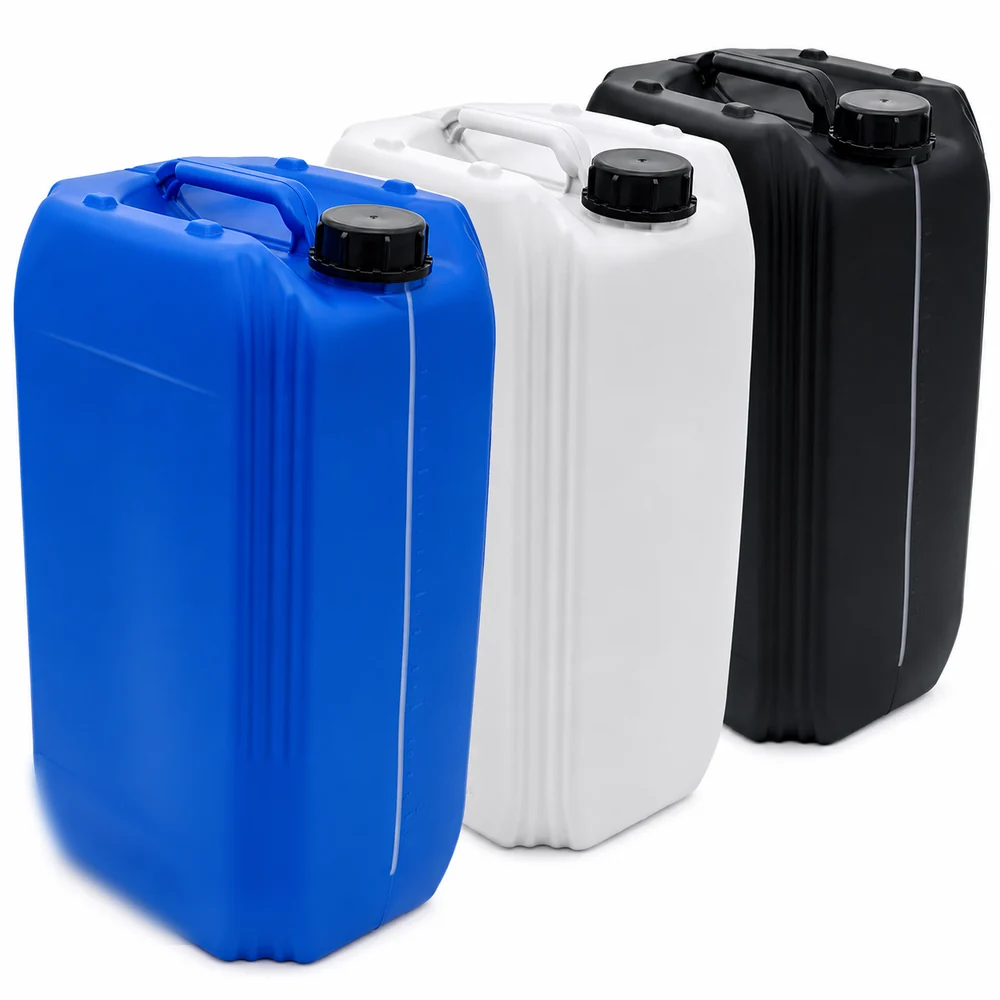 25L Stackable Plastic Jerrycan25 litres
3H1UN version available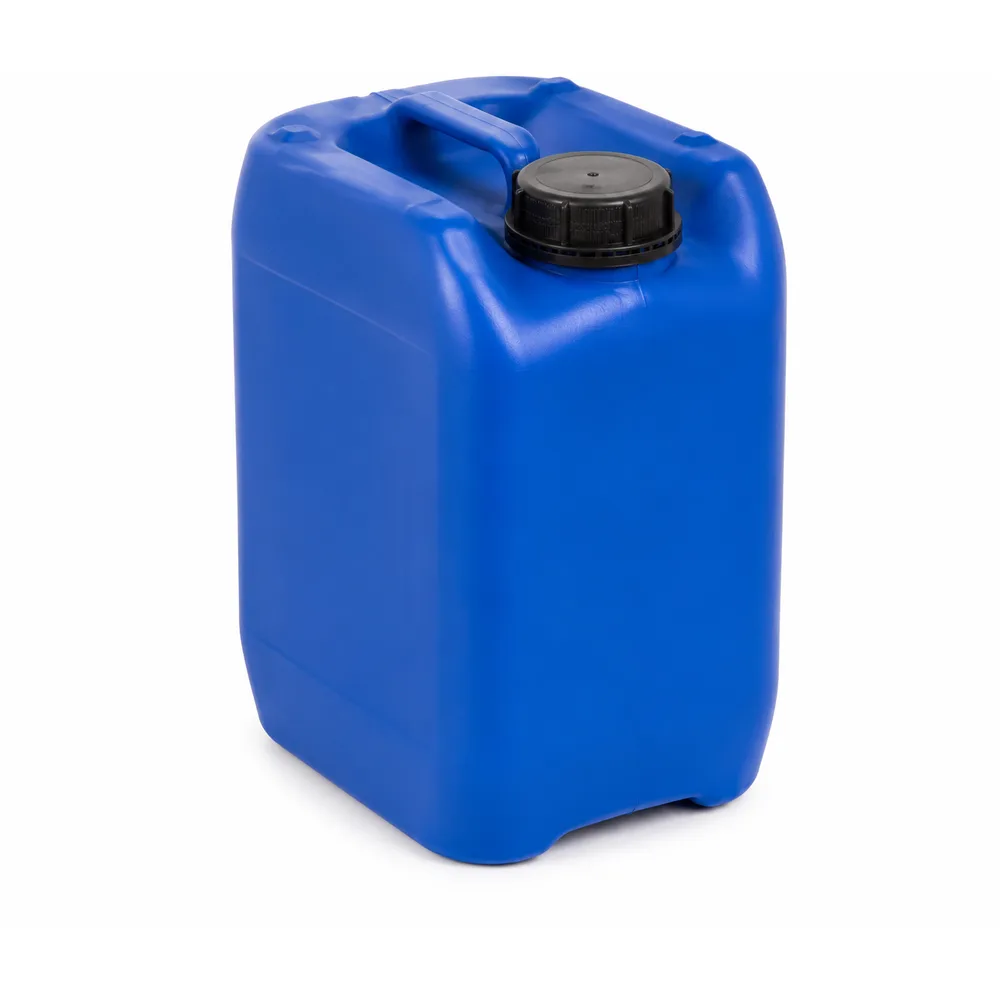 Fluorinated HDPE Jerrycan5, 10, 20, 25 and 30 litres
3H1UN version available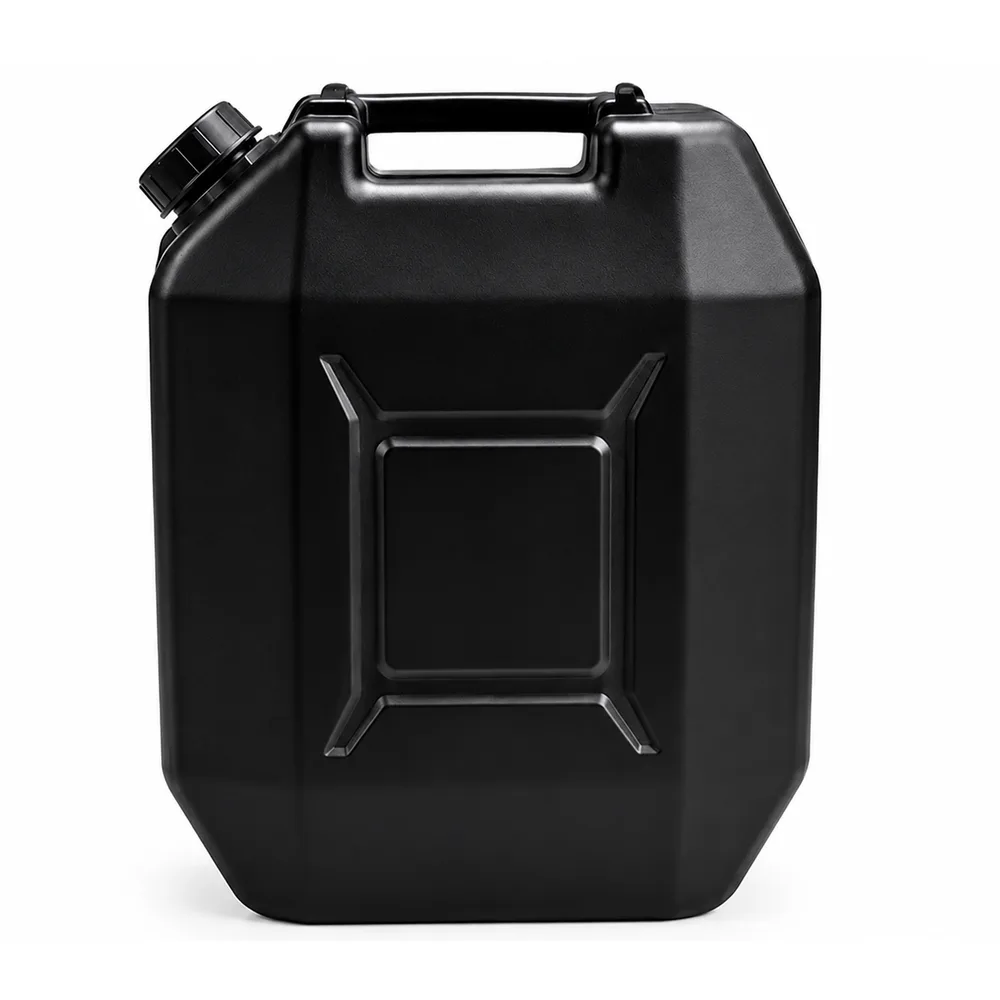 Antistatic HDPE Jerrycan5, 10, 20, 25 and 30 litres
3H1UN version available Wide-Mouth HDPE Jerrycan — UN 3H2 pattern10, 20 and 25 litres
3H2UN version available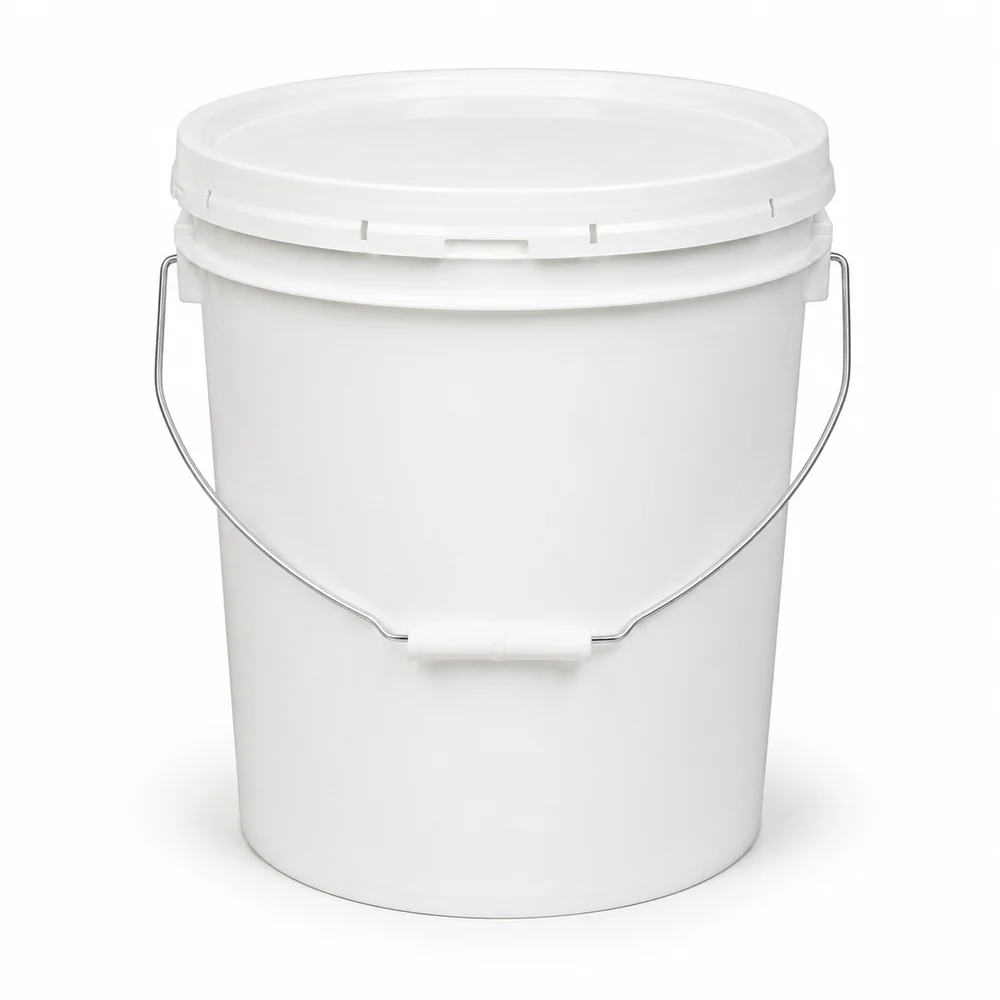 Round PP Bucket, 2.5L to 20L2.5 to 20 litres, eighteen sizes
1H2UN status: ask usHave a container already? Check its UN mark against this UN number →
Yes. P504 lists plastic jerricans (3H1) for UN 3210 up to 60 L in packing group III, with a UN mark showing X, Y or Z.
Two more rules apply. The container must resist the liquid (ADR 4.1.1.2), so check the material against the substance before you fill. A plastic drum or jerrican for dangerous goods may be used for five years from its date of manufacture (ADR 4.1.1.15); steel has no such limit.
HDPE grades and fluorination · Chemical compatibility by liquid · Steel vs HDPE fuel cans
It depends on the entry: 1 L in packing group II, 5 L in packing group III. The figures are column 7a of ADR 2025 Table A.
Under ADR chapter 3.4, a liquid in inner packagings no larger than that figure travels under reduced rules. The combination packaging may weigh up to 30 kg gross (20 kg on a shrink-wrapped tray), and it carries the limited quantity mark in place of the hazard labels.
ADR limited quantities and the 1,000-point rule · ADR 1,000-point calculator
ADR covers road transport in Europe, and RID rail uses the same list. By sea the IMDG Code has its own Dangerous Goods List, and by air the ICAO Technical Instructions and the IATA Dangerous Goods Regulations do. The class and packing group of UN 3210 normally match across them, but the packing instructions and the limits differ, so check the list for the mode you ship by.
In the US, the Hazardous Materials Table in 49 CFR 172.101 applies, and some materials carry an NA number there in place of a UN number. US rules call a UN-marked container specification packaging.
UN specification packaging · Dangerous goods transport · Packing groups explained
| UN number | Name | Class | Packing groups |
|---|---|---|---|
| UN 2014 | Hydrogen peroxide solution, 20% to 60% | 5.1 | II |
| UN 2984 | Hydrogen peroxide solution, 8% to 20% | 5.1 | III |
| UN 3149 | Hydrogen peroxide and peroxyacetic acid mixture | 5.1 | II |
| UN 3214 | Permanganates, inorganic, aqueous solution, n.o.s. | 5.1 | II |
| UN 3216 | Persulphates, inorganic, aqueous solution, n.o.s. | 5.1 | III |
| UN 3218 | Nitrates, inorganic, aqueous solution, n.o.s. | 5.1 | II, III |
Fortitude21 makes UN-certified steel and plastic jerricans, certified per design type and made under quality assurance the competent authority accepts, plus pails and the spill pallets and bunds a store needs. The cards above match our range to each entry by UN code; where a card says to ask, we confirm the certificate for that design before you order.
UN 3210 is the UN number for chlorates, inorganic, aqueous solution, n.o.s.: Class 5.1, oxidizing substances, packing group II and III. In packing group III it may travel in a UN jerrican of up to 60 L, a drum of up to 250 L or an IBC of up to 3,000 L.
Class 5.1, oxidizing substances. Class 5.1 covers oxidizing substances: they need not burn themselves, but they give off oxygen that makes other material burn (ADR 2.2.51). Hydrogen peroxide solutions are classed by their strength.
It depends on the entry: UN 3210 has 2 entries across packing groups II and III. Use the packing group in section 14 of the safety data sheet.
Yes, in packing group II and III: the entry lists IBC02, which allows metal, rigid plastics and composite IBCs of up to 3,000 L.
It depends on the entry: 1 L in packing group II, 5 L in packing group III. The figures are column 7a of ADR 2025 Table A.
The standards and regulations this page relies on, at their issuing body. Where a market rule is named here, check the current revision before you specify against it.
Data: ADR 2025 Table A as published in RID 2025 by OTIF, read on 6 October 2026, through the same engine as our UN number packaging finder. Check the current list before you ship.
Send the UN number, the packing group and the size. We reply with the design certified for it, the plant named on its certificate, and a price.