
Paste the mark off a drum, jerrican, box or IBC to read every part, then check it against your UN number.
Result for this link
UN 31H1/Y/04 25/GB/9099/10800/1200 reads as: plastic IBC (31 = IBC for liquids, H = plastic); approved for packing groups II and III (medium and low danger); made in 04/2025; design approved in the United Kingdom; identifies the manufacturer or the approved design, as set by the approving authority; the load applied in its stacking test, 10800 kg; 1200 kg, the heaviest the filled IBC may weigh.
| Packaging code | 31H1 | Plastic IBC (31 = IBC for liquids, H = plastic) |
|---|---|---|
| Performance level | Y | Approved for packing groups II and III (medium and low danger) |
| Month and year of manufacture | 04 25 | Made in 04/2025 |
| Approving country | GB | Design approved in the United Kingdom |
| Manufacturer or approval number | 9099 | Identifies the manufacturer or the approved design, as set by the approving authority |
| Stacking test load | 10800 | The load applied in its stacking test, 10800 kg |
| Maximum permissible gross mass | 1200 | 1200 kg, the heaviest the filled IBC may weigh |
Decoded by the tool on this page. The same answer as JSON: /api/un-decode
Try:
A closed-head plastic jerrican, approved for packing groups II and III, for liquids up to relative density 1.9, pressure-tested at 150 kPa, made in 2026, design approved in Germany.
| Part | On the mark | What it means |
|---|---|---|
| Packaging code | 3H1 | Closed-head plastic jerrican (3 = jerrican, H = plastic, 1 = non-removable head) |
| Performance level | Y | Approved for packing groups II and III (medium and low danger) |
| Relative density | 1.9 | Tested for liquids up to a relative density of 1.9 (water is 1.0) |
| Test pressure | 150 | Passed a hydraulic pressure test at 150 kPa |
| Year of manufacture | 26 | Made in 2026 |
| Approving country | D | Design approved in Germany |
| Manufacturer or approval number | BAM 12345 | Approval reference from BAM, the German approval authority, identifying the certified design |
Plastic drums and jerricans also carry the month of manufacture, usually on a clock symbol beside the mark.
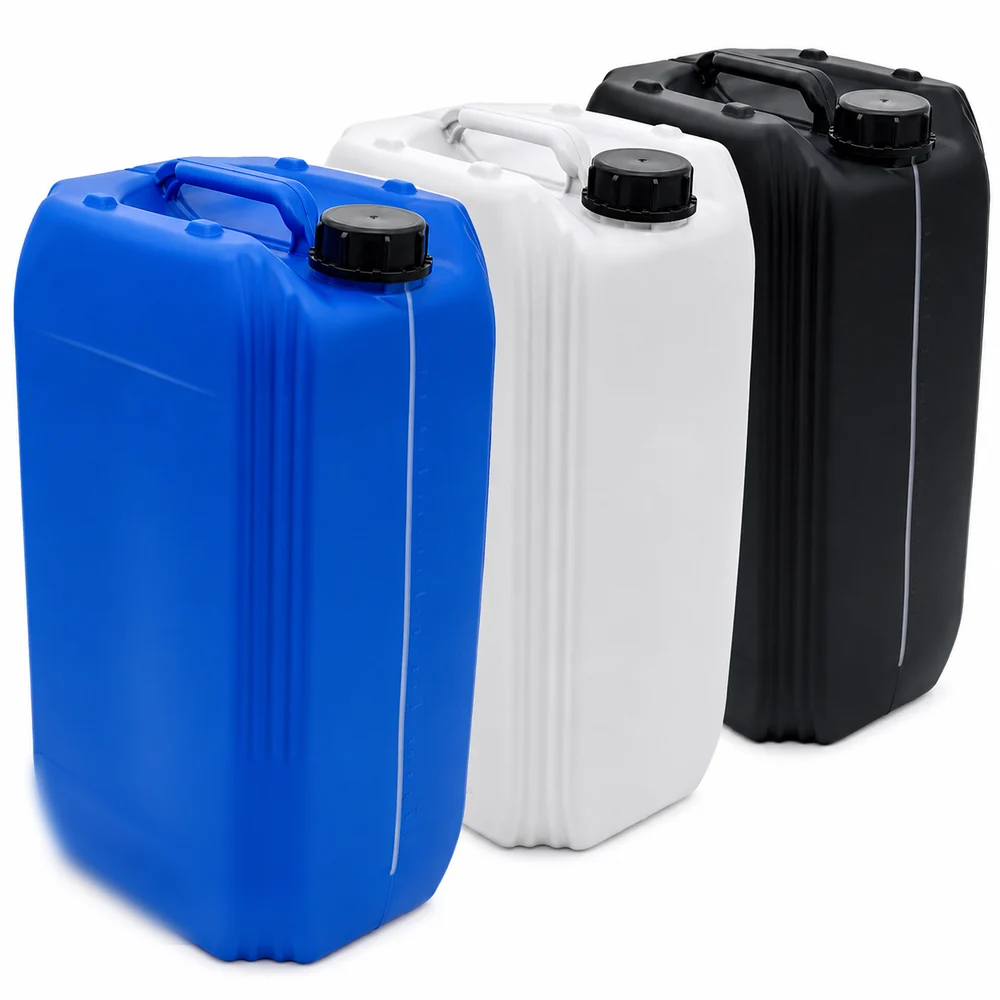 25L Stackable Plastic Jerrycan25 litresUN version available
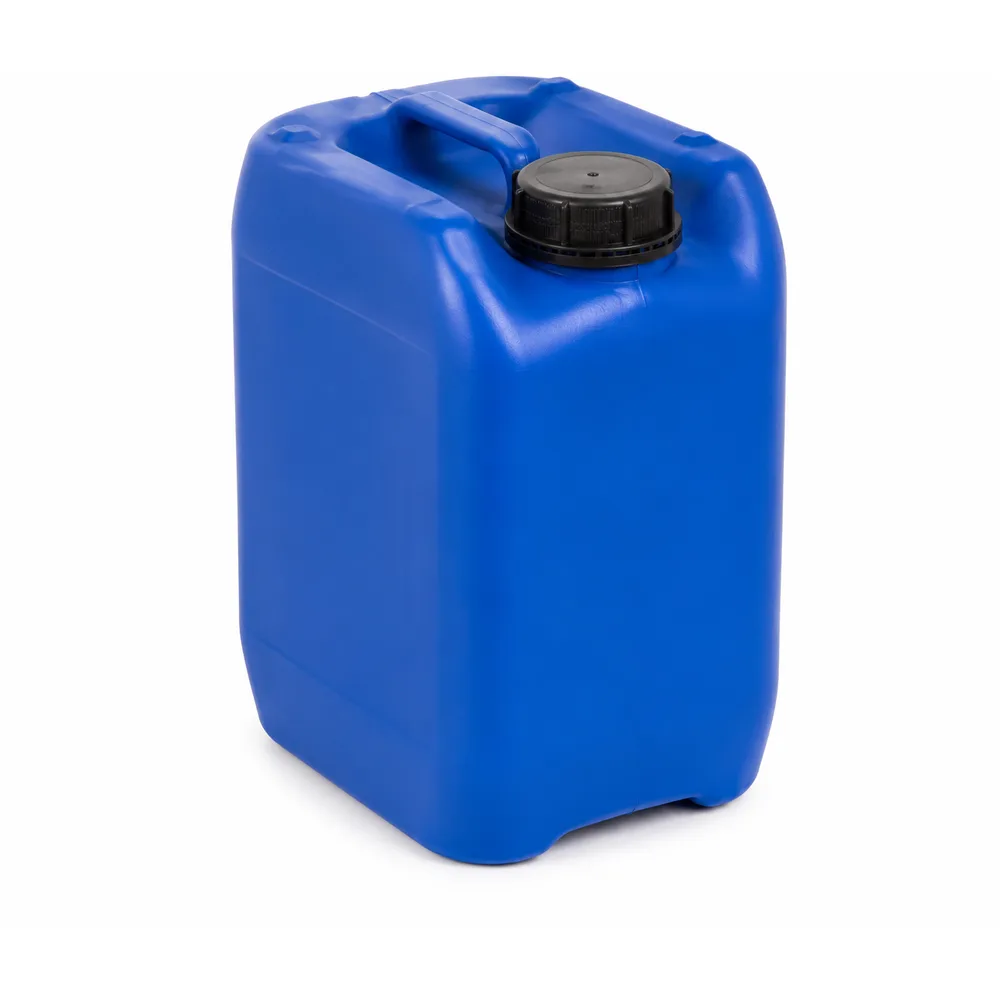 Fluorinated HDPE Jerrycan5, 10, 20, 25 and 30 litresUN version available
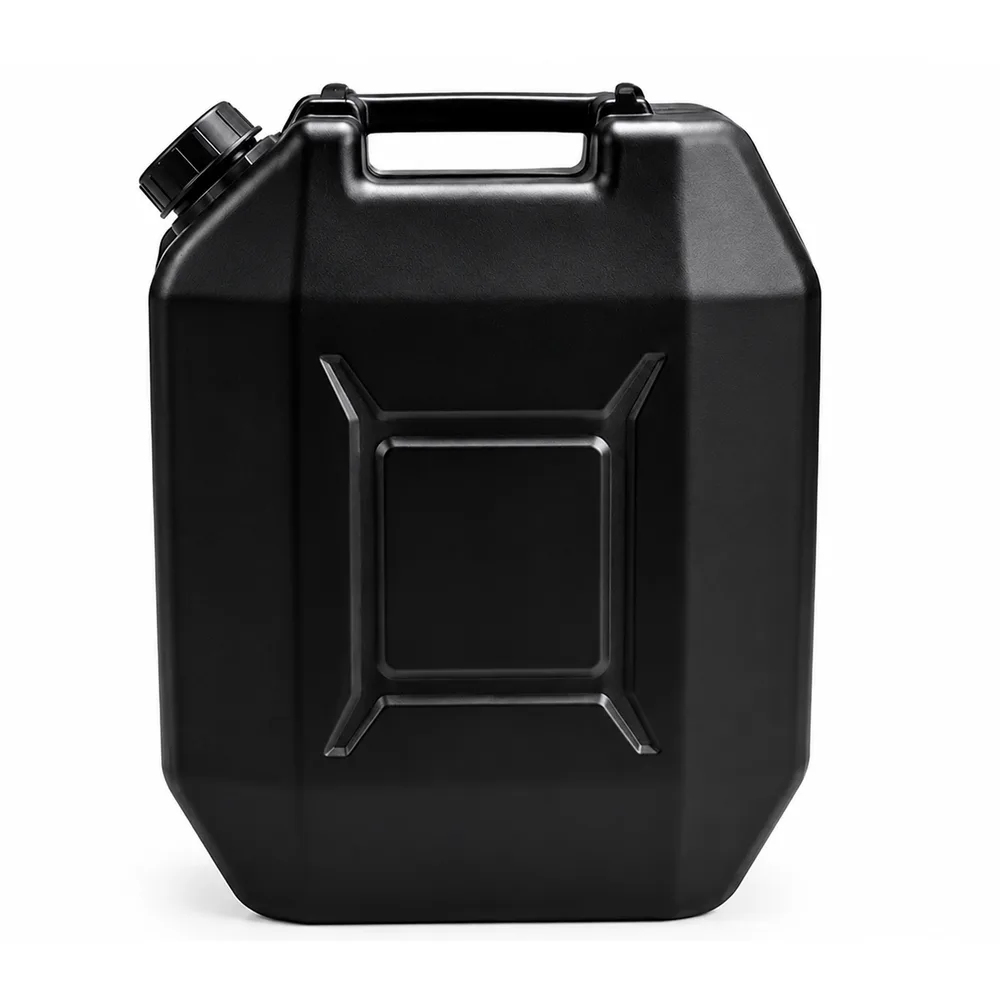 Antistatic HDPE Jerrycan5, 10, 20, 25 and 30 litresUN version available
Approval is per design and per plant, and each design carries its own level, density and test pressure. Send your contents and we confirm the design that matches your mark.
Example marks: the approval numbers are illustrative.
It splits a UN packaging mark into its parts and explains each one: the packaging type, material and head, the performance level and the packing groups it allows, the relative density or gross mass, the test pressure, the year, the approving country and the maker. It reads drum, jerrican, box, bag, composite and IBC marks, including the stacking load and gross mass on an IBC.
Buyers checking a quotation or a delivery against the specification, warehouse and quality teams receiving dangerous goods packaging, and fillers matching a container to their product’s packing group and density.
Products behind the numbers: Fuel & Gas Cans, Industrial & Chemical Containers, Pails & Open-Head Buckets.
Every UN mark on a drum, jerrican or box follows the same order, set by chapter 6.1 of the UN Model Regulations. Read it left to right and each part answers one question.
For drums, jerricans, boxes and bags the code is a digit, a letter and usually a second digit. The first digit gives the type, the letter the material, and the last digit, on drums and jerricans, whether the head is fixed. Composite packagings use two letters, inner material first. IBCs use two-digit codes such as 31H1 under their own section of the regulations.
| Type digit | Packaging |
|---|---|
0 | Light-gauge packaging |
1 | Drum |
3 | Jerrican |
4 | Box |
5 | Bag |
6 | Composite packaging |
| Material letter | Material |
|---|---|
A | Steel |
B | Aluminium |
C | Natural wood |
D | Plywood |
F | Reconstituted wood |
G | Fibreboard |
H | Plastic |
L | Textile |
M | Multiwall paper |
N | Metal other than steel or aluminium |
P | Glass, porcelain or stoneware |
| Last digit | Head (drums and jerricans) |
|---|---|
1 | Non-removable head |
2 | Removable head |
| Code | What it is | In our range |
|---|---|---|
1A1 | Closed-head steel drum | Tight-head round metal buckets |
1A2 | Open-head steel drum | Metal pails with flower lid or lever ring |
1H1 | Closed-head plastic drum | — |
1H2 | Open-head plastic drum | Polypropylene pails |
3A1 | Closed-head steel jerrican | Steel jerry cans |
3A2 | Open-head steel jerrican | — |
3B1 | Closed-head aluminium jerrican | Aluminium jerry cans |
3H1 | Closed-head plastic jerrican | HDPE jerrycans |
3H2 | Open-head plastic jerrican | Wide-mouth HDPE jerrycans |
4G | Fibreboard box | — |
6HA1 | Composite packaging with a plastic inner receptacle in a steel outer | — |
One page per code: UN 3H1 · UN 3H2 · UN 3A1 · UN 3A2 · UN 3B1 · UN 1A1 · UN 1A2 · UN 1H1 · UN 1H2 · UN 4G · UN 31HA1 · UN 31H1
UN 3H1/Y1.9/150/26/D/BAM 12345A closed-head plastic jerrican, approved for packing groups II and III, for liquids up to relative density 1.9, pressure-tested at 150 kPa, made in 2026, design approved in Germany.
| Part | On the mark | What it means |
|---|---|---|
| Packaging code | 3H1 | Closed-head plastic jerrican (3 = jerrican, H = plastic, 1 = non-removable head) |
| Performance level | Y | Approved for packing groups II and III (medium and low danger) |
| Relative density | 1.9 | Tested for liquids up to a relative density of 1.9 (water is 1.0) |
| Test pressure | 150 | Passed a hydraulic pressure test at 150 kPa |
| Year of manufacture | 26 | Made in 2026 |
| Approving country | D | Design approved in Germany |
| Manufacturer or approval number | BAM 12345 | Approval reference from BAM, the German approval authority, identifying the certified design |
Plastic drums and jerricans also carry the month of manufacture, usually on a clock symbol beside the mark.
Made to this code in our range: HDPE jerrycans.
UN 3A1/X1.3/250/26/GB/2345A closed-head steel jerrican, approved for packing groups I, II and III, for liquids up to relative density 1.3, pressure-tested at 250 kPa, made in 2026, design approved in the United Kingdom.
| Part | On the mark | What it means |
|---|---|---|
| Packaging code | 3A1 | Closed-head steel jerrican (3 = jerrican, A = steel, 1 = non-removable head) |
| Performance level | X | Approved for packing groups I, II and III (high, medium and low danger) |
| Relative density | 1.3 | Tested for liquids up to a relative density of 1.3 (water is 1.0) |
| Test pressure | 250 | Passed a hydraulic pressure test at 250 kPa |
| Year of manufacture | 26 | Made in 2026 |
| Approving country | GB | Design approved in the United Kingdom |
| Manufacturer or approval number | 2345 | Identifies the manufacturer or the approved design, as set by the approving authority |
Made to this code in our range: Steel jerry cans.
UN 1A1/X1.6/250/24/USA/M4321A closed-head steel drum, approved for packing groups I, II and III, for liquids up to relative density 1.6, pressure-tested at 250 kPa, made in 2024, design approved in the United States.
| Part | On the mark | What it means |
|---|---|---|
| Packaging code | 1A1 | Closed-head steel drum (1 = drum, A = steel, 1 = non-removable head) |
| Performance level | X | Approved for packing groups I, II and III (high, medium and low danger) |
| Relative density | 1.6 | Tested for liquids up to a relative density of 1.6 (water is 1.0) |
| Test pressure | 250 | Passed a hydraulic pressure test at 250 kPa |
| Year of manufacture | 24 | Made in 2024 |
| Approving country | USA | Design approved in the United States |
| Manufacturer or approval number | M4321 | Identifies the manufacturer or the approved design, as set by the approving authority |
Made to this code in our range: Tight-head round metal buckets.
UN 1A2/Y30/S/26/GB/2468An open-head steel drum, approved for packing groups II and III, up to 30 kg gross, made in 2026, design approved in the United Kingdom.
| Part | On the mark | What it means |
|---|---|---|
| Packaging code | 1A2 | Open-head steel drum (1 = drum, A = steel, 2 = removable head) |
| Performance level | Y | Approved for packing groups II and III (medium and low danger) |
| Maximum gross mass | 30 | 30 kg, the heaviest the filled package may weigh |
| Solids marker | S | For solids or for inner packagings, so no hydraulic pressure test applies |
| Year of manufacture | 26 | Made in 2026 |
| Approving country | GB | Design approved in the United Kingdom |
| Manufacturer or approval number | 2468 | Identifies the manufacturer or the approved design, as set by the approving authority |
Made to this code in our range: Metal pails with flower lid or lever ring.
UN 31HA1/Y/02 26/D/BAM 1234/2160/1200A composite IBC with a plastic inner receptacle in a steel outer, approved for packing groups II and III, up to 1200 kg gross, made in 02/2026, design approved in Germany.
| Part | On the mark | What it means |
|---|---|---|
| Packaging code | 31HA1 | Composite IBC with a plastic inner receptacle in a steel outer (31 = IBC for liquids, H = plastic inner, A = steel outer) |
| Performance level | Y | Approved for packing groups II and III (medium and low danger) |
| Month and year of manufacture | 02 26 | Made in 02/2026 |
| Approving country | D | Design approved in Germany |
| Manufacturer or approval number | BAM 1234 | Approval reference from BAM, the German approval authority, identifying the certified design |
| Stacking test load | 2160 | The load applied in its stacking test, 2160 kg |
| Maximum permissible gross mass | 1200 | 1200 kg, the heaviest the filled IBC may weigh |
IBC marks follow their own layout (UN Model Regulations 6.5.2). A stacking test load of 0 means the IBC is not designed to be stacked.
We do not make IBCs. Our IBC spill pallets hold one, and the spill pallet calculator sizes the sump.
Whether it suits your contents. Type your UN number under a decoded mark and the decoder checks the packing instruction, the size and the mark’s letter against it. Starting from a UN number instead, the UN number packaging finder lists every container it may use. The mark shows the packing groups and density the design was tested for, not every substance it can hold. A plastic container also has to be compatible with the actual chemical; our chemical compatibility guide covers how to check.
How long it can be used. Under ADR, plastic drums and jerricans carrying dangerous goods may be used for five years from the month and year of manufacture, so read the date before you fill. Our guide to cleaning and reusing jerry cans sets out the rule.
When an IBC is due for testing. The mark gives the month and year of manufacture; the plate beside it gives the last test and inspection. Our IBC inspection date checker turns them into the next due dates.
Which plant made it. Approval belongs to a design made at a particular plant. Ask the supplier for the certificate that names the plant your containers come from; the mark alone will not tell you. Our UN packaging codes guide explains why.
Safety advisers, trainers and trade bodies can embed it free. Paste the code into any web page. The tool updates when we update the rules, and the credit line links back here. Building software instead? The same answer comes as JSON from our free API.
3H1 is a closed-head plastic jerrican: 3 means jerrican, H means plastic and 1 means the head is not removable, so it fills and empties through a small neck. It is the code on UN-approved plastic jerricans for liquids.
Both are steel drums. 1A1 has a fixed head with openings no wider than 7 cm and is the usual choice for liquids. 1A2 has a removable lid, or any opening wider than 7 cm. It carries solids and liquids of packing groups II and III, and in packing group I only viscous liquids.
Y means the design is approved for packing groups II and III, medium and low danger. 1.9 is the highest relative density of liquid it was tested with, so it can carry liquids up to 1.9 times the density of water. When no figure appears, the limit is 1.2.
On a packaging for liquids, the number after the performance level is the hydraulic test pressure in kPa that the design passed, here 150 kPa. Packagings for solids show the letter S in that place instead.
The standards and regulations this page relies on, at their issuing body. Where a market rule is named here, check the current revision before you specify against it.
Send what goes in them, the size and the destination. We reply with the design, the code it is certified to, the plant on its certificate, and a price.